
Project incubation
One morning in early December in Tinh Tuc commune, Cao Bang province, the sky was still foggy and thin on the gray rocky mountain slopes. The small road leading to Nam Toc hamlet is now much cleaner than before.
On both sides of the road, green and yellow trash bins are placed right at the right place, people are used to dumping trash of the right type and place.
Its getting used to it now. Organic waste is separated and stored for manure. The remaining garbage is left to be collected by vehicles. Clean it for yourself first" - Ms. Nong Thi Tam opened the trash can and laughed.
Few people expected that just a few years ago, this place faced the situation of household waste being thrown into streams, causing prolonged pollution, and now has become a bright spot in the picture of waste treatment in the highlands.
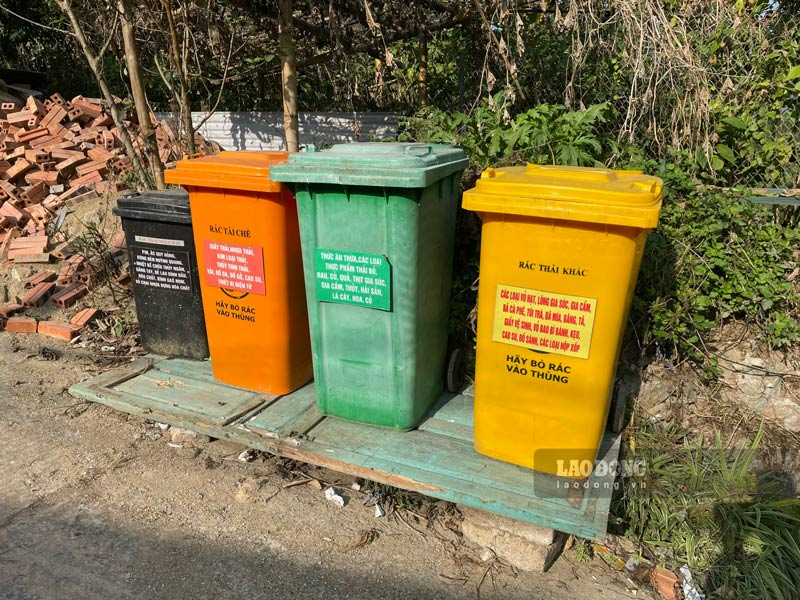
The story in Tinh Tuc is just a part of a picture that is moving strongly in the Cao Bang mountains - a place where waste treatment has long been a difficult problem.
In November 2023, the Tinh Tuc waste treatment area project was granted an environmental license. However, what makes success is not machinery, but change from awareness.
In just two years, the commune coordinated with the Department of Agriculture and Environment (DONRE) and Nguyen Binh district (old) to organize dozens of training courses, distributed documents, and instructed people on waste classification at source.
Village meetings that were only a few dozen people have now increased to hundreds. Environmental staff must divide into groups, "hands-on with each household" to: where is organic waste, where is recyclable waste, where is waste that must be treated.
"At first, the people kept saying to classify the problems and make mistakes. But with careful guidance, additional support for preparation products and containers, they gradually got used to it. Now many households are asking for more products to fertilize the fields" - Mr. Hoang Van Thai, a commune resident said.
The results came faster than expected, in 2025, the rate of households classifying waste according to regulations increased from 56.5% to 94.3%. Those seemingly dry numbers reflect a very real change: from lifestyle, habits, to the landscape of each road and alley.
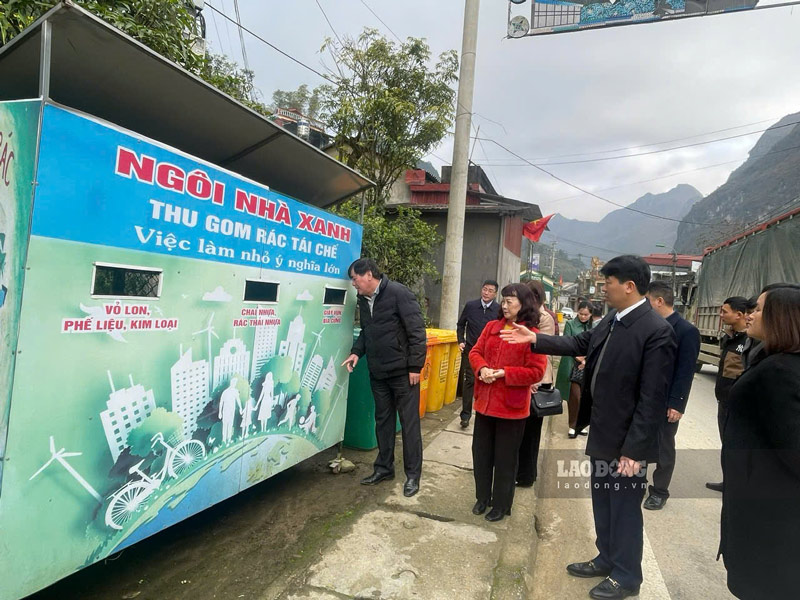
This change creates an important foundation for the new waste treatment area of the commune. Each day, only 1.36 tons of waste are received - a significant reduction when the amount of organic waste has been retained and treated at households. Thanks to that, the incinerator - burying furnace system operates stably, is not overloaded, and reduces the risk of pollution.
Pac Mieu - garbage crusher replaces the screams of open landfills
More than 100 km from Tinh Tuc, in Pac Mieu residential group (Bao Lam commune), the waste treatment area once caused people to "complain" about the stench and dust. But now, the journey here has a different feeling: cleaner, more organized and especially... quiet.
Behind the closed net, the sound of the garbage crusher was constant. Workers bring each garbage truck into the newly installed collection area to avoid the wind blowing the garbage out. The waste is sprayed with biological products, put into a small crusher and then put into an incinerator with a capacity of 800 kg/hour.
In the past, the landfill was open, and every time there was a strong wind, the whole village "ran" because of the smell. Since the new system was installed, it has improved significantly" - Mr. Ma Van The, a local resident said.
While many landfills in the highlands are still heavily buried, lacking roofs, products, and workers, the company operating the Pac Mieu waste treatment area has chosen to go back, investing an additional 500 million VND in conveyor belt, crusher, roofing and a retaining system.
The boldness of Long Tuan Cooperative - the operator has turned this place into one of the few waste treatment points operating according to the correct process.
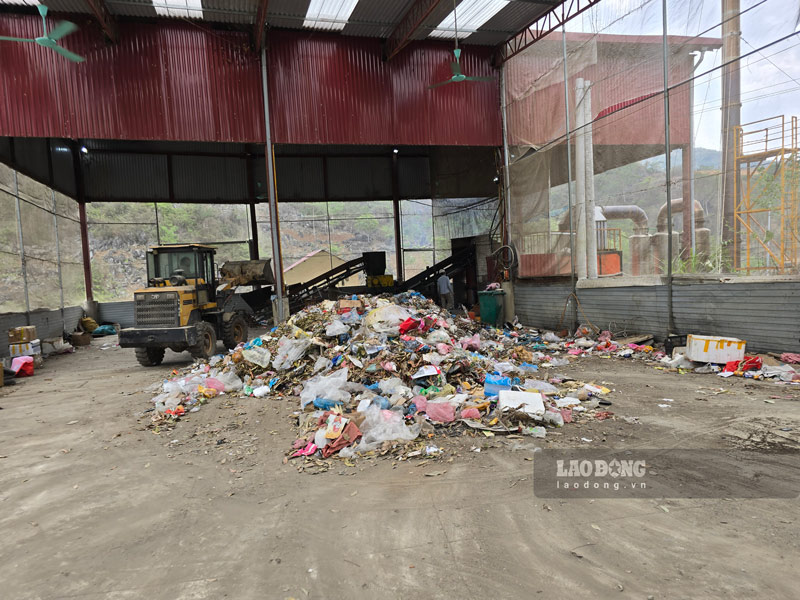
All activities from temporary classification, grinding, incineration to ash and slag treatment are carried out in a closed space. Workers are less struggling, the surrounding environment is less polluted, and the time to use the landfill is extended thanks to the significant reduction in the ash and slag after burning.
"If we do not invest in the environment, it cannot be sustainable. This is our profession, so we must work to the point" - Mr. Mai Song Ma, Deputy Director of Long Tuan Cooperative expressed.
Resources are prioritized, the system is gradually taking shape
After the Law on Environmental Protection 2020 took effect, Cao Bang issued a series of decisions and plans to specify responsibilities and orient waste classification - treatment - recycling.
From 2022 to 2024, the regular budget for environmental protection will reach VND 281.716 billion - an increase of nearly 150% compared to the period 2016 - 2021. In addition, more than 54 billion VND has been invested in the construction, upgrading of landfills, and treatment of medical waste.
Thanks to this resource, the whole province currently has 16 domestic solid waste treatment facilities, although only 4 facilities operate stably. But the important thing is that the collection - transportation - gathering system has clearly formed: 1,070 classification bins are provided to schools, agencies, and villages; thousands of people are trained in 100 training classes on waste classification alone.
The rate of urban garbage collection reached 92.56%, rural areas reached 32.59% - a figure that is not high but has changed.
In many places, classifying organic waste for manure has become popular. Some districts have begun to take advantage of the ashes from incinerators as filling material. Although small, circular economic models have begun to group.
When garbage is no longer garbage
Passing through bright spots like Tinh Tuc and Pac Mieu, one thing is clear: change begins in the smallest place.
A training class helps people understand that organic waste does not have to be thrown away. A treatment area with investment in was adjusted to help the whole town feel relieved. A sorting trash can be placed in the right place to make the alley road cleaner.
And when the government - businesses - people participate together, waste is no longer a burden, but becomes a resource that can be recycled, reused and rotated in the economic cycle.
A representative of the Department of Natural Resources and Environment of Cao Bang province shared that if waste is recycled well, the revenue will be used to help the province have a budget to invest in waste treatment works, and it will also become a tool to regulate and encourage businesses to proactively switch to cleaner technology.
It can be seen that waste classification and recycling models, although there are few, are creating a spillover effect. In Trung Khanh, Quang Uyen or Hoa An communes, source classification programs are starting to spread.
Some places have tested microbiological cultivation, others have taken advantage of inorganic waste to recycle to raise funds for the village. Amidst the typical difficulties of the highlands - harsh terrain, limited resources, and scattered residents - model locations like Tinh Tuc and Pac Mieu are the affirmation: if done correctly, waste will not become a dark story in the mountains.
It is a story of unity, of new thinking, of diligent but persistent steps. And most importantly, it is the journey to "not be garbage anymore" - but to become a part of green, clean and sustainable development in Cao Bang.
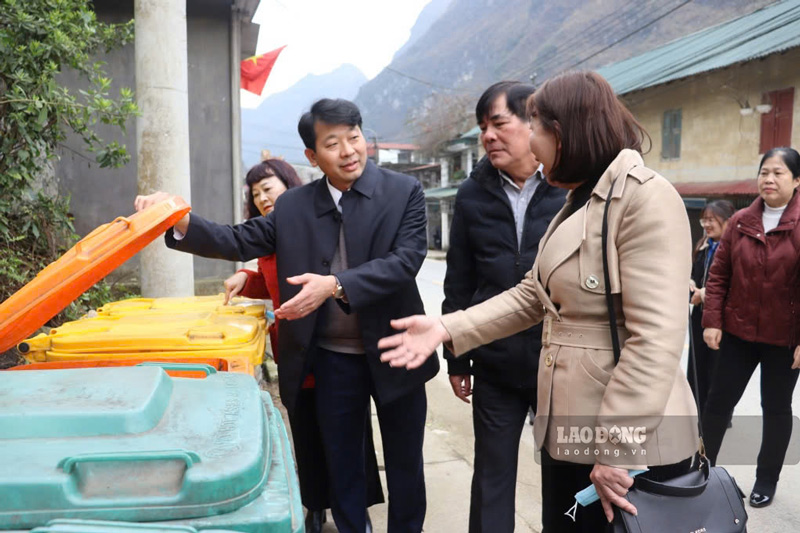
Mr. Nguyen Manh Hung - Deputy Director of the Department of Agriculture and Environment of Cao Bang province commented that building a comprehensive and long-term strategy for waste treatment is an urgent task at present.
"Therefore, the key solutions to be implemented in the coming time are to complete technical infrastructure such as investing in standards-based waste collection, transit and treatment points at the commune level; encouraging private enterprises to participate in the field of waste treatment and recycling.
Develop human resources specializing in environmental issues. Strengthen propaganda, change community behavior, build a movement "Waste classification at source" associated with the criteria for building new rural areas and civilized urban areas" - Mr. Hung added.
According to information from the Department of Agriculture and Rural Development, in the coming period, Cao Bang province will review the entire domestic solid waste treatment plan, prioritize investment in concentrated treatment facilities by region, combine incineration - recycling - clean landfill, and gradually reduce the simple landfill method.
"The province is gradually moving in the right direction when combining policies - technology - community awareness to turn environmental challenges into development opportunities.
A sustainable green, clean future will not be far away if every small action today is always maintained and spread widely" - Deputy Director of the Department of Agriculture and Rural Development of Cao Bang province shared.


