
Garbage congestion in the first days of implementation
From December 1, Da Phuoc landfill (HCMC) will only receive household waste from 6pm to 6am every day, instead of the same day and night as before. This has created great pressure on the collection and transportation system of household waste in Ho Chi Minh City.
Previously, garbage was distributed in two shifts: daily shift about 1,800 tons (equivalent to 175 shifts), night shift about 2,750 tons/day (equivalent to 268 shifts). Now, all this volume is concentrated on overnight shifts, giving the vehicles only 11 hours to operate.
Speaking to Lao Dong reporter, Mr. Pham Van Khanh, Director of Dong Tam Environment Cooperation Union, said that in the first two days of application, garbage transportation still experienced congestion and delays.
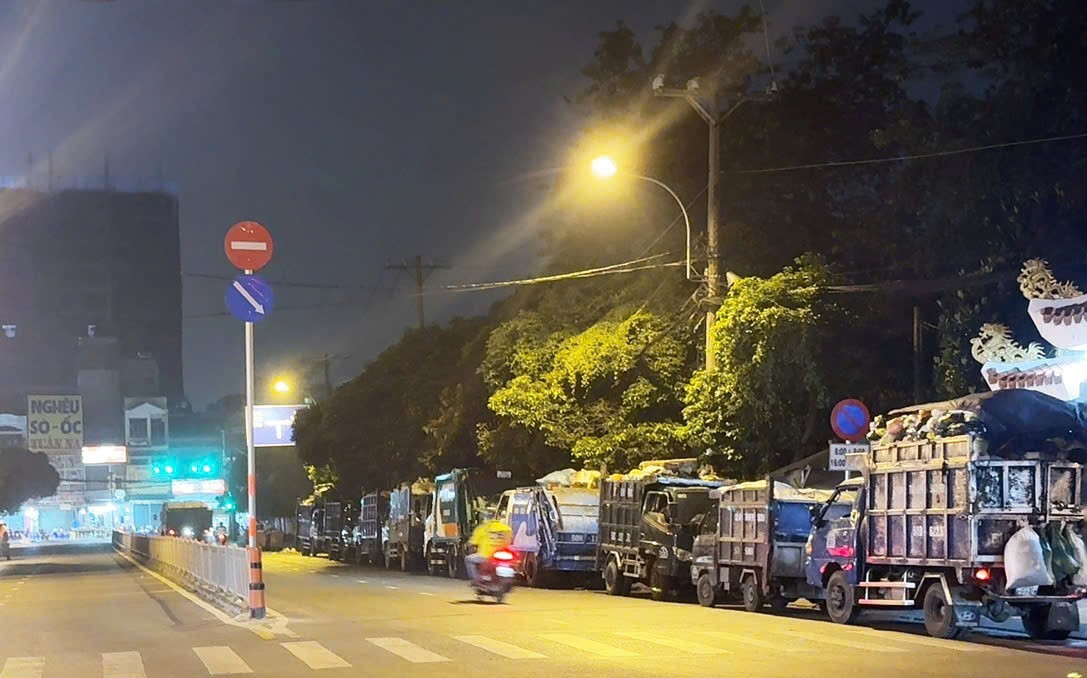
According to Mr. Khanh, although there was a previous announcement about the change in the time frame and the Department of Agriculture and Environment of Ho Chi Minh City had a plan to allocate waste to the landfill in Cu Chi district before, transportation was still difficult in the early days.
Currently, more than 80% of the garbage in the area has been converted to take at night. The situation is not as passive or sudden as the closure of Da Phuoc landfill during Tet. However, even with preparation, the situation in general is still affected and it will probably take a few more days to stabilize," said Mr. Khanh.
Mr. Trieu Kim Bang, Director of Binh Tan Cooperative, said that the congestion occurred on the first day of application.
"At 6:00 p.m. yesterday (December 1), right at the first time of application, the gateway to Da Phuoc had a long queue of people, vehicles had to wait," Mr. Bang informed.
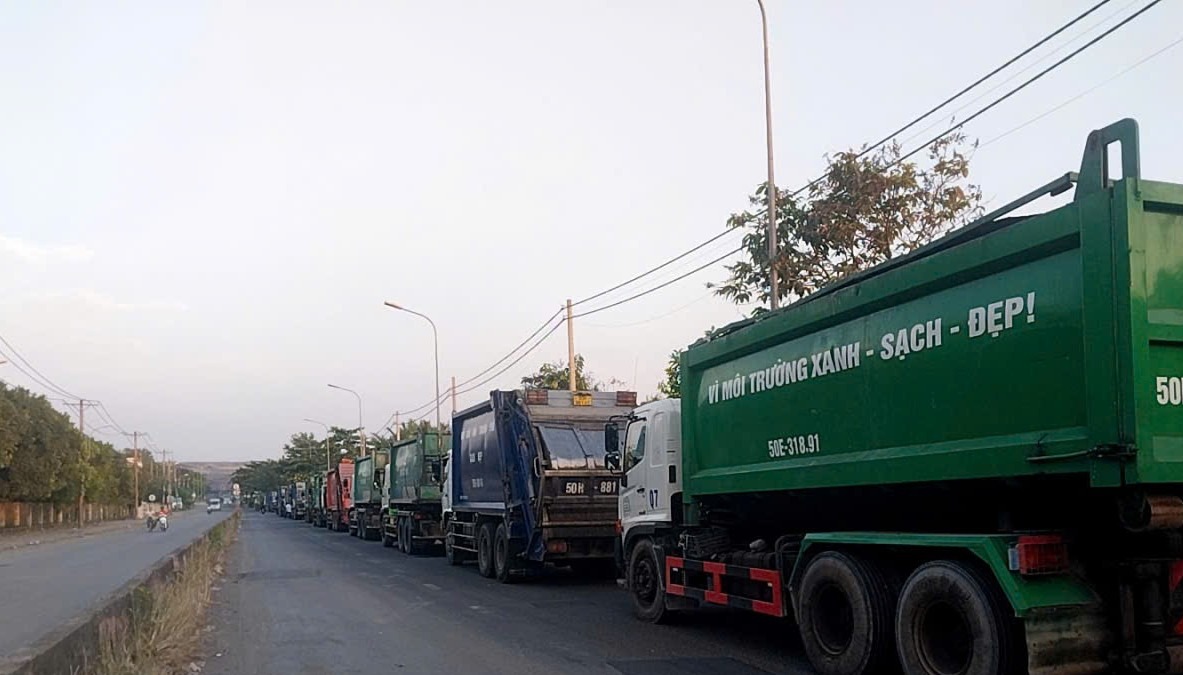
Concerns about garbage congestion as Tet approaches
According to Mr. Bang, changing the garbage treatment time frame has a positive impact on urban aesthetics, but also causes great problems at meeting places, causing the number of vehicles gathered to not be enough to receive garbage in time.
The Director of Binh Tan Cooperative expressed concern that if there is no timely solution, the problem of garbage congestion will continue, especially as the Lunar New Year approaches.
"By the holidays, the amount of garbage will increase dramatically. If the receiving time frame is only at night as at present, there will not be enough time to receive the amount of household waste," Mr. Bang emphasized.
Faced with these practical difficulties, Binh Tan Cooperative recommends that the City should have an urgent solution:
Expanding the time for receiving waste in Da Phuoc, instead of limiting it to the night.
If there is a plan to bring garbage to Cu Chi, it is necessary to create conditions for other units to be allowed to go, in order to reduce traffic and reduce the load on Da Phuoc area.
Regarding the proactive response plan, Binh Tan Cooperative is making efforts to arrange fixed and specific hours for each collection vehicle to optimize time and avoid garbage accumulation among the people. This unit is also preparing additional and backup vehicles (such as 30-40% of transport vehicles) to ensure smooth transportation, especially during holidays.
Previously, to avoid garbage congestion and ensure the environment for Ho Chi Minh City, Mr. Nguyen Hong Nguyen, Deputy Director of the Department of Agriculture and Environment of Ho Chi Minh City (DONRE) said that the Department had a plan to implement activities to collect and transport household waste in Ho Chi Minh City from December 1.
Accordingly, the Department of Agriculture and Rural Development has implemented a number of solutions as follows:
Transfer the volume of household waste in some urgent areas without transit stations, which is likely to cause garbage congestion during the day to the Northwest Waste Treatment Complex.
Transfer the daily shift to transport the night shift to Da Phuoc processing area about 1,350 tons/day. Increase investment in additional means of transporting household waste.
In addition, the Department recommends that the Ho Chi Minh City People's Committee consider reducing the prohibited time frame so that transport units have enough time to turn around and make the next trip.


