On the morning of December 9, at the 6th session of the 10th term of the Ho Chi Minh City People's Council, the Ho Chi Minh City People's Committee submitted a document on agreeing with the competent authority to implement the investment project under the public-private partnership method through the area of two provincial-level administrative units (Dong Nai province and Ho Chi Minh City).
According to the proposal, the Ho Chi Minh City People's Committee is the competent authority to implement the investment project to build Phu My 2 bridge under the public-private partnership (PPP) method.
Dong Nai Provincial People's Committee acts as the competent authority to implement the Cat Lai bridge construction investment project and the Long Hung bridge construction investment project (Dong Nai 2 bridge) under the PPP method.
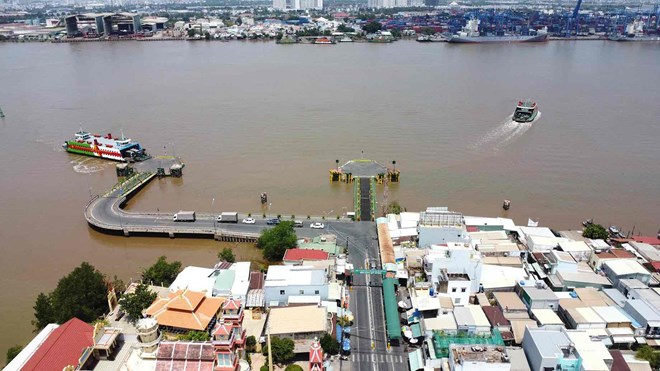
Cat Lai Bridge has a total length of 11.6 km, of which the main bridge is 3 km long, designed with 6 lanes for motor vehicles and 2 lanes for rudimentary vehicles, speed of 80 km/h.
Cat Lai Bridge will directly connect Nguyen Thi Dinh Street (Cat Lai Ward, Ho Chi Minh City) with Dai Phuoc Commune (Dong Nai), eliminating Cat Lai ferry bottlenecks that are always overloaded.
The project has a total capital of more than 20,500 billion VND, implemented according to the PPP model combined with public investment. Dong Nai will construct the main bridge and approach road (more than 15,500 billion VND).
Ho Chi Minh City is in charge of site clearance and expansion of Nguyen Thi Dinh Street (about 4,975 billion VND). The project is expected to start construction on December 19 and be completed in 2028.
Long Hung Bridge creates a strategic connecting route between National Highway 51 and Ho Chi Minh City Ring Road 3. The project is nearly 12 km long, of which the bridge is 2.3 km long, with a scale of 6 lanes for motor vehicles and 2 primary lanes, with a design speed of 80 km/h.
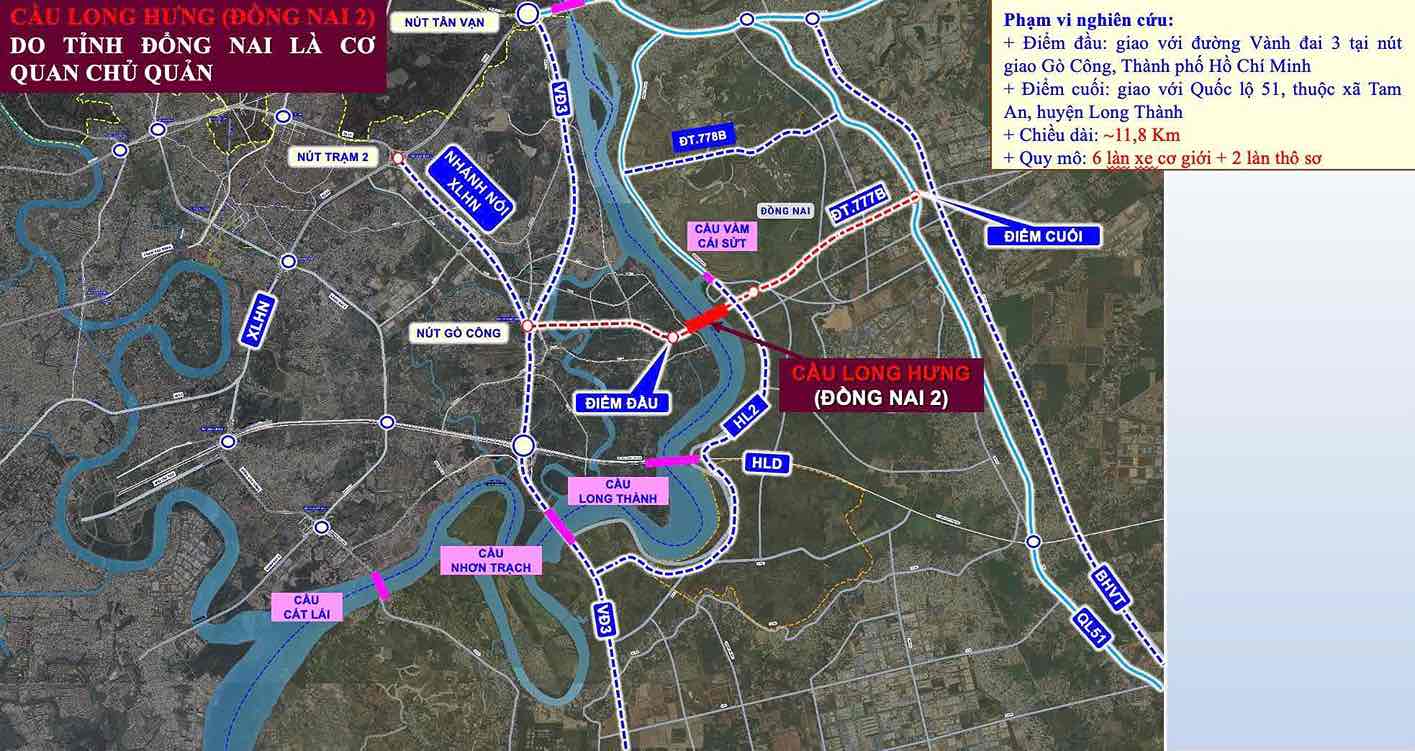
The project has a total capital of nearly 11,800 billion VND, implemented under the PPP and BT contract form in the period of 2025 - 2028.
Dong Nai is responsible for the construction of Long Hung Bridge and DT.777B route, while Ho Chi Minh City invests in the section from Go Cong intersection to Long Hung Bridge.
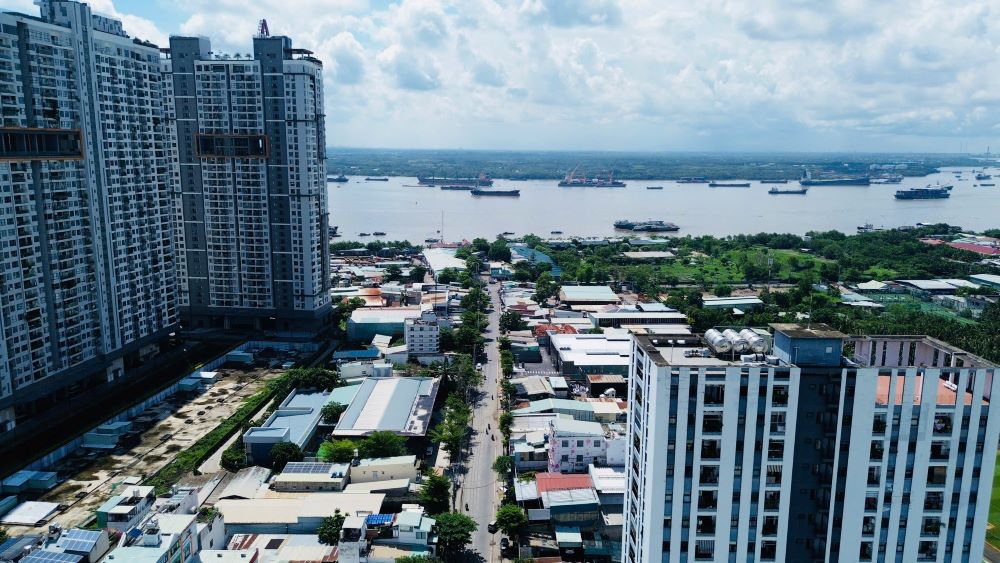
Phu My 2 Bridge is expected to reduce great pressure on the existing Phu My Bridge - a vital route for transporting goods from Cat Lai Port to the Eastern and Western regions.
The project is 6.3 km long, of which the section through Ho Chi Minh City is 4.6 km long, with a scale of 8 lanes including 6 lanes for motor vehicles and 2 mixed lanes.
The approach road on the Ho Chi Minh City side connects with the North - South axis (Nguyen Huu Tho Street), while building a 2-storey overpass running along Hoang Quoc Viet Street and additional branches connecting Dao Tri.
The total investment of the project is about 25,01 billion VND under the form of PPP, BT contract, implemented in the period of 2025 - 2028.
Ho Chi Minh City will take the lead in implementing the main bridge and the approach road on the city side. Dong Nai will deploy a route connecting Nguyen Ai Quoc to Phu My 2 bridge location (including site clearance).
Currently, Ho Chi Minh City and Dong Nai are separated by many major rivers such as Dong Nai, Long Tau, Dong Tranh, Thi Vai, while existing road connections such as National Highway 1, National Highway 1K and Ho Chi Minh City - Long Thanh - Dau Giay Expressway are all overloaded.
In recent years, the traffic infrastructure in this area has been improved with Nhon Trach Bridge on Ho Chi Minh City Ring Road 3 completed and Ben Luc - Long Thanh Expressway expected to be fully operated in 2026.