
Can Gio Sea Overpass and Road
The Can Gio sea road and overpass project has a total length of more than 14.6 km.
In which, a nearly 11 km long overpass will be built, including 4 lanes for motor vehicles and 2 mixed lanes, with a design speed of 60 km/h. The cable-stayed structure with a main span of 600 m, clearance of 55 m, is suitable for heavy-duty ships to pass.
The approach roads on both sides of the bridge are nearly 3.8 km long, with a design speed of 80 km/h.
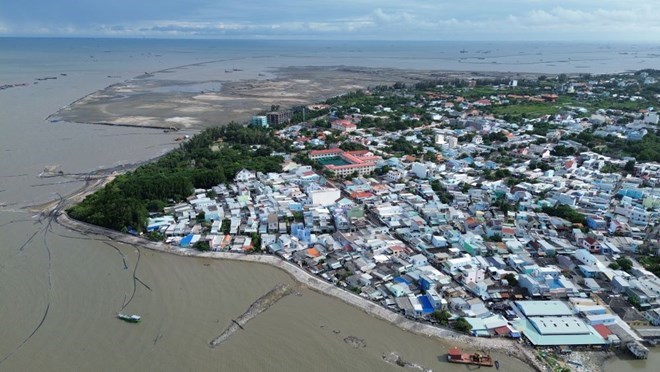
From the starting point at Can Gio coastal urban area, the route goes in the Southeast direction, crosses Ghenh Rai Bay and connects with Mai Sao - Ben Dinh road in Vung Tau.
The total estimated investment capital is more than VND104,000 billion under the form of public-private partnership (PPP), BT (build - transfer) contract. The project is expected to start construction in 2026 and be completed in 2029.
Can Gio Bridge
Ho Chi Minh City also speeds up the Can Gio bridge project to replace Binh Khanh ferry. The project is more than 6.3 km long, of which the main bridge is nearly 3 km, designed with 6 lanes, speed of 60 km/h, structure of a cable-stayed tower with a clearance of 55 m.
In addition to the main bridge, the project also builds three bridges on the route: Song Cha bridge; Tac Song Cha bridge; Rach Muong Ngang bridge (on the parallel road on the Nha Be side).

The project has a total investment of more than 13,200 billion VND (including interest) under the PPP and BT contracts form. The project is expected to start construction in the first quarter of 2027, and be completed by the end of 2029.
Can Gio Bridge not only replaces Binh Khanh ferry but also forms a direct connection axis from the city center to Can Gio via Rung Sac Road, facilitating urban development, eco-tourism, and sea logistics.
Cat Lai Bridge
After a long wait, Cat Lai Bridge is expected to start construction on December 19, 2025. The route is 11.6 km long, of which the main bridge is 3 km, designed with 6 lanes for motor vehicles and 2 lanes for rudimentary operations, at a speed of 80 km/h.
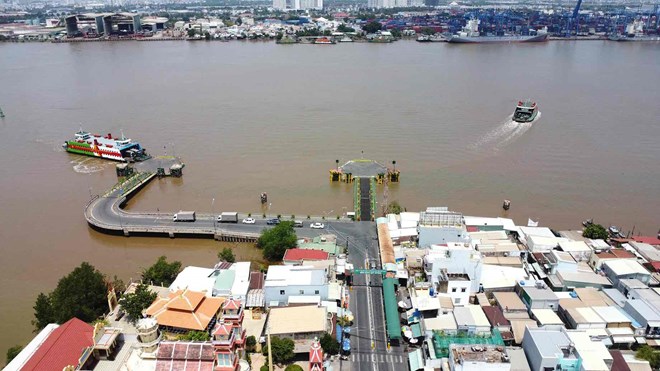
Cat Lai Bridge will directly connect Nguyen Thi Dinh Street (Cat Lai Ward, Ho Chi Minh City) with Dai Phuoc Commune (Dong Nai), eliminating Cat Lai ferry bottlenecks that are always overloaded.
The project has a total capital of more than 20,500 billion VND, implemented according to the PPP model combined with public investment. Dong Nai will construct the main bridge and approach road (more than 15,500 billion VND).
Ho Chi Minh City is in charge of site clearance and expansion of Nguyen Thi Dinh Street (about 4,975 billion VND). The project is expected to be completed in 2028.
Dong Nai 2 Bridge (Long Hung)
Dong Nai 2 Bridge (also known as Long Hung Bridge) creates a strategic connection route between National Highway 51 and Ho Chi Minh City Ring Road 3. The project is nearly 12 km long, of which the bridge section is 2.3 km, with a scale of 6 lanes for motor vehicles and 2 primary lanes, with a design speed of 80 km/h.
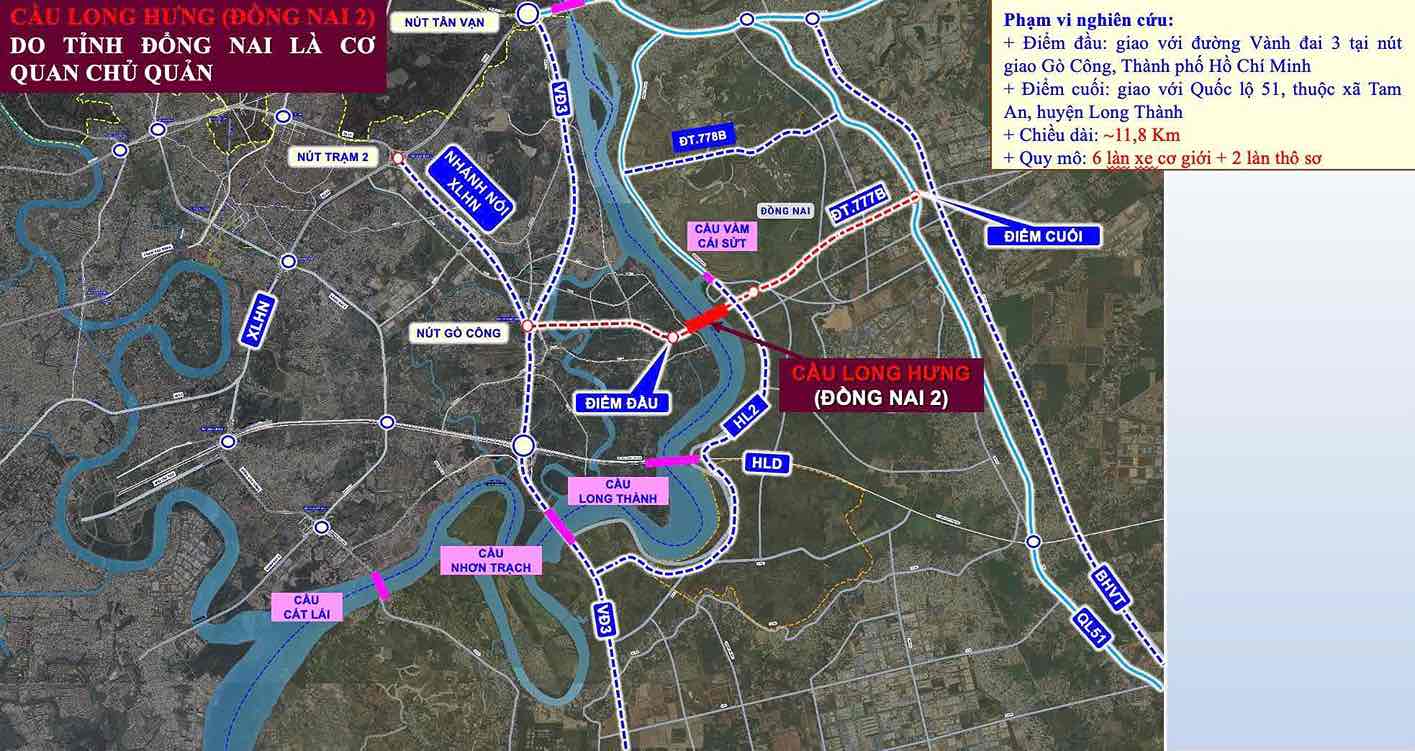
The project has a total capital of nearly 11,800 billion VND, implemented under the PPP and BT contract form in the period of 2025 - 2028.
Dong Nai is responsible for the construction of Long Hung Bridge and DT.777B route, while Ho Chi Minh City invests in the section from Go Cong intersection to Long Hung Bridge.
Phu My 2 Bridge
Phu My 2 Bridge is expected to reduce great pressure on the existing Phu My Bridge - a vital route for transporting goods from Cat Lai Port to the Eastern and Western regions.
The project is 6.3 km long, of which the section through Ho Chi Minh City is 4.6 km long, with a scale of 8 lanes including 6 lanes for motor vehicles and 2 mixed lanes.
The approach road on the Ho Chi Minh City side connects with the North - South axis (Nguyen Huu Tho Street), while building a 2-storey overpass running along Hoang Quoc Viet Street and additional branches connecting Dao Tri.

The total investment of the project is about 25,01 billion VND under the form of PPP, BT contract, implemented in the period of 2025 - 2028. Ho Chi Minh City will take the lead in implementing the main bridge and the approach road on the city side.
Dong Nai will deploy a route connecting Nguyen Ai Quoc to Phu My 2 bridge location (including site clearance).


