Not only does this bamboo provide a stable source of income, it also contributes to protecting land, preventing landslides, preventing social evils and creating local livelihoods so that people do not have to return home.
The journey to revive "dead" hills
In many Northwestern highlands, Bat Do bamboo is considered the "treet of endurance". Strong growth, few pests, good drought resistance and almost no need to fertilize makes bamboo an ideal choice for greening the hillside vacant land - a problem that has existed for many years in poor provinces.
Mr. Phan Seo Su - a ranger of Vinh Yen commune, Lao Cai province - clearly remembers the hills that were once seriously eroded: "The day before the rain, rocks and soil flowed like flood. No one thought they could grow anything there. When we brought in Bat Do bamboo, we just hoped it could survive. Who would have thought that after just 2-3 years, the whole hill would change color".
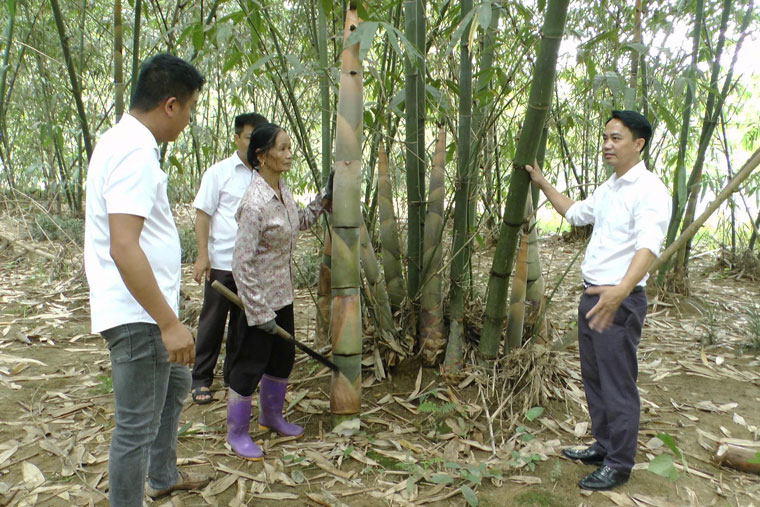
The bamboo root system is spread out and eaten deeply, helping to retain soil and prevent landslides effectively. Many areas that were once considered "dead hills" have now turned into lush green bamboo forests, improving the micro climate, retaining groundwater and limiting the strong flow during the rainy season. Local authorities have included Bat Do bamboo in the forestry development plan associated with poverty reduction, considering this a strategic crop that helps stabilize livelihoods in disadvantaged areas.
In fact, in many mountainous villages, Bat Do bamboo brings with it the opportunity to escape poverty sustainably. Thanks to the year-round bamboo harvest cycle, bamboo generates a steady source of income, reducing risks compared to traditional forestry plants.
The family of Mr. Lau A Vu (Nam Co commune) has been on the list of poor households for many years. 3 hectares of land behind the house are abandoned due to barren land. After receiving bamboo variety support from the project, Mr. Vu boldly planted the entire area.
"I just hope bamboo can survive, who will keep it as strong as a mountain buffalo", Mr. Vu said with a smile. From the third year, bamboo forests will be harvested evenly. Each bamboo shoots he sells for more than 20 tons, earning about 120150 million VND/year. Thanks to that, the family built a solid house and bought a new motorbike for their children to go to school.
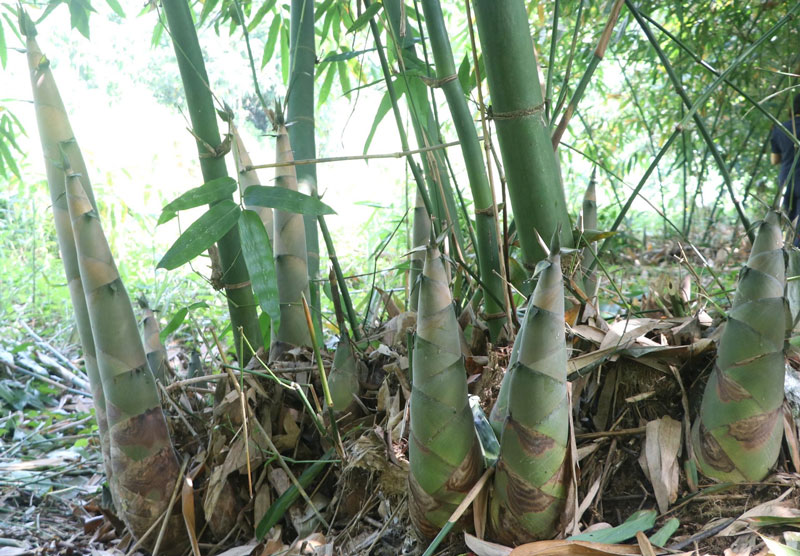
He said: "In the past, we were so poor that many young people left our villages to work for hire and suffered from alcohol and gambling. Now that there are bamboo forests, they are no longer going anywhere. At home, caring for bamboo and bamboo shoots is enough to survive".
In Lao Cai, the story of Ms. Lu Thi Dinh (Bao Yen commune) makes many women in the highlands more confident. She once planned to go to China to work for hire because she had difficulty raising her children. In 2020, thanks to the National Target Program, her family was supported with 1.5 hectares of bamboo seeds.
"Three years later, bamboo started to produce bamboo shoots. Each year I make a profit of 6080 million. I have given up the idea of working far away. At home, I take care of my children and bamboo, and find life completely secure, said Ms. Dinh.
According to commune statistics, after developing the Bat Do bamboo area, the poverty rate has decreased sharply; especially women and young people with stable jobs, no longer leaving the village to find spontaneous jobs as before.
In Son La, Mr. Thao Seo Nha (Nam Pan village, Tong Lanh commune) used to live in fear of landslides every rainy season. In 2019, the village simultaneously planted Bat Do bamboo to prevent flash floods and develop the economy. Up to now, bamboo shoots have brought his family 7090 million VND/year, and their lives have become more stable.
Mr. Nha pointed to the hill and said: "In the past, the whole village was worried about the rain. Now the land is consolidated, and there is little heavy rain. Treat the whole village".
Forest protection - protecting people, repelling social evils
One of the biggest changes that Bat Do bamboo has brought is creating on-site jobs, helping people not to leave their hometowns to work for hire - the cause of a series of social problems: black credit, gambling, alcohol, and even being scammed into selling labor.
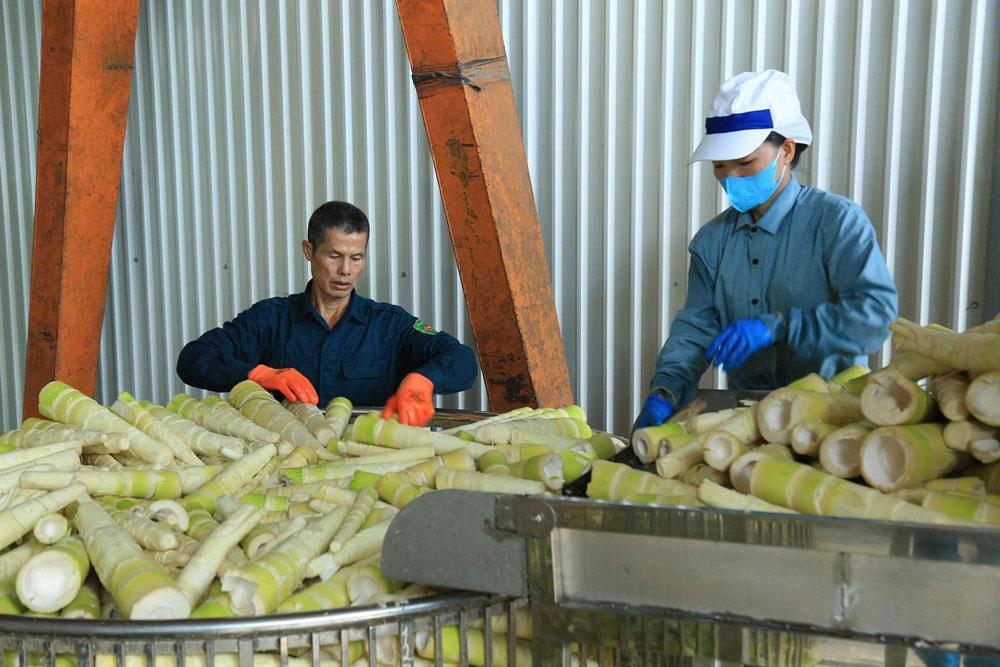
Mr. Ban Quang Huy - Chairman of Vinh Yen Commune People's Committee commented: "In the past, when going to the fields, young people would take each other to work far away. Many students fell into trouble due to lack of management. Since the bamboo tree was created, each household has had a job all year round. Stable income makes the village much more peaceful".
Self-management groups in the village also said that drug addiction and theft have decreased significantly after the bamboo area developed. People do not have to go into the forest to illegally exploit forest products, reducing pressure on natural forests - which are threatened by illegal logging and hunting.
In Nam Pan village (Son La), Ms. Mua Thi Chia, a member of the women's group to protect the environment, shared: "With bamboo, women of the village do not have to go into the forest to pick up firewood or dig bamboo naturally. The bamboo hill near the village is both safe and preserves the old forest. There are also few misfortunes".
Bamboo shoots, according to many grassroots officials, have become a "double shield": both protecting land and keeping people, and preventing the risk of evil that has penetrated remote villages.
Increasing the value of forests
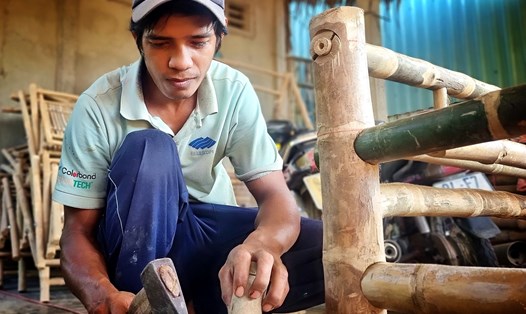
The development of the bamboo processing industry in the Northwest has helped increase product prices, creating a closed value chain. In addition to bamboo shoots, bamboo is also processed into handicrafts, pressed bamboo furniture, activated charcoal, biological tablets... creating more jobs in the locality.
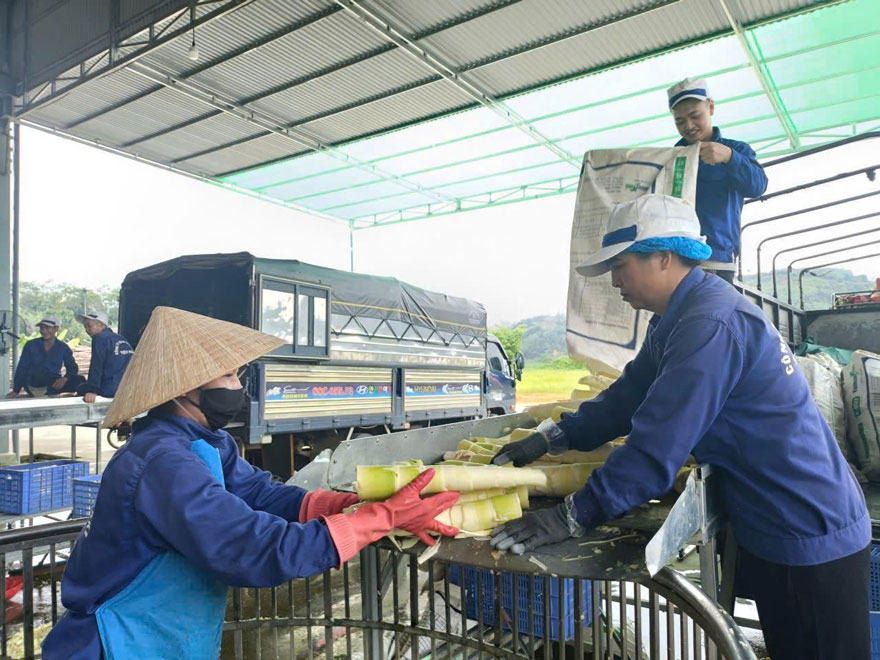
Mr. Kim Van Son - owner of a bamboo purchasing and processing facility in Lao Cai said - always prioritizes purchasing in the village to reduce transportation costs for people.
" Bat Do bamboo shoots are of good quality, crispy, fragrant, and easy to prepare, so the market is very supportive. We are committed to purchasing all year round, helping people not worry about being forced to price.
Many businesses also connect markets to Korea and Japan, opening up export directions for Vietnamese bamboo products.
Similarly, many communes in Son La are piloting a circular economic model from bamboo: bamboo shoots used for food processing; bamboo trunks for producing pressure boards and household appliances; bamboo leaves for biological fertilizer cultivation. This model not only increases economic value but also reduces agricultural waste, contributing to keeping the environment clean.
In the context of increasingly complex climate change, Bat Do bamboo is proving its important role in environmental protection. The ability to absorb CO2 4 times more than conventional trees, regenerate quickly and adhere well to the soil makes bamboo a "natural weapon" against erosion and landslides.
In Lai Chau, many villages that used to be natural disaster hotspots have now stabilized thanks to bamboo green covering. streams are less cloudy, the amount of mud flows down. During the rainy season, people no longer have to stay up all night to worry about landslides like before.
Mr. Phan Seo Su said: "People with bamboo should limit cutting down firewood from natural forests, and have stable livelihoods so they do not illegally destroy the forest. Environmental protection is not through a slogan, but through actual livelihoods".
The green color of change
Amidst the previously deserted mountain slopes, the Bat Do bamboo forests are now stretched straight, green, carrying new hope. People in the highlands have seen the future right on their land - no need to leave the country, no need to borrow, no longer worried about landslides.
Mr. Lau A Vu - the poorest person in the village - said a saying that made everyone feel warm: "In the past, I just needed enough to eat. Now that I have bamboo, I hope my children will have a good education. Bamboo feeds my whole family".
The aroma of bamboo shoots, the sound of bamboo leaves barging every morning, is now not only a familiar sound of the mountains and forests, but also an affirmation: green livelihood, clean environment, peaceful villages - it is completely possible when people are given the right "fishing rod".