From a strange tree variety to a "golden guarantee" of the highlands
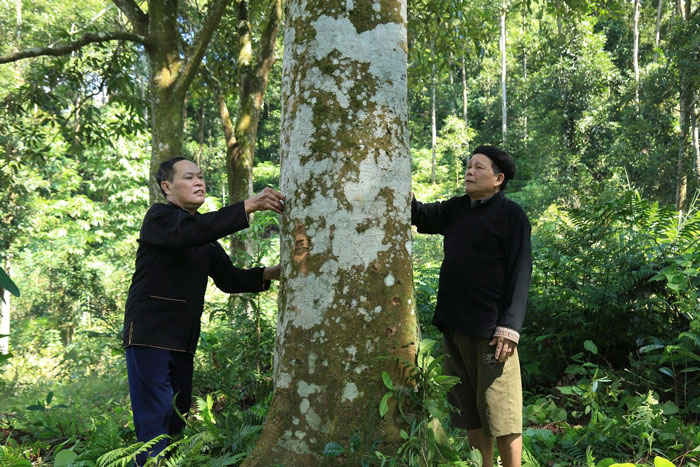
In the middle of a stilt house in the middle of a cinnamon valley, Mr. Ly Tien Thanh - Secretary of the Thap Cai Village Party Cell - recounted the story that many generations of Red Dao people in Vien Son still pass on: The first person to bring cinnamon variety to this area was Mr. Ban Phu Sau, more than a century ago.
While going to the forest, Mr. Sau discovered fragrant, spicy leafy plants and immediately brought them back to plant around his mat. "No one thought that those first cinnamon trees would create businesses for their children and grandchildren in the future," Mr. Thanh exclaimed.
Today, the people of Thap Cai set up an altar to Mr. Sau at the village communal house as a craft group. From a few original cinnamon trees, the whole village owns nearly 1,400 hectares of cinnamon, becoming the " cinnamon capital" of the Northwest.
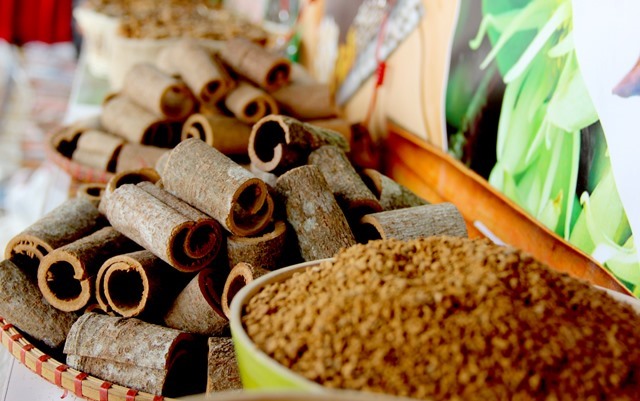
Vien Son cinnamon is famous for its high essential oil content, special aroma, and strong spicy taste - a quality that is only available in mountainous areas such as rocky mountains and harsh climates.
In 2017, Van Yen cinnamon - including Vien Son cinnamon - was granted a Geographical indication, paving the way to bring the cinnamon brand to the international market.
Not only crops, cinnamon has become a cultural symbol, a "golden guarantee" for the sustainable development of this land.
People make organic cinnamon to preserve land and forests
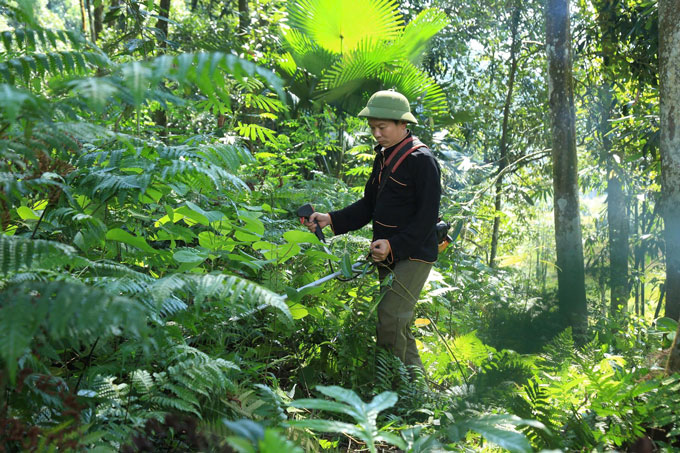
Before 2000, people's farming methods were completely natural. However, the appearance of herbicides has caused forest land to deteriorate, water sources to change color. Realizing the danger, the people of Vien Son, with the support of the government and forest rangers, have returned to the organic cinnamon model.
Taking us along the green cinnamon hills, Mr. Thanh said: "95% of the cinnamon area in the village is Organic, without using chemicals. Grass is distributed by hand, the leaves fall and decompose. Many households also grow herbs and native plants to keep the soil moist and improve the soil. Organic farming is more difficult, but that is the only way to keep the forest for the children and grandchildren".
Ms. Ly Thi Sanh, one of the leading households in organic cinnamon production, confided: "In the past, we used herbicides to be really free, but the soil and bottles and water in the stream were cloudy. Now I clean up, the land is reclaimed, the trees are healthy, and I can sell them at a higher price. My children and grandchildren still live here, we have to protect the environment for them.
Organic cinnamon helps increase product value by 1530%, but more importantly, it creates an environmental protection mechanism right in daily economic activities.
Preventing evil from the root
Cinnamon not only brings in income, but also keeps young people in the village - an important factor in preventing social evils in poor areas.
Mr. Ly Tien Thanh shared: "In the past, we were so poor that many young people left the village to work for hire, easily getting caught up in drugs and gambling. Now that we make cinnamon, we have work all year round, and have a good income, so the misfortune has decreased significantly. In recent years, the village has had no new drug addicts, nor has there been any illegal deforestation or exploitation."
Thap Cai Village maintains a self-managed forest protection team, 2-3 patrols per week. People patrolled in groups, checking the forest and helping each other to divide grass and clear the road. Many young men who used to work for hire have returned to start a business with a few hectares of cinnamon, becoming a forest protection shock force.
Mr. Ly Van Keng (29 years old) - who used to work as a worker in the South, shared: "In the past, when I went to work far away, my friends invited me to come and ask me for many things. Since returning to his hometown to make cinnamon, having money, and being close to his family, he can't sleep at night worrying about anything bad. Cinnamon both gives me income and a stable job so I don't get into trouble."
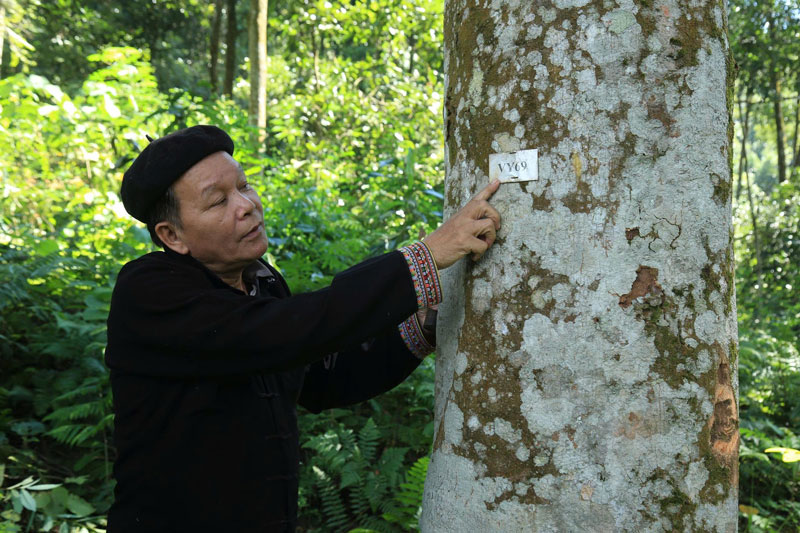
In Vien Son, the main forest is the "security belt" - green forest for a peaceful village.
Raising the poor to a new position
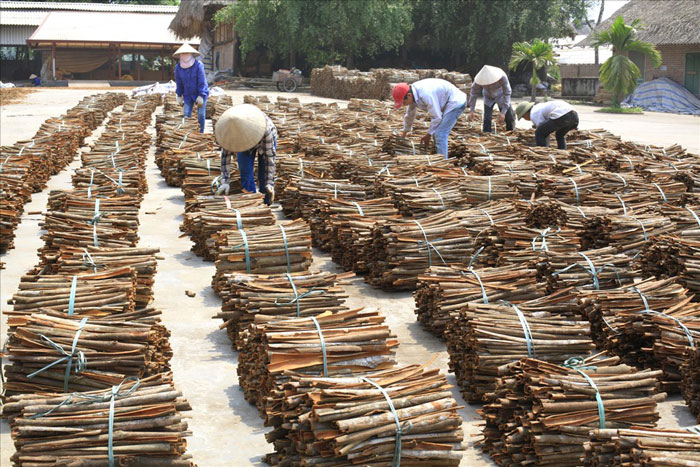
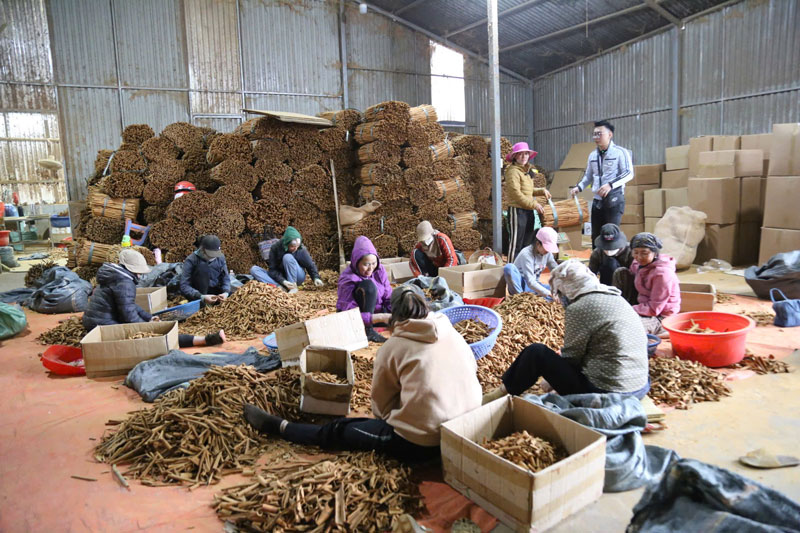
With a cycle of 1015 years, cinnamon brings high and stable income. From the 7th year, the skin can be peeled off, each hectare brings in 500700 million VND. Many large cinnamon hills help households become "forest billionaires".
Currently, Vien Son has nearly 300 households owning over 10 hectares of cinnamon, with assets of tens of billions of VND, which is not uncommon.
The family of Mr. Ly A Lu, a household with 12 hectares of cinnamon, said: "In the past, it was the poorest in the village, and we had to borrow rice to eat. But since cinnamon has entered the harvest season, my family earns 1.5 billion VND each year. Growing cinnamon helps me to be more decent, my children get to study well, and there is no longer the scene of young people in the village going to work for hire and then getting into trouble."
The average income in 2024 of Thap Cai people will reach 54 million VND/person, expected to exceed 60 million in 2025. The remaining poor household is just lonely elderly people or people with serious illnesses.
The special thing is that despite rapid economic development, the Red Dao people in Vien Son still maintain their cultural identity such as the Cultural Ceremony, the Dancing Festival, the worship of the Chinese ancestors... These cultural features have become a natural "brake" against against against against foreign travel.
The dream of bringing cinnamon to the high-end market
Xuan Ai commune currently has more than 6,000 hectares of cinnamon, of which 2,000 hectares meet organic standards, more than 50% of the output is exported to the US, Japan, Korea and the EU. This is one of the largest cinnamon areas in Vietnam.
Mr. Luu Trung Kien - Secretary of the Xuan Ai Commune Party Committee - said: "In the coming period, the commune aims to expand the area of organic cinnamon to 4,000 hectares. Making organic cinnamon helps prevent soil degradation, water retention, climate change and is also a sustainable way to prevent social evils in poor areas. When people have a good livelihood, they will stick to the forest and stay away from evil.
The commune is also building "clean" and harmless green village models, assigning youth unions to manage village roads, women to mobilize waste collection, and the elderly to participate in water protection. Small but quiet activities create a sustainable foundation for green development goals.
Looking from the steep cinnamon hill down to Thap Cai valley, it is easy to see a strong change: newly built houses are growing, children are going to school, cinnamon trucks follow the factory. It all started with the cinnamon trees that are decades old - the tree that has helped people escape poverty and get rich sustainably.
In Vien Son, economic development - forest protection - disease prevention - environmental protection - is not a wall slogan, but has become a daily habit of every family.
Vien Son cinnamon is a symbol of how a poor community can rise up through their own strength, with respect for nature and pride in the green forest.
From Cai Tower, the story of "old from the clean forest - peace from the green livelihood" is still being written, bringing Vietnamese cinnamon incense further on the world map and spreading a strong message about forest conservation, fighting evil and protecting the environment of poor areas.
According to local people, the cinnamon cycle usually lasts from 10 to 15 years, and can be peeled off by the 7th year. If harvested white, 1 hectare can earn from 500 - 700 million VND.
Mr. Ban Phuc Hien, former Chairman of the People's Committee of Vien Son commune, shared: The cinnamon tree has truly become a "golden tree" on Vien Son land, people call this a "happy tree", a sustainable "flower to eliminate hunger and reduce poverty".