Bringing local culture into tourism products
On weekends in the Cham village along the Hau River (in Vinh Hau commune, An Giang province), groups of tourists from inside and outside the province come to visit, take photos, enjoy traditional cuisine and learn about the cultural life of local people. The bustling atmosphere makes many households in the village clearly feel the positive changes since doing community tourism.
Mr. Abdul Alim - Director of An Giang Cham Village Trading and Tourism Co., Ltd. said that in the past, people in Cham Da Phuoc village mainly lived by brocade weaving, fishing and small business. Unstable income often made life difficult. In recent years, when the locality encouraged tourism development based on cultural identity, he has invested in and built Cham Da Phuoc Village rural market (Ha Bao 2 hamlet, Vinh Hau commune, An Giang province) as a place to live and welcome visitors.
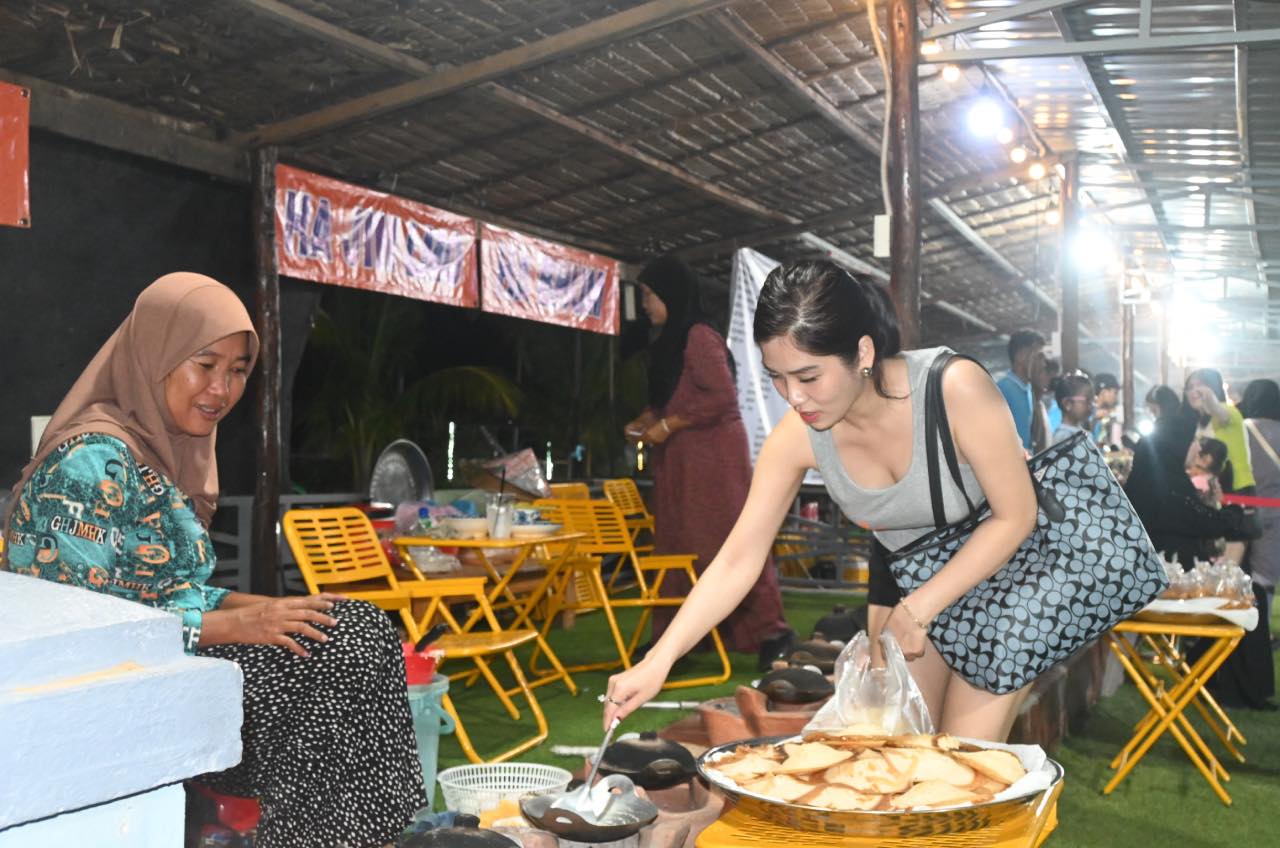
Tourists who come here really like to watch brocade weaving, hear about the customs of the Cham people, and then enjoy traditional dishes. Thanks to that, every week the family also has more income and a more stable life," Abdul Alim shared.
According to Mr. Abdul Alim, many other households in the village have also started to participate in the chain of activities serving tourists. Some people open stalls selling brocade products, some cook typical dishes, some guide tourists to visit the mosque, learn about customs and habits. Thanks to the joint efforts of the community, Da Phuoc Cham village has gradually become a familiar destination for tourists who want to explore indigenous culture.
Unique cultural experience
The most attractive point for tourists when coming to Cham village is the unique cultural experiences that are still preserved by the people through many generations. Walking around the small roads in the village, tourists can easily see images of Cham women sitting next to looms, meticulously weaving brocade with sophisticated patterns. These are not only handicrafts but also the crystallization of tradition and the ingenuity of Cham women. Besides weaving, religious rituals, traditional costumes, and typical cuisine have also become highlights attracting visitors. Many tourists are excited to try on Cham costumes, enjoy dishes such as curry and traditional cakes.
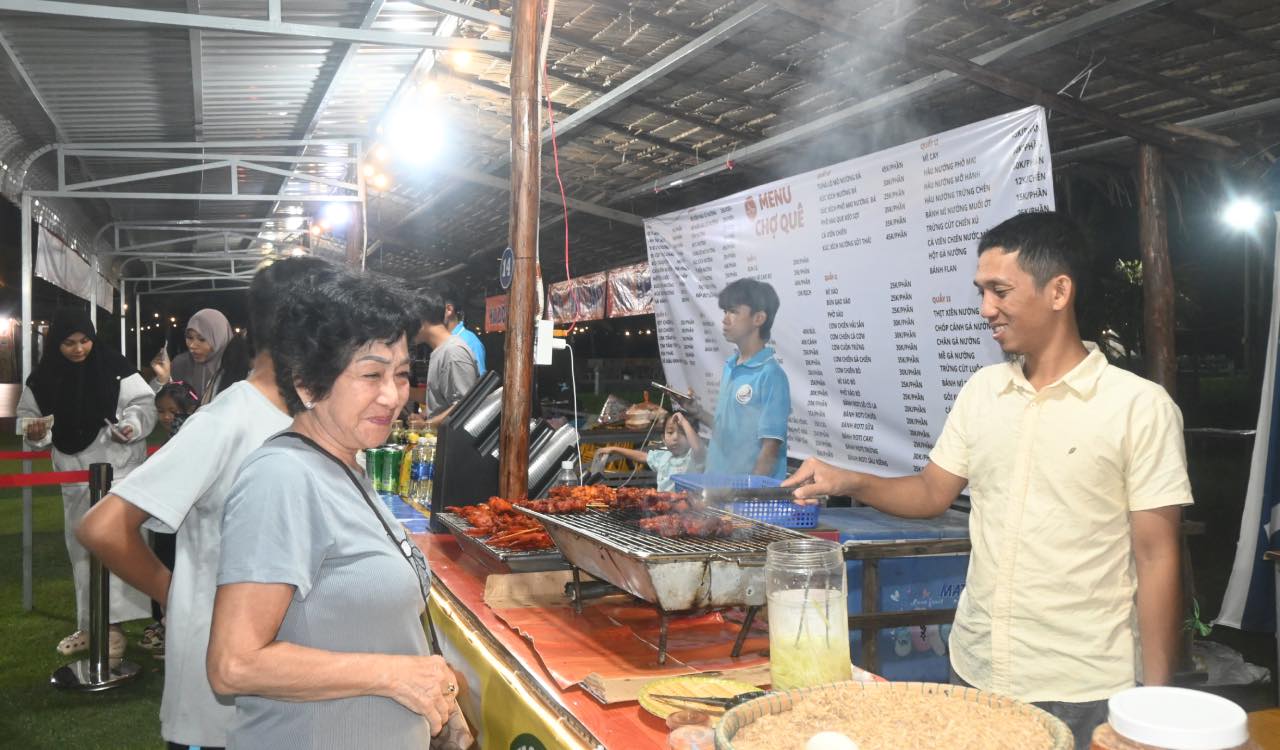
Ms. Dong Anh Thu, a tourist from Khanh Hoa province - said that the trip to the rural market of Da Phuoc Cham Village brought many interesting experiences. "I have heard a lot about Cham culture, but when I came to the place, I saw all the uniqueness. People are very friendly, enthusiastically introducing customs and traditional crafts. This is a trip that is both relaxing and helps to understand more about culture," Ms. Thu said.
Preserving the soul of culture in the new rhythm of life
Amidst the modern pace of life, the Cham villages along the Hau River still retain their peaceful beauty with stilt houses, majestic cathedrals and the sound of shuttles steadily moving on the weaving frame. The development of community tourism not only brings income but also helps traditional cultural values to be preserved and spread.
Mr. Du So - Secretary of the Party Cell of Ha Bao 2 hamlet (Vinh Hau commune, An Giang province), said that Da Phuoc Cham village currently has more than 2,500 people, mainly Cham people living for a long time. In order to create sustainable livelihoods for people, the locality has coordinated with individuals and businesses to build a community tourism model, in which Da Phuoc Cham Village rural market is considered the core.
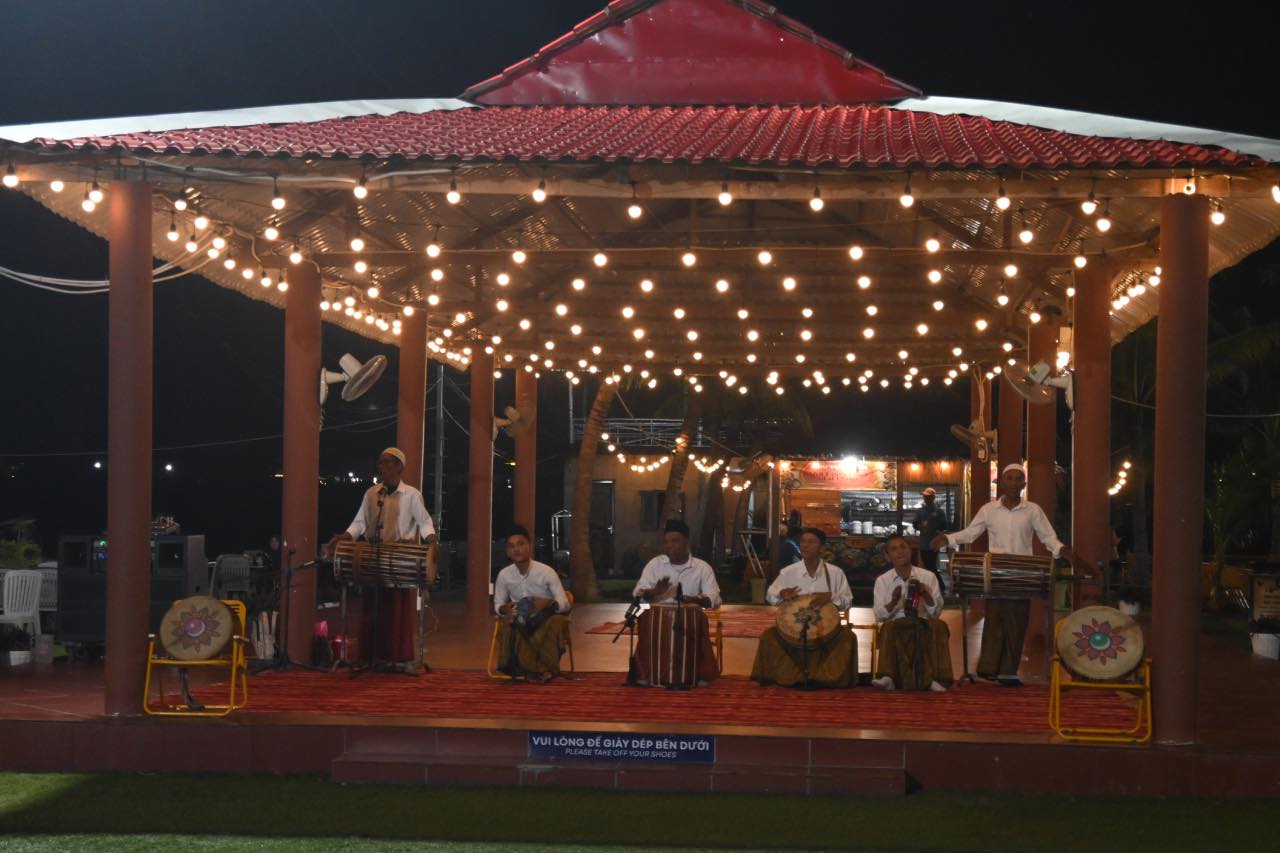
Every weekend, as more and more tourists come, the villagers are even more proud of their cultural identity. From everyday stories, brocade panels, to traditional dishes... all have become a bridge to bring Cham culture closer to tourists," Mr. Du So said.
According to Mr. Du So, the development of community tourism not only contributes to increasing people's income but also creates conditions to preserve and promote the traditional cultural values of the Cham people. Many households participate in selling goods, providing services, and performing traditional crafts, thereby having an additional stable source of income.