
Difficulties of frontline medical facilities
Ban Lien Health Station currently has 13 officials, of which 7 people work at the main station and 6 people at Nam Khanh subdivision station. The team includes 3 bachelors in Public Health, 4 doctors, 2 nurses, 2 nurses and 2 pharmacists.
With this force, the work of station duty and health care for people has been basically maintained, but the accompanying pressure is very high. Medical staff have to see a doctor during the day and be on duty for emergency care after work, with almost no days off.
"The workload is relatively large, health station staff have to perform medical examination and treatment during the day and have to be on duty for emergency care after work. Therefore, this is also a difficult obstacle for health stations" - Doctor Nguyen Van Son - Head of Health Station shared
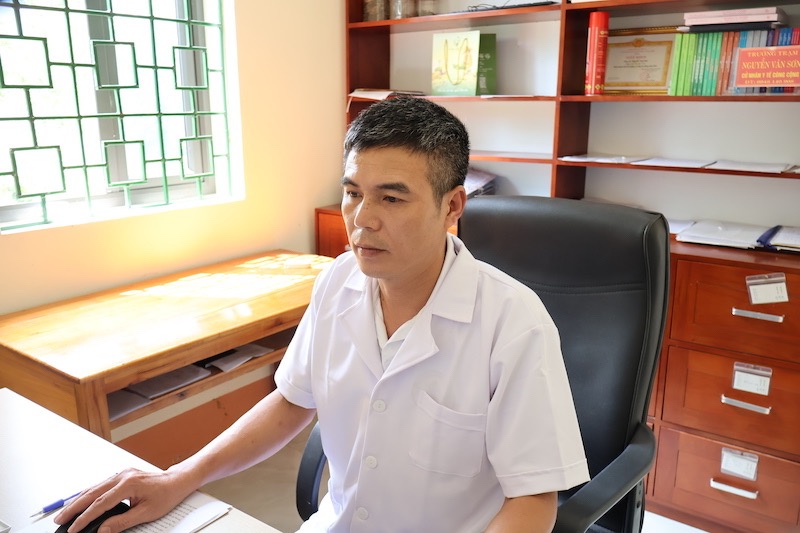
One of the biggest challenges for the station is the referral of patients. Normally, after first aid, officers will quickly contact Bac Ha Regional General Hospital to ask for support for transportation vehicles and a specialist. However, when storms and landslides occur, this becomes almost impossible.
In September 2024, Typhoon No. 3 Yagi made landfall, causing Ban Lien to be isolated for nearly a week, and communication between medical facilities was interrupted.
At that time, the pregnant woman Lieu Thi Riem (31 years old) - who had a history of hygiene and was prescribed to be born at a district hospital - was forced to go to the station. Despite having to face such an urgent situation, the medical team together successfully delivered the child, helping the mother to have a full moon.
The baby's first crying sound in the midst of the storm became a testament to the courage and sense of responsibility of grassroots health care.
Despite facing such difficulties and conditions, Ban Lien Health Station still fully implements the expanded immunization program according to the plan of the Ministry of Health. In September, hundreds of children under 1 year old and pregnant women were vaccinated with important vaccines such as pharyngitis - whooping cough - tetanus, hepatitis B, to measles vaccine, rubella...
The station also deployed a cold chain system to preserve vaccines, organize vaccination according to the one-way principle, ensure safety and avoid cross-infection. Before the vaccination, medical staff conducted a screening examination, then monitored the reaction and prepared the medicine for timely treatment. Thanks to that, the rate of children under 1 year old who are fully vaccinated every year in the commune always reaches 9597%, an encouraging figure in mountainous areas.
Urgently support the upgrading of facilities and medical equipment
According to the station's leaders, the most urgent support at present is investment in upgrading facilities, medical equipment and training human resources.
Investing in more modern medical machinery and equipment will contribute to improving the quality of medical examination and treatment, attracting more people to health stations and reducing the burden on upper-level hospitals - Mr. Son shared.
The head of Ban Lien commune health station expressed his hope that in the next 5 years, Ban Lien commune health station will have 1-2 doctors working on the payroll at the commune health station. There will be ambulances to transport patients to the upper level for treatment, the health station will have ultrasound machines and testing machines to support the diagnosis and treatment of patients.
Commune and district authorities and organizations have accompanied the station in mobilizing people to get vaccinated, while calling for social resources to support facilities. People also contribute to repairing the infirmary, supporting the daily life of medical staff, especially during storms and traffic disruptions.
Many social organizations and volunteer groups have donated medical equipment and medicine, helping to reduce some of the immediate shortages. This is an important factor for grassroots health care in Ban Lien to maintain sustainable operations in the context of many difficulties to face.

Night shifts, days of overcoming storms and floods to examine and treat patients... have long become a part of the daily work of doctors in Ban Lien. They silently contribute like persistent "white fires", keeping the lives of the people in the mountains and forests.
For that fire to continue to burn, it requires more cooperation and support from the health sector, the government and the community. Taking care of the health of the people in mountainous areas is not only a professional task, but also a responsibility and a responsibility of the whole society.