
Many changes
In previous years, the discovery of rare monkeys, parrots, and birds in the garden was often considered a "forest trophy", many people brought them home to raise or give them or give them away. But in recent years, that picture has been gradually changing.
On November 18, the Center for Rescue - Conservation and Development of Life organics of Phong Nha - Ke Bang National Park received a particular Mien Dien Flower Kite voluntarily handed over by Mr. Vo Hoang Viet (Cua Tung commune). The bird flew into the house in a state of exhaustion and broken feathers. "I only keep it for temporary care, because I know this is a type that needs protection, I have to report it immediately," said Mr. Viet.
Not long before, on October 27, Mr. Ho Van Duong (rin Rin village, Truong Son commune) handed over a rare pig-tailed monkey to the authorities. During a propaganda session in the village, he heard an explanation about the responsibility to protect wild animals and understood that monkey farming was a prohibited act. "I thought I would save it and raise it for fun. Hearing the staff say, I knew I had to hand it over, he said.
Another case occurred on October 13, after a heavy rain, a royal Redaging bird, a heron species in group IB - flew into Mr. Vo Xuan Quoc's garden. Mr. Quoc immediately reported the forest rangers.
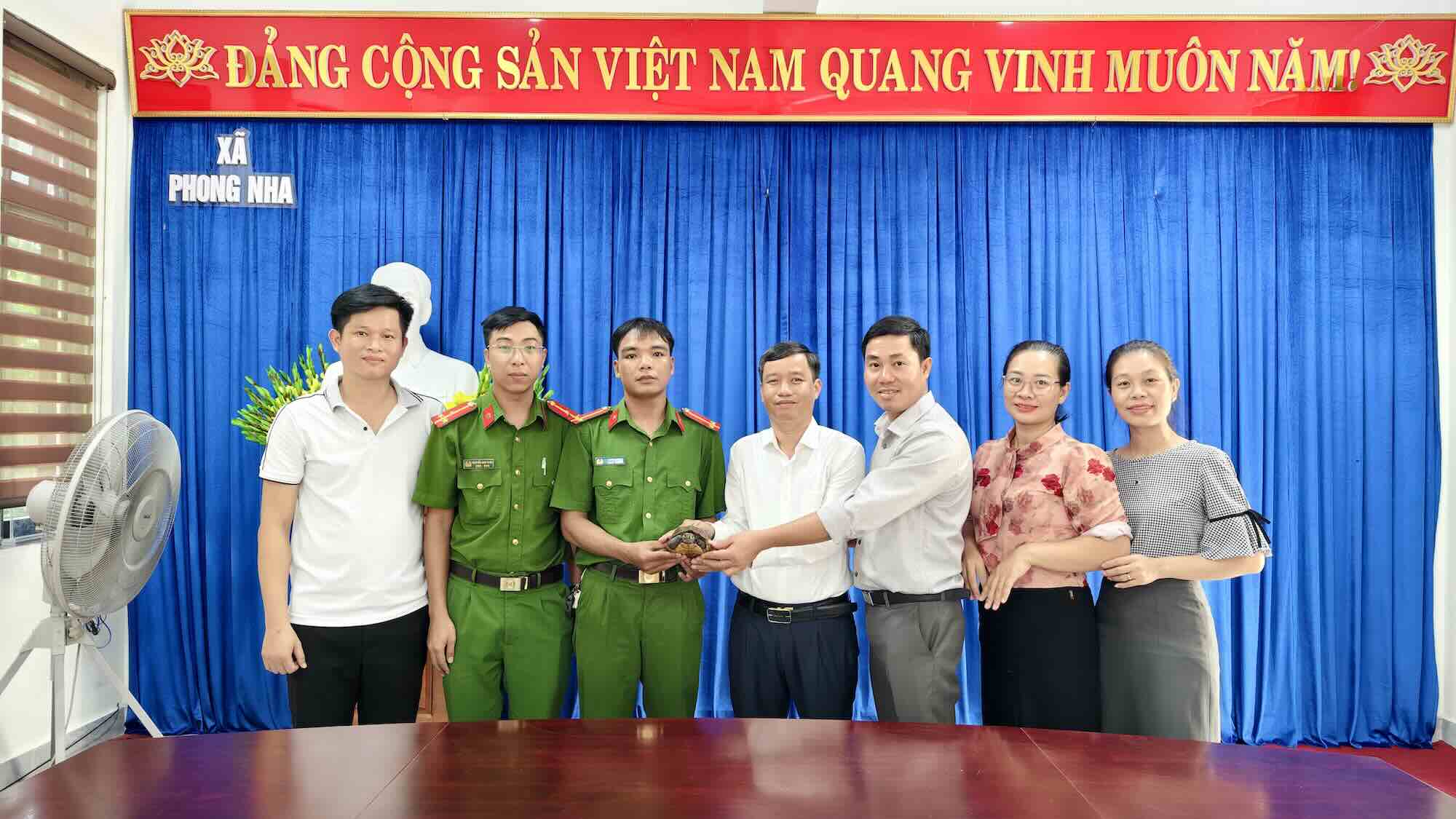
These individuals were all processed by the forest rangers and handed over to the Rescue Center for care and recovery before being released back into the wild.
Deputy Head of the Provincial Forest Protection Department, Mr. Tran Manh Luat said that people have recognized wild animals as the property of the forest and the ecosystem. This is a clear change in perception compared to before.
This change did not come naturally. In mountainous communes such as Truong Son, Tuyen Hoa, Vinh O, the rangers, police, border guards and authorities have maintained many forms of propaganda suitable for the people.
Propaganda to the people
Many talks were held right at the village cultural house; officials went to the household to guide the identification of rare animals; models of "village without tree traps" and "family without hunting" were deployed. The content focuses on: priority species protection, sanctions, legal responsibility and ecological significance of each animal species.
Only when people fully understand why protect, will they change their behavior, Mr. Luat emphasized.
In addition, local authorities also closely coordinate with the Rescue Center to receive, handle, and release animals according to procedures, creating trust for people when handing over.
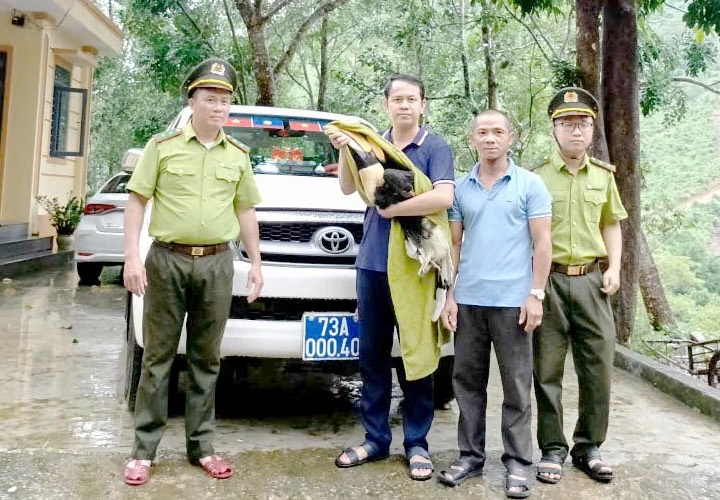
Currently, many households have given animals to become "voluntary propagandists", explaining to the villagers about the benefits of biodiversity and legal risks of illegal captivity.
To maintain and strengthen this positive behavior, the Quang Tri Provincial Forest Protection Department said that in the coming time, it will deploy three key groups of solutions, enhancing multi-modal communication: organizing small training classes for household groups; distributing leaflets with images classifying rare species; applying social networks of the village; creating short videos in Bru - Van Kieu for the people.
At the same time, enhance the role of grassroots government: each commune establishes a quick response team when receiving reports about the border; village officials are responsible for monitoring and encouraging households not to use homemade traps and guns.
In addition, increase inspection and handling of violations: forest rangers coordinate with the police to control high-risk points; strictly punish illegal detention and trading; and promptly reward people who voluntarily hand over.
Mr. Luat said: "People have changed, our task is to maintain that change with correct information, quick feedback and consistent action".