
On March 28, the Institute of Economics and International Law in coordination with relevant units organized a scientific conference with the theme "Pearlification - Trends of civilized burial and prospects in Vietnam".
Prof. Dr. Vu Minh Giang, Vice President of the Vietnam Historical Science Association, said that in the context of modern society seeking both humane and environmentally sustainable burial methods, the gemification of remains has emerged as a new trend rich in meaning and with development potential in Vietnam.

However, for the gemification of remains to truly become a popular trend, there needs to be synchronous preparation in terms of technology, legality and social awareness. People need to be provided with complete and transparent information about the process, cost and meaning of this method; at the same time, integrating cultural - spiritual elements into the approach will help reduce initial concerns and create wider acceptance in the community.
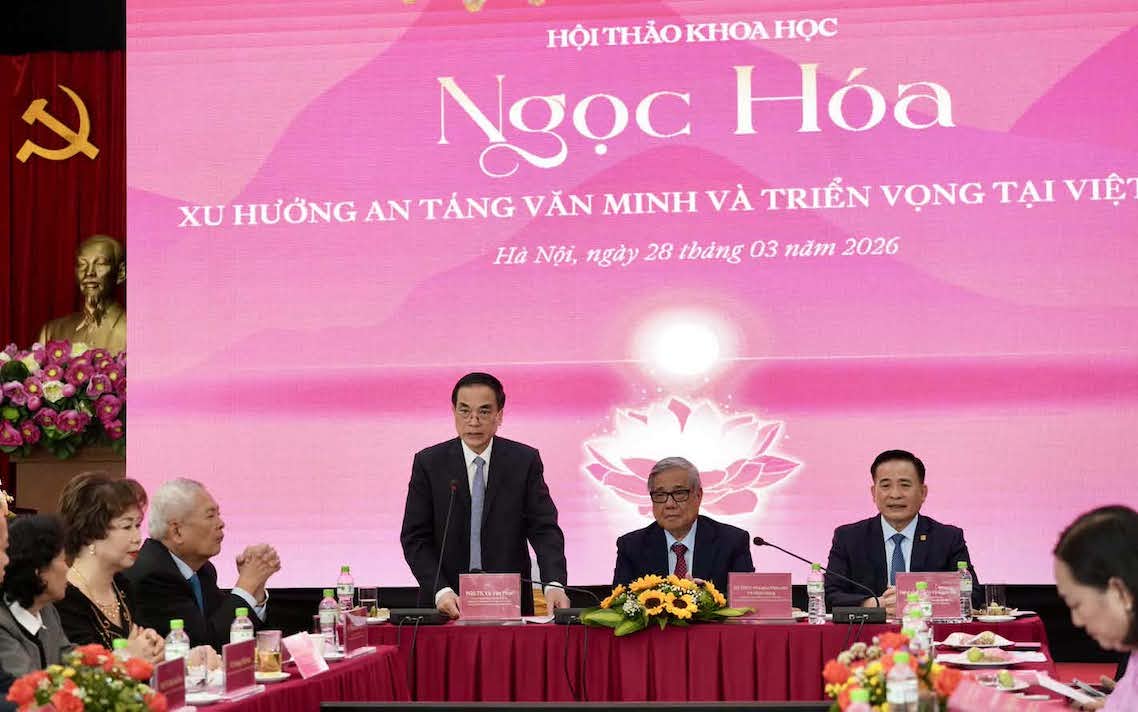
Assoc. Prof. Dr. Vu Van Phuc - former Editor-in-Chief of the Communist Review - assessed that compared to other burial methods (ground burial, water burial...) Ngoc hoa - preserving Linh Ngoc - brings unique and sustainable honor to the deceased, both ensuring solemnity, and increasing the connection between relatives and the deceased and making an important contribution to protecting land resources and protecting the environment. The form of Ngoc hoa is suitable for the tradition of filial piety of our nation.
Mr. Phuc said that if implemented with a cautious, transparent approach and a clear legal basis, this form can contribute to building a civilized funeral system, saving land resources and being environmentally friendly, while still being consistent with the cultural traditions of Vietnamese people.
Assoc. Prof. Dr. Bui Hoai Son - National Assembly Delegate working full-time at the National Assembly's Committee for Culture and Society - said that Vietnam is undergoing rapid urbanization, with increasingly high population density in major cities. In that context, land funds for cemeteries are becoming increasingly limited, while the demand for living space, public space and urban infrastructure is increasing.
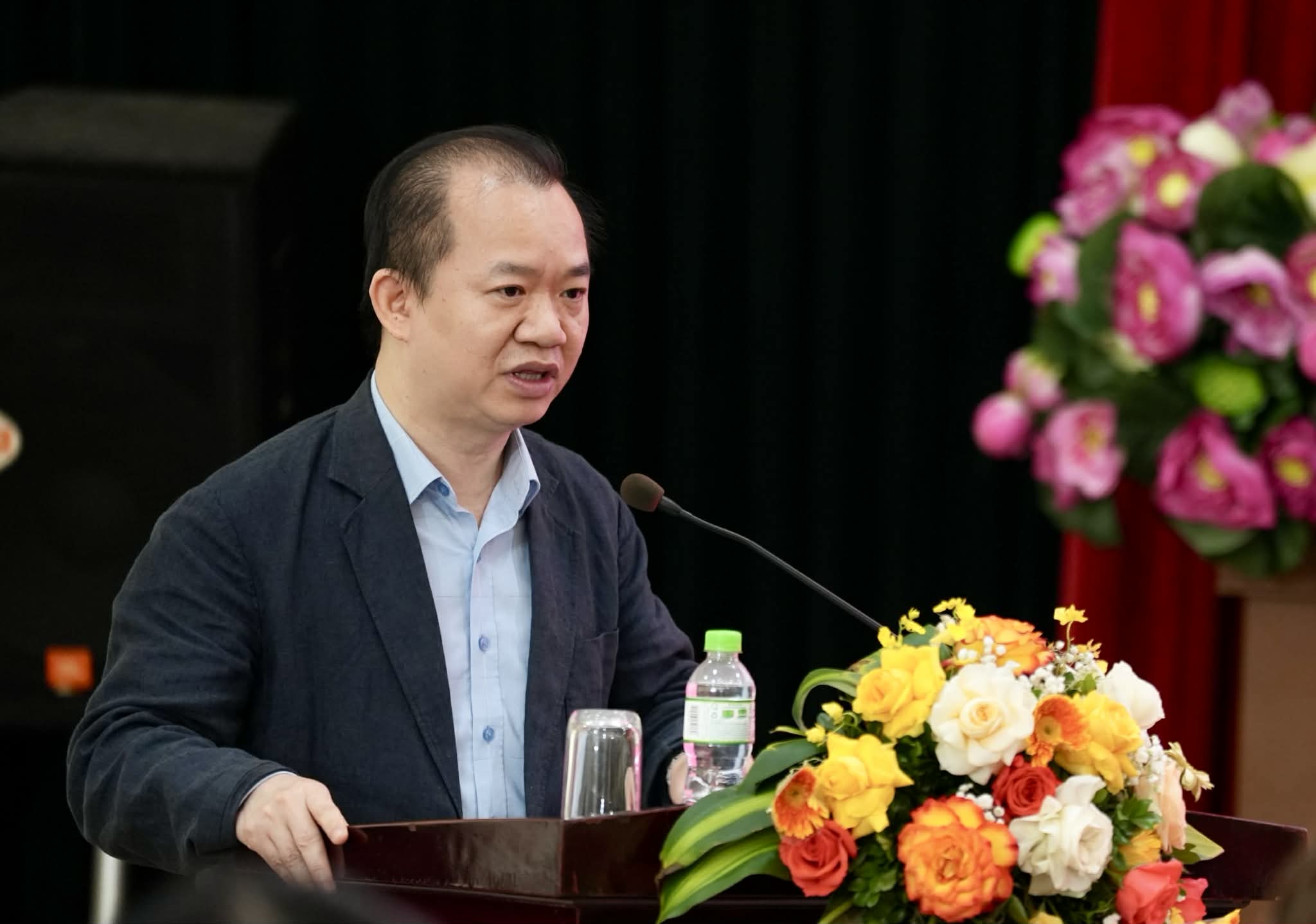
This reality has caused many localities to adjust cemetery planning in the direction of focusing, reducing burial area and encouraging more land-saving burial forms.
Cremation is therefore gradually becoming a popular trend in many major cities such as Hanoi, Ho Chi Minh City or Da Nang. As cremation becomes an increasingly familiar choice of society, the forms of preserving ashes after cremation also begin to diversify.
In that context, burial jade can become a new choice for families who want a form of commemoration that is both solemn, sustainable and convenient for preserving family memories.
However, Mr. Son believes that the development of new burial forms should always be placed in the basic principle: respecting tradition, ensuring humanity and towards sustainable development. The goal is not to completely replace traditional forms, but to expand more civilized choices, suitable for modern social conditions, thereby helping each family to find a way to commemorate loved ones that is both solemn and suitable for their circumstances.
The process of Crystallization, English name called "cremation ashes crystallization", translated as crystallizing the ashes of the deceased, specifically turning the ashes after cremation into diamonds or other crystals, also known as Linh Ngoc, is a developing trend, especially as a way to personalize and commemorate the deceased.
This process includes carbon purification from ash and then processing at extremely high temperatures and pressures to form diamonds or other crystals.


