
The temple dedicated to King Dinh Tien Hoang is a relic located in the Hoa Lu ancient capital heritage complex (Ninh Binh province). The location of the temple belongs to the center of Dong citadel of the ancient capital Hoa Lu. This is a place to worship King Dinh Tien Hoang at the same time, his parents and their sons, and there are statues of generals of the Dinh Dynasty.
King Dinh Tien Hoang (924 - 979), officially named Dinh Bo Linh, was the emperor who founded the Dinh Dynasty, Dai Co Viet in Vietnamese history. He was the person who suppressed the rebellion of 12 warlords, unified the country and became the first emperor of Vietnam after the Northern period.
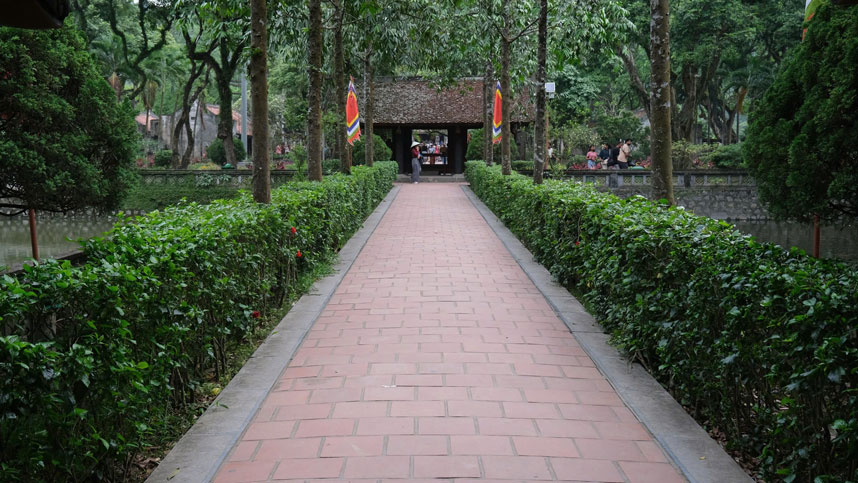
Although it has been restored through many dynasties, the work still bears the architectural style of the Later Le Dynasty, the 17th century. In particular, the temple is an important relic belonging to the special protected area, recognized by UNESCO as a world heritage site in the world cultural and natural heritage complex of Trang An scenic spot in 2014.
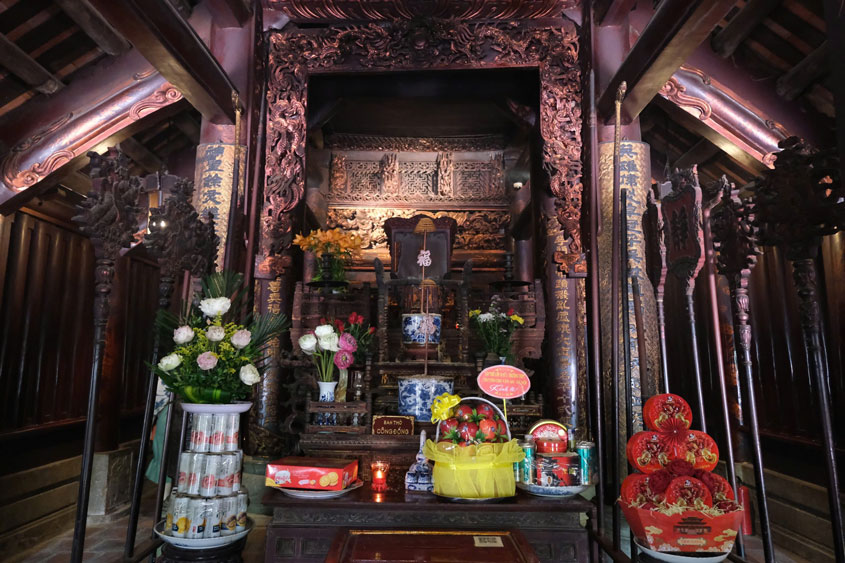
The temple dedicated to King Dinh was built in the style of "internal work, foreign affairs". The inner hall consists of 3 buildings: Bai Duong, Chinh Cung and Thieu Huong. The Bai Duong building is for community altars. The Thieu Huong building is dedicated to mandarins of the Dinh Dynasty.
And the Main Palace displays statues of King Dinh Tien Hoang and princes. The statue of King Dinh Tien Hoang is solemnly carved in the posture of serving the court, wearing a Binh Thien hat, wearing a royal robe, and sitting on the throne.
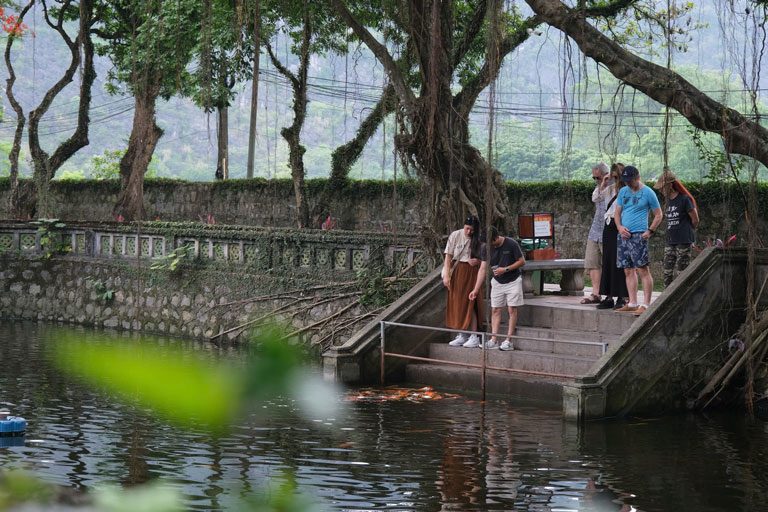
Ngo mon quan is the outer gate leading to the temple. In the temple grounds, there is a semi-circular lake (a lake built in the style of ancient royal architecture).
Going through the main path, passing through two large pillars, you will reach the dragon courtyard. In the middle of the dragon courtyard, there is a stone dragon bed surrounded by embossed carvings. On both sides of the dragon slope, there are two stone nghês worshiping, carved on two monolithic blue stone blocks. Gradually moving inside, there is a stone dragon bed in the middle. On both sides of the dragon bed are statues of two green stone nghês worshiping from the 17th century.
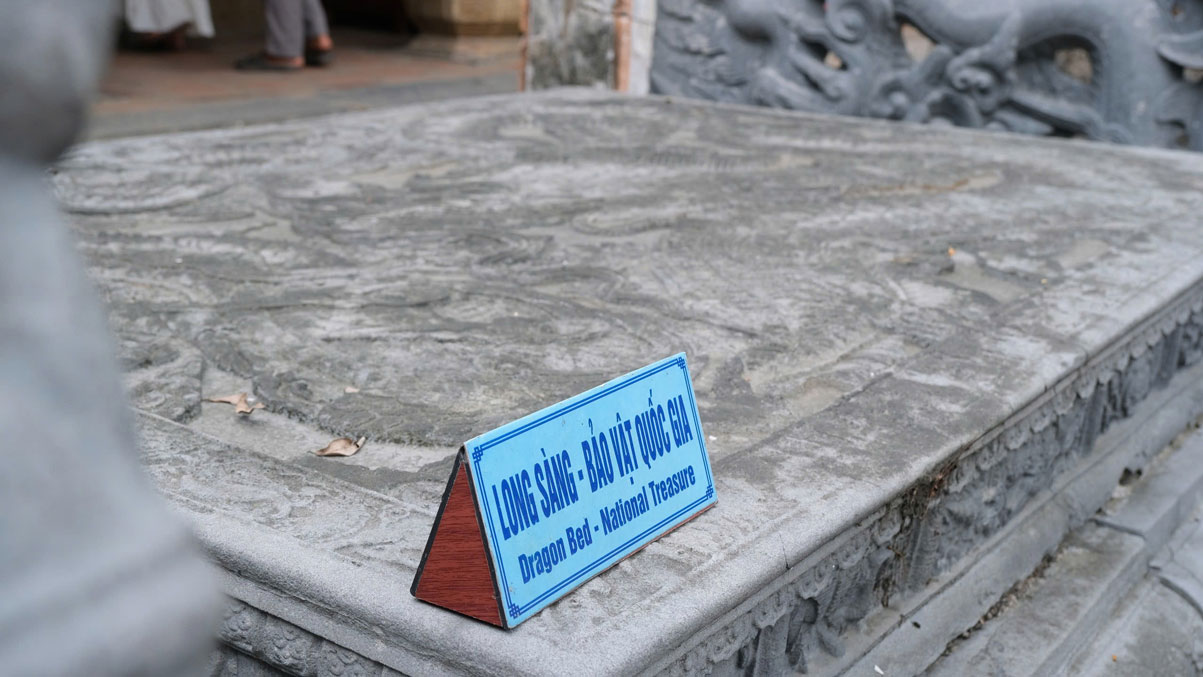
The long bed symbolizes the dragon pedestal, so it is carved with very beautiful motifs. The two handrails of the long bed are two dragons bending on high clouds. The long bed in front of Nghi Mon Ngoai and in front of Bai Duong temple of King Dinh Tien Hoang has been recognized as a national treasure of Vietnam.
Dinh King Temple is also a unique artwork with many precious artifacts preserved, such as palace building bricks engraved with the words Dai Viet quoc quan thanh chuyen, Buddhist scripture pillars engraved with Sanskrit characters, steles...


