
Den Pagoda is believed to have been built during the reign of King Ly Than Tong (1116–1138) on the foundation of the old house of Zen Master Tu Dao Hanh's father and mother - the place where the Zen master was rumored to be born in Lang village.
Initially, this place was a temple named after the words "Dan Thanh Co Tu" built on the old house foundation to worship the Zen master's parents, the monk Do Sat Tu Vinh and Mrs. Tang Thi Loan.
Legend has it that when Tu Dao Hanh's descendant became King Ly Than Tong, the temple became "Dan Co Tu" pagoda, another name is "Co Son Tu". Folk people call it simply "Nen Pagoda" because "Dan Thanh Co" means "The foundation gives birth to Saints".
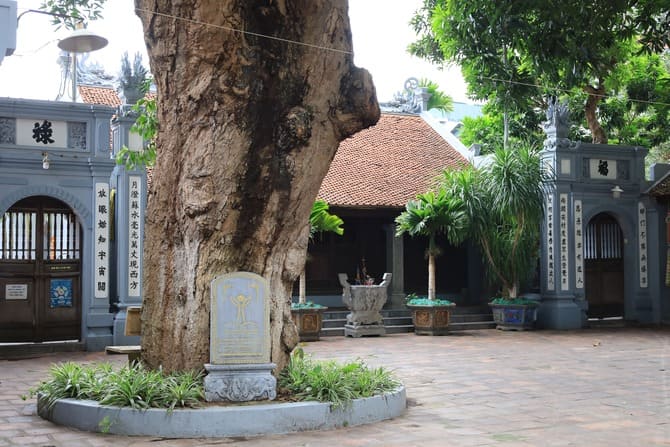
Den Pagoda is built in a South direction with many architectural units forming it. The architectural items are arranged in depth of the relic, including: Tam Quan, Ta - Huu Mac, Tien Duong, Thuong Dien, Cung Thanh, To house, Mau house, Vong house, Tinh Xa area and auxiliary works. Surrounding the architectural block is a large green garden creating a separate and quiet space for the meditation gate.
The main pagoda includes the Tien Duong building with 5 compartments and 2 compartments, the Thuong Dien with 2 vertical compartments and the Forbidden Palace worshiping Saint Phu and Saint Mau in the back, creating an architecture with a flat layout in the form of the letter "Cong".
In addition to the main architecture, Den Pagoda also has many architectural works such as the ancestral house, Mother's house, Vong house, Tinh Xa area and auxiliary works... These works are all made in the traditional style, harmonizing with the overall plan of the relic, creating a majestic and spacious appearance for the ancient pagoda.
Through many ups and downs and changes of history, Den Pagoda still preserves a large number of unique and rare artifacts, reflecting the religious content of the relic, such as: bronze bells, bronze offerings, stone steles, imperial decrees and many horizontal lacquered boards, parallel sentences with content praising the beauty of the relic, praising the land, praising the merits of the gods worshiped in the pagoda.
Among them, noteworthy are the 2 statues of Saint Phụ and Saint Mẫu in the Forbidden Palace. The statues sit in a large convertible-shaped Khám in a kiết già sitting posture, with both hands placed on their thighs. Because they have become Buddhists, the two statues are represented according to the Buddhist statue creation rule, eyes half-closed looking down, straight nose, large ears flowing down to the shoulders...
The pagoda's Buddha statue system includes: Buddha statues, Tổ statues, Mother Buddha statues that are beautifully and meticulously crafted, imbued with the 19th century art style of statue carving. High-value statues, such as: Tam Thế, A Đi Đà, Di Lặc, Tứ Bồ Tát, Tứ Thiên Vương statues...
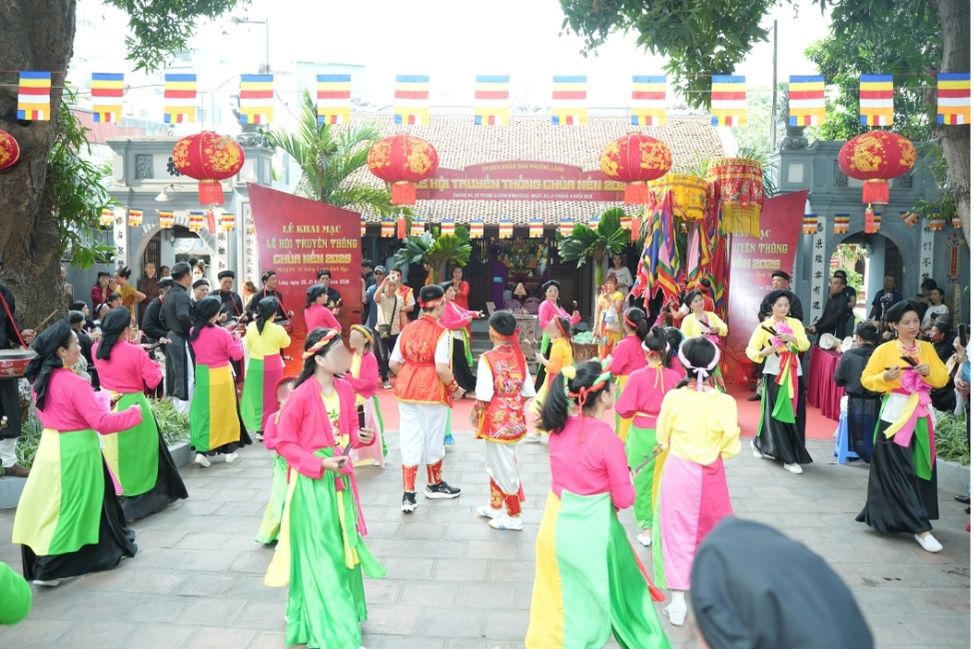
Along with Lang Pagoda, Hoa Lang Pagoda, Tam Huyen Pagoda, Thay Pagoda..., Nen Pagoda forms a unique relic complex in the land west of Thang Long capital. This complex not only preserves long-standing historical and cultural values but also reflects the harmonious intersection between folk beliefs and Buddhism, through the model of "Tiền Phật, hậu Thánh" pagoda - a unique mark in the history of Vietnamese Buddhism under the Ly Dynasty.
With the values of the relic, Den Pagoda was ranked as a national relic in 1992.


