
Located in Dong Trieu city (Quang Ninh), Canh Huong Pagoda is one of the typical ancient temples associated with the land rich in Truc Lam Yen Tu Buddhist tradition. Not only is it a spiritual activity point for people, the pagoda also carries special historical and cultural values, reflecting the intersection between Dharma and patriotism through many periods.
According to historical records, the pagoda was built in the 13th century under the Tran Dynasty. During the resistance war against the Nguyen-Mongol army, the ancient Don Son land was associated with the imprint of King Tran Nhan Tong. After great feats, the king once stopped in this area, established a pagoda and left traces through poems engraved on the cliffs, contributing to creating a special historical value for the relic.
The pagoda is located on a large land area, located in the space surrounded by mountains, bearing the shape of "leaning on mountains facing water". The name Canh Huong means beautiful scenery, showing the respect of the ancients for this land. Through ancient documents, the Don Son area was once described as a dangerous terrain, and also a place associated with many important historical events.
In the process of development, the pagoda once welcomed the footsteps of many Zen masters. Typical is Zen master Nhu Nguyen during the reign of Le Hy Tong. Realizing that the landscape and terrain were suitable for cultivation, he expanded the scale of the pagoda, turning this place into a Buddhist activity center and spreading the Zen sect of Truc Lam in the region.
Over 7 centuries, Canh Huong Pagoda has been restored many times. The stele at the end of the 17th century records the joint efforts of monks, nuns and people in rebuilding the pagoda, showing the important role of the relic in the spiritual life of the community. Not only is it a place for cultivation, the pagoda was also a fulcrum in historical periods of upheaval.
In the early 20th century, the pagoda became a place associated with patriotic movements. During the August Revolution of 1945, this place was considered one of the important bases of the local uprising movement. During the resistance war against France and the US, the pagoda continued to be used with many different functions, contributing to serving the revolution and resistance life.
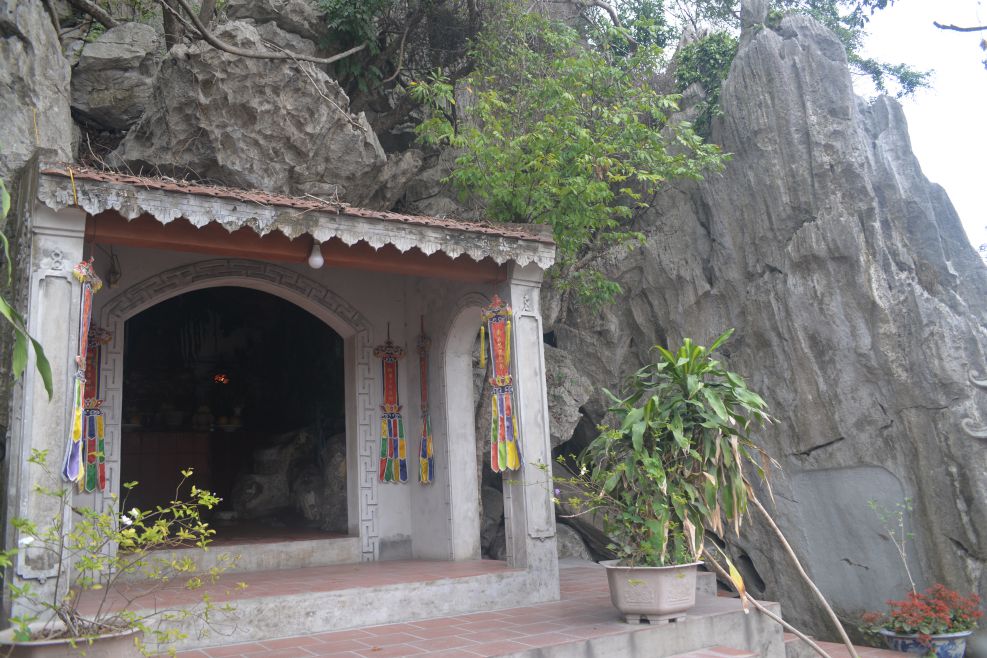
However, over time, the building seriously deteriorated and once went into a state of desolation. By the beginning of the 21st century, the pagoda was restored, gradually restoring the original architecture and space under the contributions of monks, nuns and people.
Currently, Canh Huong Pagoda has a harmonious architecture between tradition and natural landscape, including many items such as the three-entrance gate, main hall, worship area and tower garden space. Some artifacts such as stone steles and Nguyen Dynasty steles are still preserved, contributing to recreating the historical depth of the pagoda.
Not only is it a place for religious activities, the pagoda also organizes New Year festivals and Buddhist cultural activities, attracting a large number of Buddhists and tourists. With a history of more than 7 centuries, Canh Huong Pagoda has become a typical cultural and spiritual symbol of Dong Trieu land, associated with the history and traditions of the nation.


