
Located in the middle of the Vam Thuat River, Phu Chau Temple, often called Boat Temple by the people, is one of the temples with a special location and architecture in Ho Chi Minh City.
Having existed for more than three centuries, the project is not only a familiar religious activity spot but also a destination attracting a large number of tourists and pilgrims.
According to many documents and folk legends, the temple was formed from the early 19th century, during the reign of King Gia Long. However, the history of the temple's birth is still associated with many different stories passed down through many generations.
One of the stories recorded on the stele said that while fishing on the Vam Thuat River, a fisherman picked up a statue from the bottom of the river. People at that time believed that this was a statue of Ba Thuy Te, so they built a temple to worship it.
Meanwhile, many elderly people living for many years around the area believe that the temple was initially just a simple place of worship built during the reign of King Gia Long before being expanded and completed as it is today.
Mieu Noi has a strong imprint of the intersection between Vietnamese culture and Chinese culture. The worship space is divided into two main areas including the main hall and the place to worship Ngu Hanh Nuong Nuong (Five Mothers).
Outside the yard, there are also Bodhisattva altars. Inside the main hall, the Maitreya Buddha statue is placed in the center, and on both sides are places to worship Buddha Tathagata and Earth Mother.
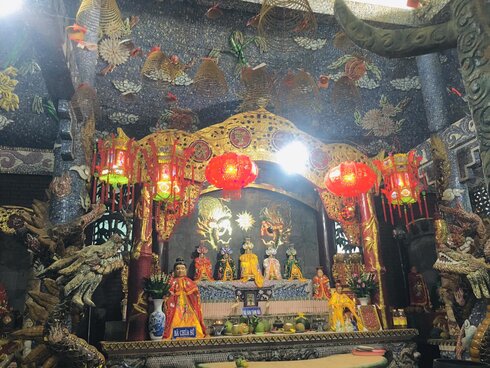
The most prominent feature in the temple's architecture is the elaborately ceramic-inlaid dragon statue system appearing on the roof, pillars and many other items. Hundreds of mascots with diverse sizes are meticulously crafted, creating a mysterious and sacred beauty for the project.
In addition, decorative motifs such as chrysanthemums, grape leaves, water waves or fish are arranged throughout the campus. Dark pink painted walls combined with red window frames further highlight the architectural style with Chinese influence.
According to local people, the temple was initially built by traders and traders in the area to pray for smooth business and safe boat trips.
Later, a Chinese person stood up to restore it, and at the same time added more objects of worship such as Maitreya Buddha, Quan Am Bodhisattva, Thap Bat La Han... Over time, the temple became increasingly famous and became an important spiritual site of the region.
On major holidays of the year such as the full moon of the first lunar month, the full moon of the second lunar month or the full moon of the seventh lunar month, the temple attracts a large number of people and tourists to participate in traditional rituals. Many unique cultural and religious activities are also organized, contributing to preserving long-standing folk cultural values.
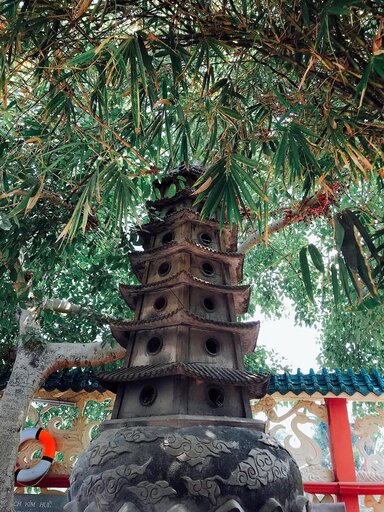
For pilgrims, the temple is a place to send faith, pray for fortune, peace, smooth love affairs and smooth work. Every year-end or early spring, the rituals of returning offerings and opening spring are solemnly organized, creating a bustling and sacred atmosphere at the special temple in the heart of the city.


