
King Le Dai Hanh Temple is a historical and cultural relic belonging to the Special National Relic Area of the ancient capital Hoa Lu (Ninh Binh province). The temple is located about 300m from King Dinh Tien Hoang Temple, belonging to the East Citadel of the ancient capital Hoa Lu (now Truong Yen ancient village, Tay Hoa Lu ward, Ninh Binh province).
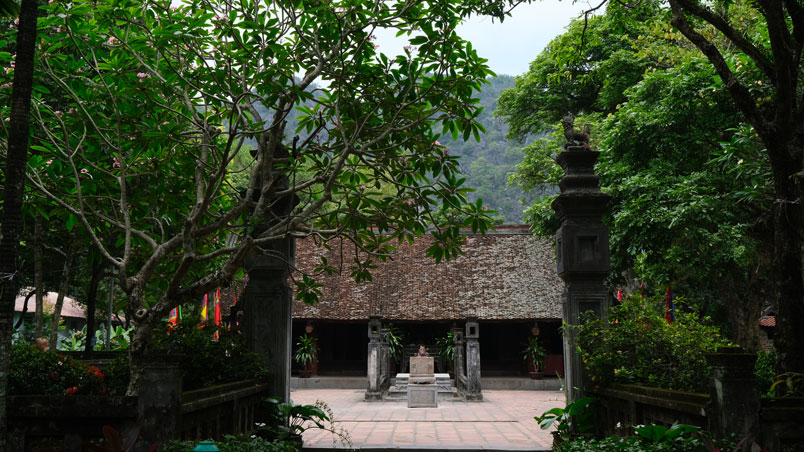
In addition to King Le Dai Hanh, the temple also worships Empress Dowager Duong Van Nga, Khai Minh Vuong Le Long Dinh, Princess Le Thi Phat Ngan and General Pham Cu Luong.
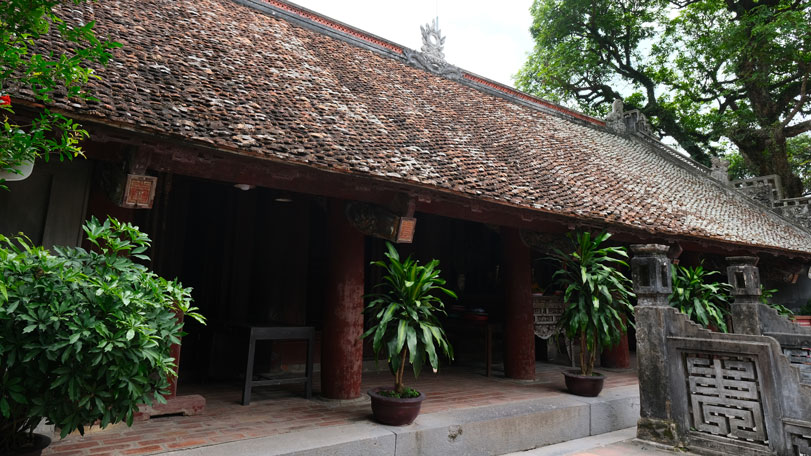
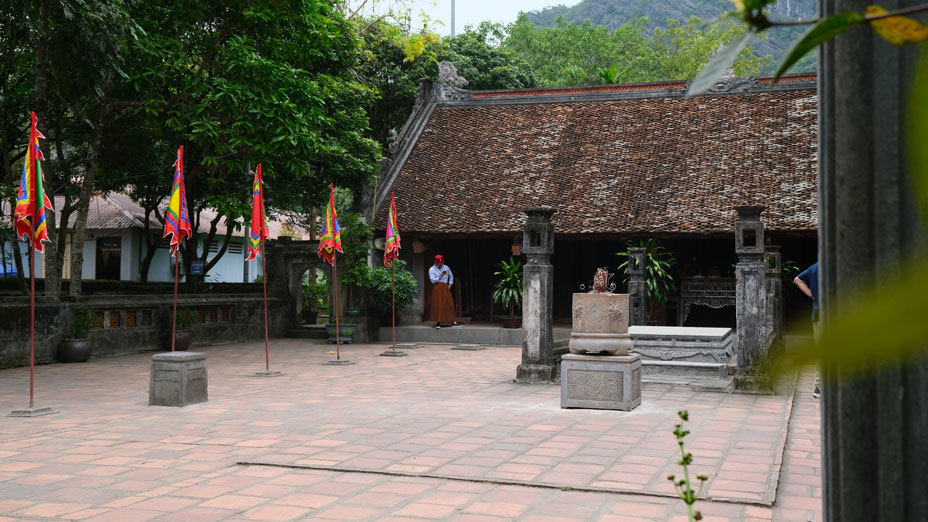
The temple was built in the 17th century, with architecture in the style of "nội công ngoại quốc" like the temple dedicated to King Dinh. However, the special feature of this place is that it still preserves many very sophisticated architectural sculptures from the Later Le Dynasty.
The inner palace includes 3 buildings: Bai Duong, Thieu Huong and Chinh Cung. The Bai Duong building has a community altar. The Thieu Huong building worships mandarins and meritorious officials of the Pre-Le Dynasty. The Chinh Cung building is where statues of King Le Dai Hanh, Empress Dowager Duong Van Nga and Khai Minh Vuong Le Long Dinh are arranged.
The statues here all date back to the 17th century. Among them, the statue of King Le is carved in the posture of setting up the court, wearing a bình thiên hat, wearing a hoàng bào robe and sitting on the throne.
The statue of Empress Dowager Duong Van Nga is carved symmetrically, elegantly, exuding noble beauty from figure to deep inner self, with symbolic costumes according to the motif of the Buddha statue. Meanwhile, the statue of King Khai Minh Le Long Dinh is carved in mandarin costume, wearing a ô sa hat, sitting on the podium.
King Le Dai Hanh, born in 941, surname Le Hoan. Under the Dinh Dynasty, he was conferred the title of Thap Dao Tuong Quan. In 980, he succeeded the Dinh Dynasty, ascended the throne as Emperor, and established the reign title Thien Phuc. King Le Dai Hanh made great contributions to resisting Song, pacifying Chiem, maintaining national independence, consolidating the state apparatus and expanding diplomacy.
In 1005, the King passed away, and the temple was honored as Le Dai Hanh.


