
From January to March of the lunar calendar is the time when Quang Ngai fishermen enter the anchovy fishing season. Besides making dried, salted, braised or processing familiar dishes every day, coastal people often choose the freshest fish to make anchovy rice paper.
To make delicious cakes, the fish used to make the cakes must be really fresh, with a clear body and firm meat. The fish after being brought home is washed several times with water to remove sand and impurities. The operation must be done gently to avoid crushing the meat. After that, the maker will remove the head, clean the black flesh, separate the hard bones and let the fish drain.
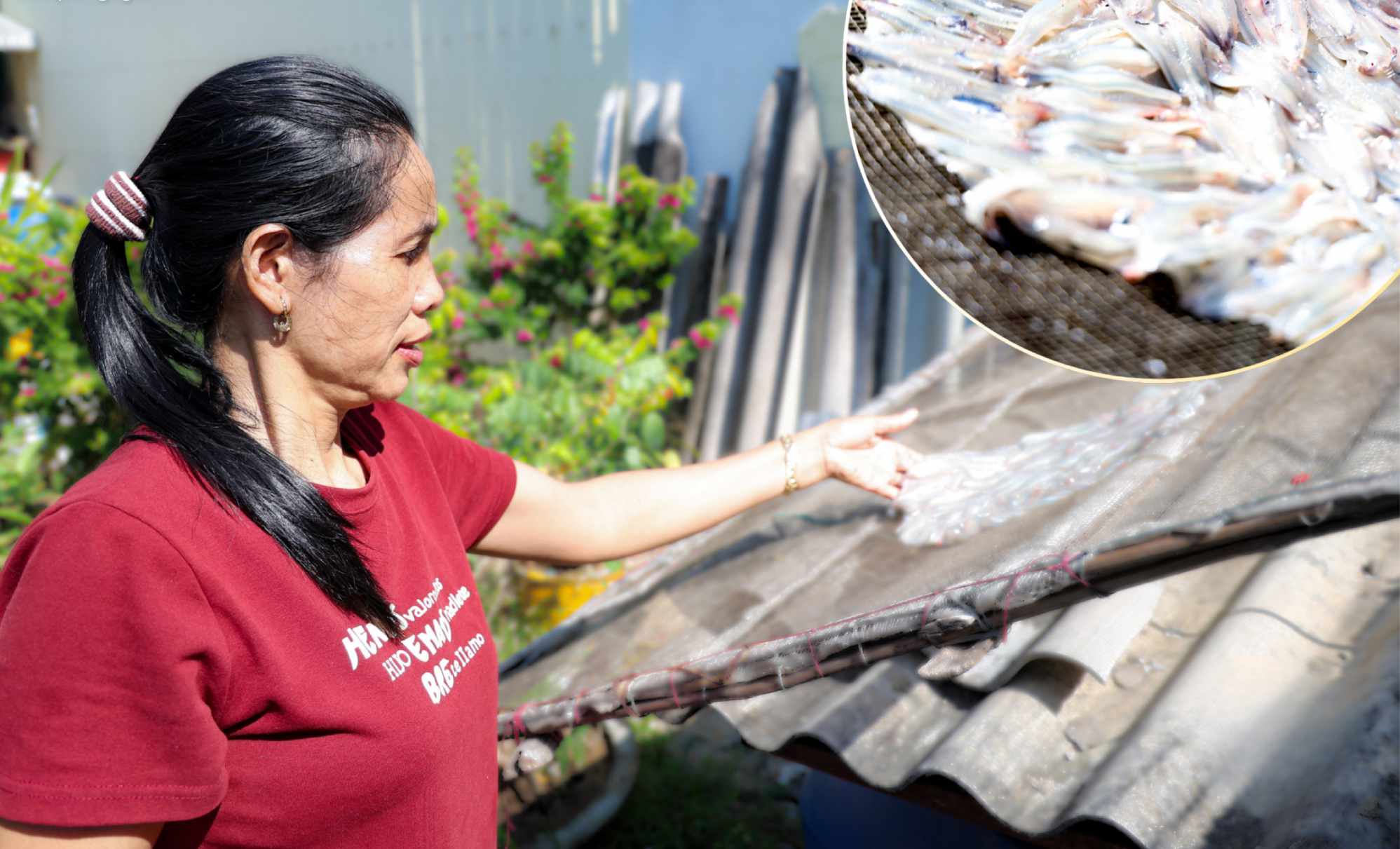
The marinating of the fish is simple but plays an important role, deciding the flavor of the finished product. Spices usually include salt, sugar, MSG, crushed chili and chopped onions. Some families carefully fry onions with a little oil before mixing to increase the aroma.
Everything is stirred evenly with the fish to absorb the flavor. Anchovies are inherently sweet in meat, so just season them just moderately, enough to highlight the sea flavor without overshadowing the inherent lightness.
The type of rice paper used is thick rice paper, with moderate chewiness so that it does not tear when placing the fish layer on top. After marinating, the fish is spread evenly, covering the surface of the rice paper. Each piece of rice paper is then neatly arranged on a tray and taken out to dry in the sun.
According to the experience of coastal people, sunshine is the most important "spice" for anchovy cake. After only one to two days of good sunshine, the fish will shrink, stick to the surface of the cake and emit a characteristic mild fragrance. If there is no sunshine, the cake will hardly reach the desired crispness and the flavor will not be complete. When dried, the cake is sealed to preserve and use gradually.
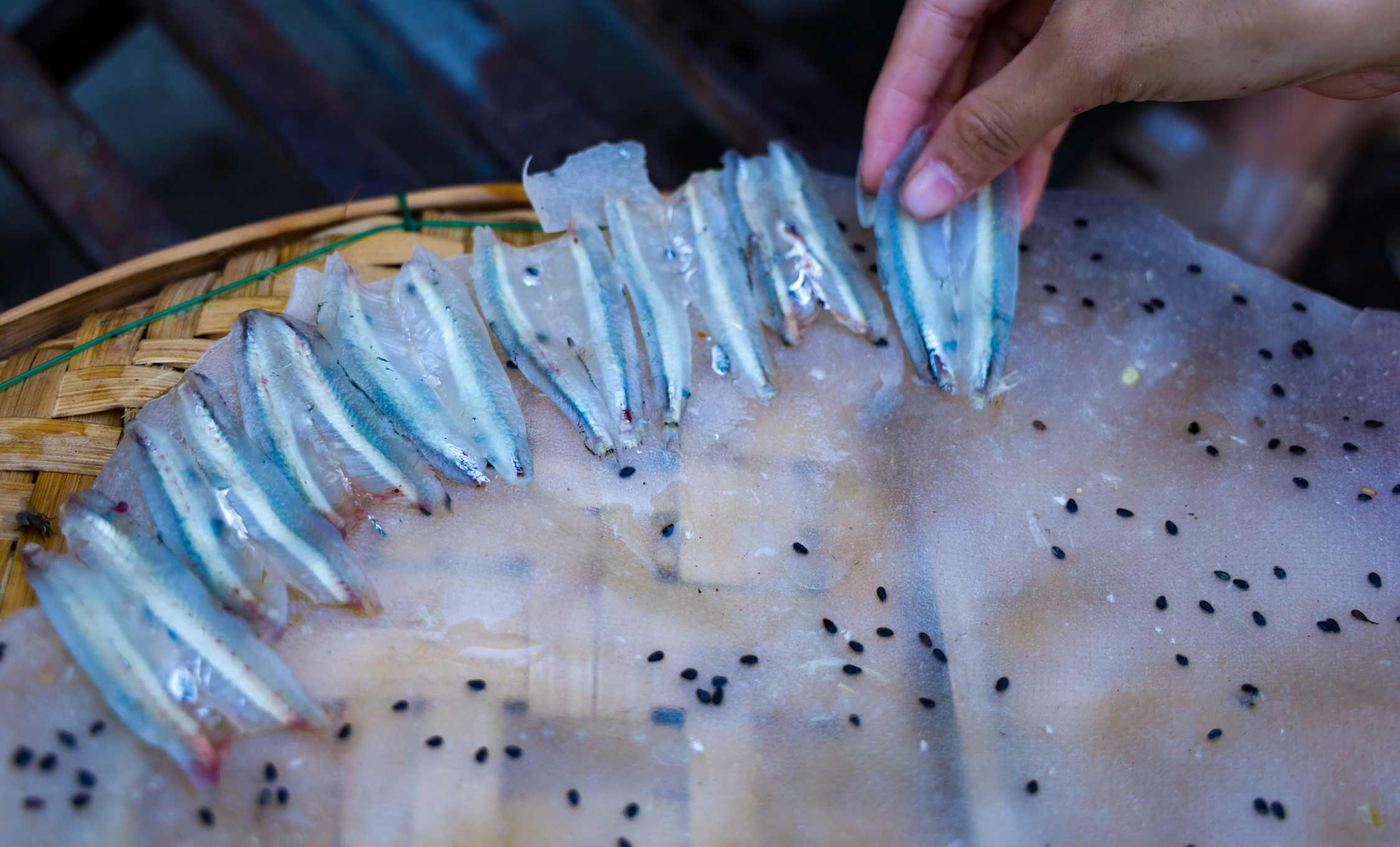
The finished product is rice paper with the pale yellow color of fish, along with the red color of chili and the green color of onions, creating an attractive appearance. The rice paper can be fried in hot oil or baked on charcoal, with the important requirement of keeping the heat moderate so that the rice paper flushes evenly, golden brown without burning.
When cooked, the smell of anchovies blends with the aroma of onions and chili peppers, creating an irresistible attraction. The cake is crispy, the light sweetness of the fish blends with a bit of spiciness; dipped in chili sauce or chili fish sauce, it becomes even richer. The dish can be served as a snack or served with white rice and raw vegetables in a family meal.
To make delicious and authentic rice paper with anchovies, people must invest a lot of time and meticulousness. From the stage of choosing fish, cleaning, marinating to sun-drying, patience is required. Therefore, rice paper with anchovies is not as popular as dried fish, but is often considered a "savings" in many coastal families.
Not only food, this is also a gift imbued with affection, often brought out to treat distinguished guests or given to relatives far away as a way to send hometown flavor.
From a small anchovies, through the skillful hands of the people and under the sunshine of the coastal region, anchovies rice paper becomes a rustic but delicate specialty, preserving the soul of the sea.


