
At the end of the Tra Khuc River (Quang Ngai), before the water merges into the vast sea, there is a special intersection area, where the sweetness of the river meets the saltiness of the sea. Local people call it the "two tea" water area. It is in that seemingly simple place that the living environment of a small but famous mollusk species - the don - has formed.
Dons reproduce in the sand on the river, and are diligently raked by people every day. Small dons like green beans, seemingly worthless, have become ingredients for a dish associated with generations of Quang Ngai people.
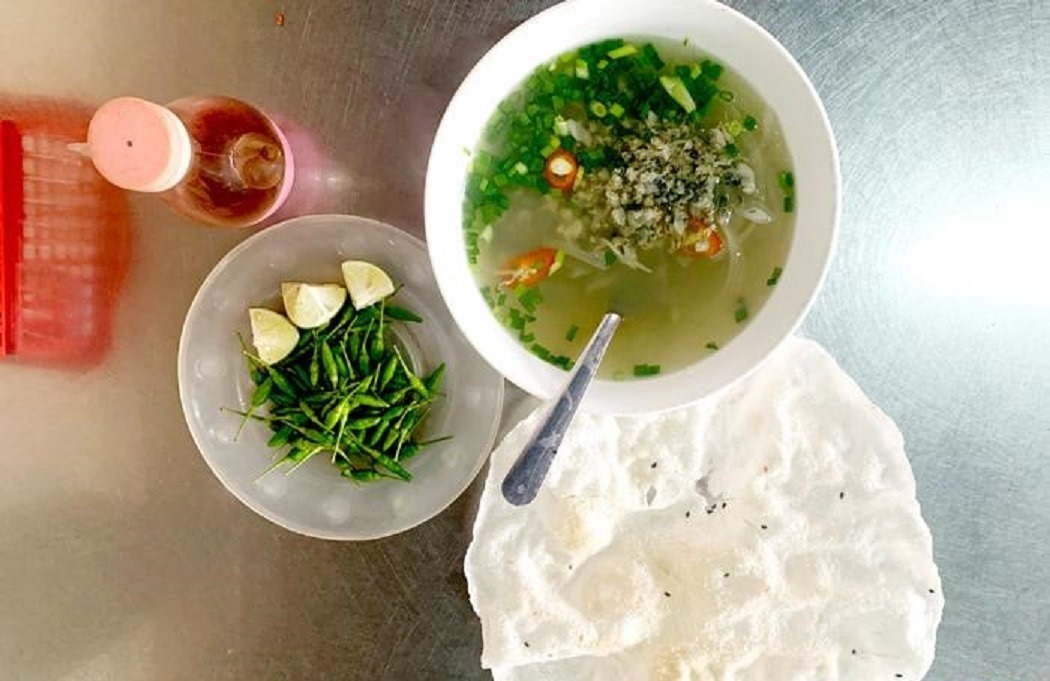
To get a delicious don pot, the cook must go through many meticulous stages. The don after being raked is scrubbed clean of its skin, washed thoroughly and then soaked to release all the sand. Then, the don is boiled until it is opened, releasing a sweet, clear and completely natural broth. That broth is the "soul" of the dish.
Don meat after being peeled is kept, combined with shredded onions, crispy grilled rice paper and a little spice just enough. All blend together to create a simple bowl of don that evokes a very unique flavor of Quang land. When eating, people break the rice paper into small pieces and put them in the bowl, to gradually absorb the don water, feeling the crispness mixed with the sweetness, plus a little spiciness of green chili, all as if awakening the taste buds in a gentle but profound way.
For generations, don is still a rustic, cheap dish that anyone can enjoy. However, in the minds of Quang Ngai people, don is not only a snack but also a specialty, a part of memory, a part of homeland.
Coming to Quang Ngai, tourists can easily find don dishes at many familiar locations of local people. Among them, Co Luy Don Restaurant is one of the long-standing addresses, known by many people. In addition, Ba Cam coconut shell don restaurant or Co Van don restaurant are also familiar stops, where diners can fully enjoy the traditional don flavor.
Amidst the modern pace of life, when many new and strange dishes appear, don still maintains its own place. It is not just a dish, but also the "soul of the countryside" of Quang Ngai, where each bowl of don carries a story about the land, about the country and about the people here.


