
Black turmeric, also known by the names Tien Nhan Dong, Suong Sao, Luong Phan Thao or Tien Thao... is a plant that has been associated with the people of Cao Bang for a long time, especially in the former Thach An district area.
According to traditional medicine, black jelly plant has a sweet taste, cool properties, is non-toxic, and is often used for the purpose of relieving stress and clearing body heat. This plant is also used by folk people to support in some cases such as colds, acute arthritis, diabetes or high blood pressure.
Besides its wonderful health benefits, black jelly is also used to prepare some refreshing dishes, which are popular in the summer.
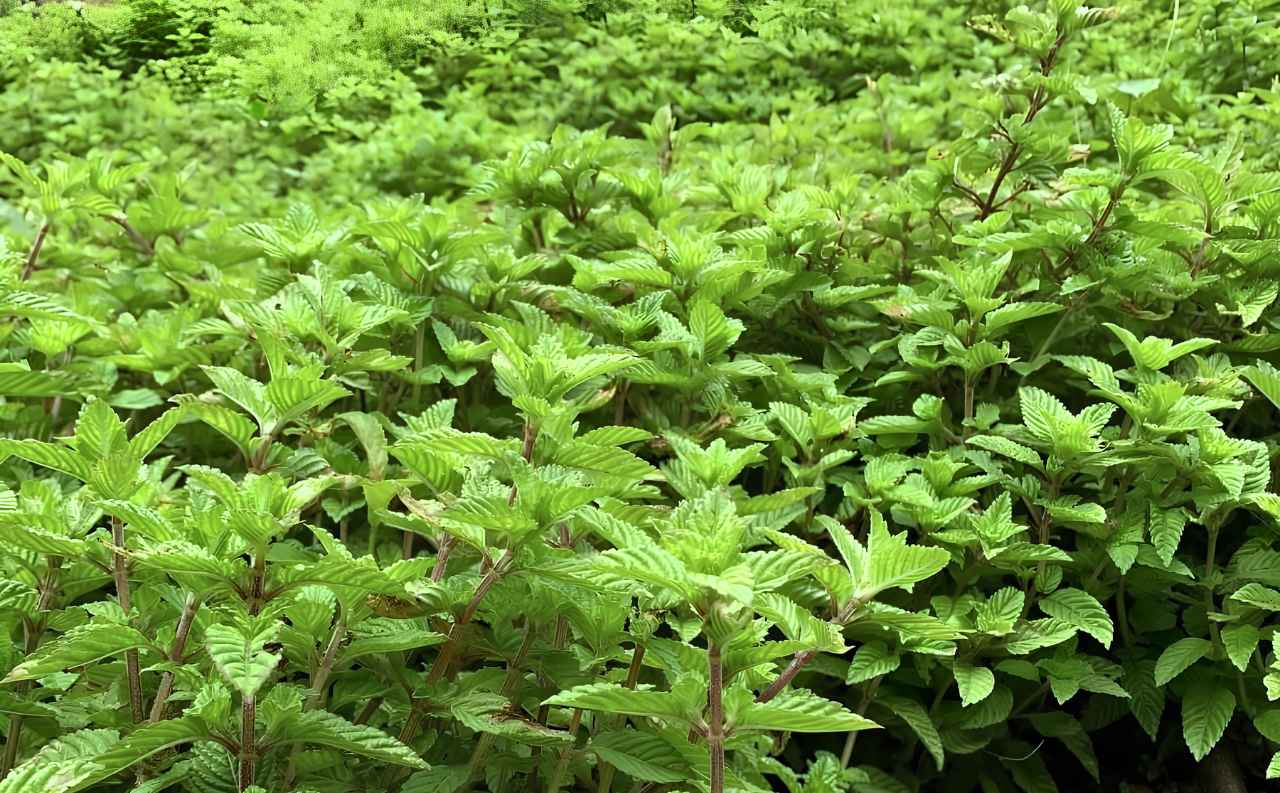
According to Ms. Be Thi Ban, owner of a black jelly leaf supply facility in Cao Bang, what makes this dish popular is that the ingredients are completely made from natural grass jelly resin, without mixtures, so it is very safe for users.
Although black jelly trees are currently grown in many localities, Ms. Ban said that the best quality is still concentrated in 5 communes Canh Tan, Minh Khai, Quang Trong, Duc Thong and Trong Con (belonging to the former Thach An district), where there are suitable soil and climate conditions for trees to create more jelly resin.
Black jelly trees must be planted on swidden land, at a height of about 500m or less, taking ash from plants and grasses after burning to nourish them. In particular, this type of tree is almost impossible to use chemical fertilizer because even a small amount will prevent the tree from creating standard jelly resin," Ms. Ban shared.
If planted on good soil, black jelly plants can grow about 40-120 cm long. Each year, people only plant one crop, usually sowing from the beginning of the year and starting harvesting in July-August of the lunar calendar.
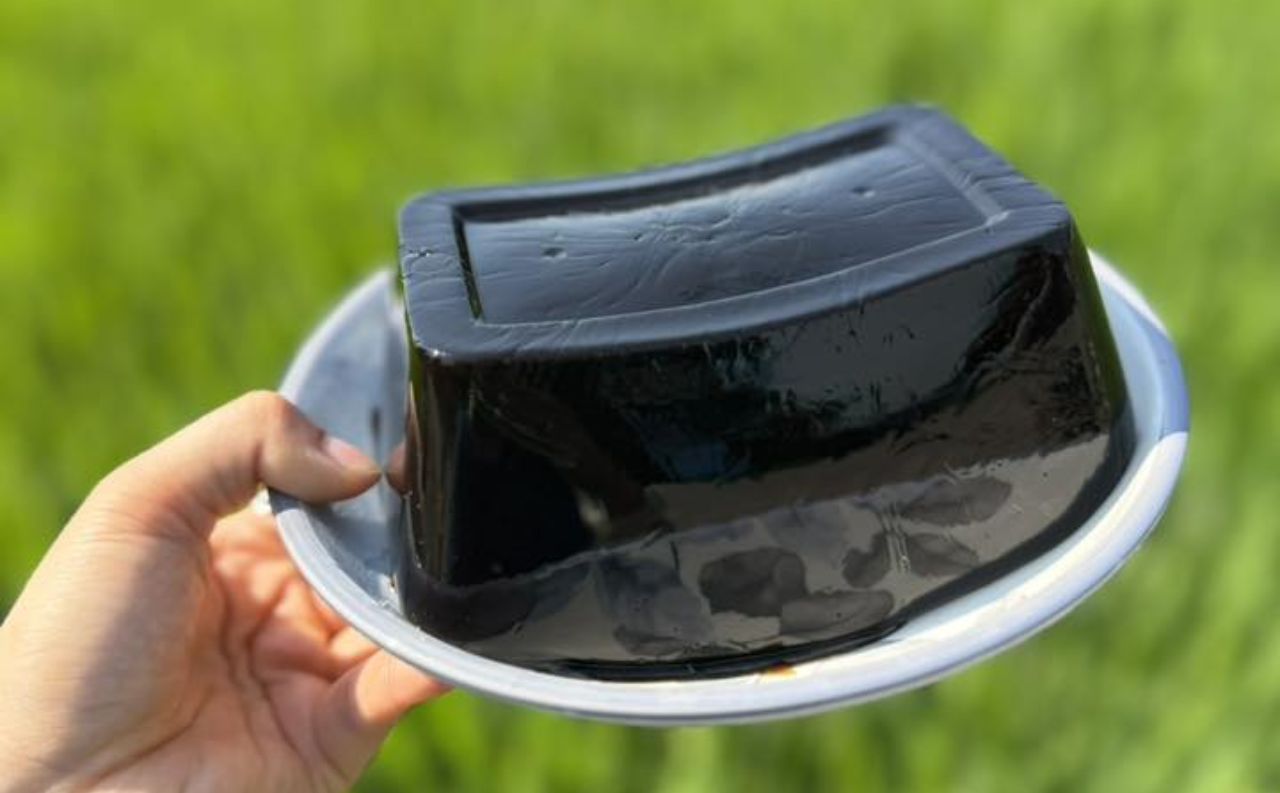
According to the experience of local people, the most suitable time for harvesting is when the plant starts to bud and flower.
After cutting, the plants should not be dried in the hot sun immediately, but must be tied up, sheltered overnight before being dried to retain the agar fluid and create a beautiful color.
Ms. Ban said: "The color of jelly depends a lot on the incubation and drying technique of raw materials. If jelly plants are thoroughly incubated before drying, the finished product will have a dark, beautiful black color. Conversely, if dried in the sun too early or planted on red soil, jelly will usually have cockroach wings. However, whether it is black or cockroach wings, the quality and basic flavor are not much different.
After drying, the jelly plant is tied and stored for about 3 months. When processing, the cook will wash the ingredients, braise them until soft, then pour water in to simmer. During the cooking process, it is necessary to watch the heat continuously because jelly fluid is very easy to overflow.
When the plant has been simmered, the cook will filter thoroughly to get the jelly fluid, then add sugar and tapioca starch according to each family's own ratio and continue to cook, stirring evenly before pouring into a tray. After cooling, the mixture will gradually solidify.
According to Ms. Ban, any stage in the processing process is important because if you do not do it carefully in one step, the quality of the finished product will be affected. To make the jelly smooth and not greasy, cooks should filter the jelly fluid through a cloth bag about 2 times.
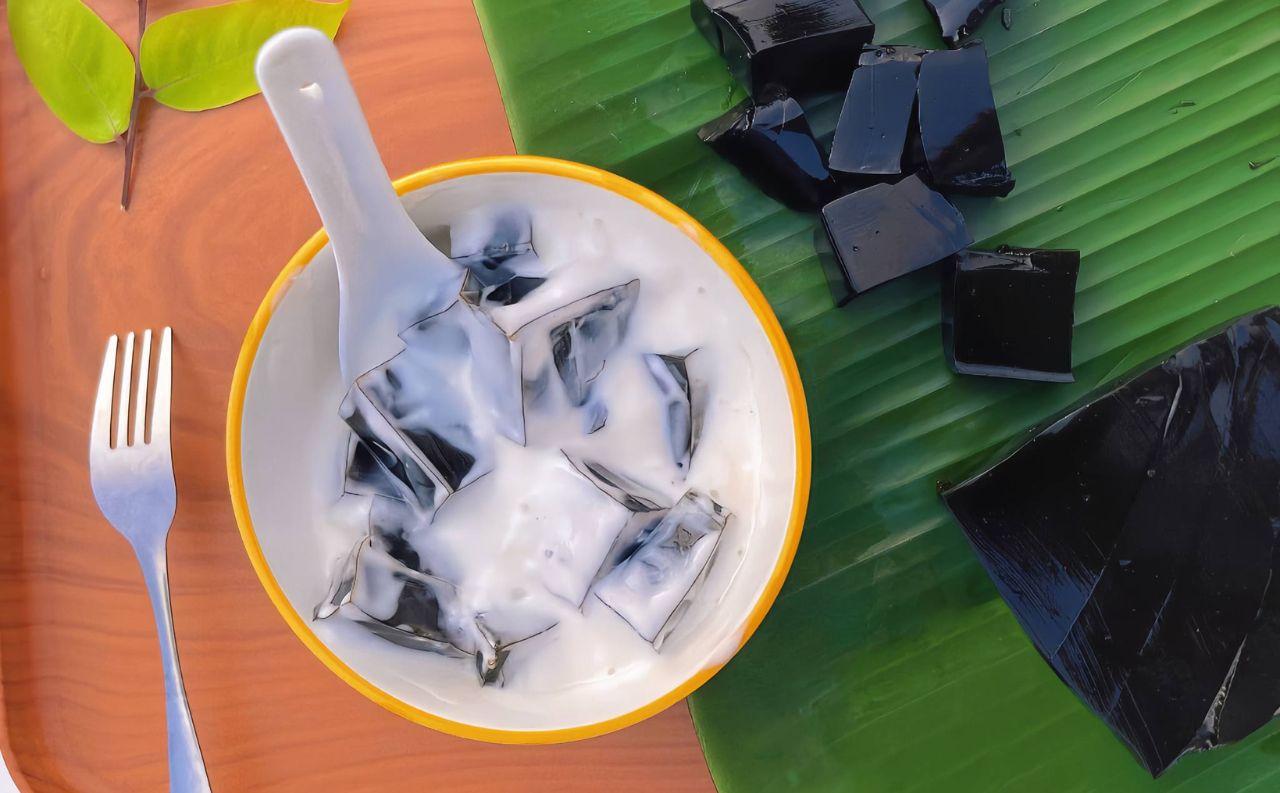
In addition to being eaten directly after cooling, black jelly can also be combined with many other ingredients such as sugar water, soy milk, coffee, yogurt or fruits. In recent years, green bean jelly cake has also been popular with many people.
Ms. Ban said that black jelly should be stored in the refrigerator compartment and slightly opened to avoid steaming. Depending on the quality of jelly leaves and processing techniques, some batches of handmade jelly can be stored for many days while still retaining its delicious flavor.


