
This is the time when jellyfish reach their best deliciousness - the body is plump and retains its characteristic crispness. Wherever the jellyfish drifts, fishermen follow to go to sea, from the sea area of Ninh Binh (former Nam Dinh), Hung Yen (former Thai Binh), Hai Phong to Thanh Hoa, Nghe An...
Called red jellyfish, but in fact, jellyfish are picked up by fishermen from the sea, which is inherently clear. Fresh jellyfish are inherently mildly poisonous, concentrated in the tentacles, so immediately after catching, people have to dissect, clean the slime, then soak the fruit and parrots in salt water in jars, pots... Incubating jellyfish is also very elaborate, depending heavily on the weather. When it's hot, it only takes about 7 days for the jellyfish to be delicious, and on cold days, this time can last a few weeks for the jellyfish to fully absorb. Each piece of turns into a characteristic reddish-brown color like betel residue. That's why people in the North are used to calling it red jellyfish.
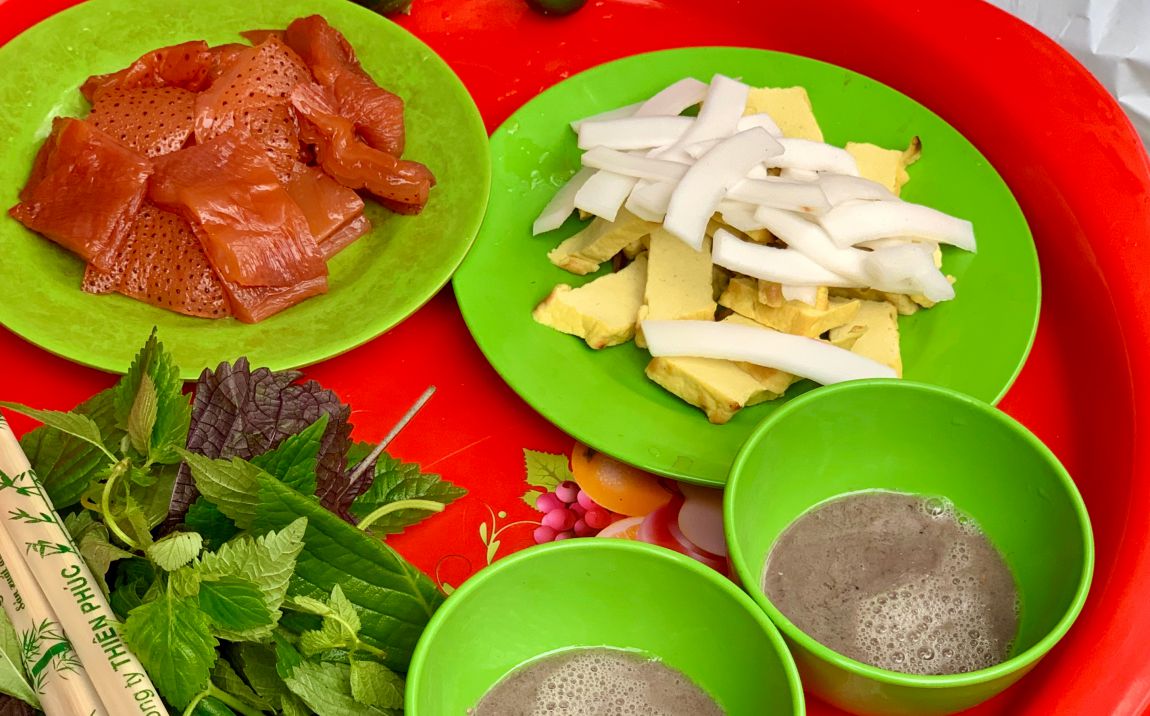
The beauty of this specialty is that each region has its own ways of enjoying it. A famous version is the red jellyfish dipped in bỗng of Hai Phong. A plate of red jellyfish in the port city cannot be without a bowl of bỗng - a dipping sauce cooked from tomatoes, garlic, chili, coconut milk, sticky rice wine bỗng and a little cassava flour. Suddenly, it turns dark yellow, lightly thick, with a mixture of sour, spicy, salty, sweet... supporting the inherent coolness of jellyfish. A basket of raw vegetables eaten with red jellyfish in Hai Phong must be of all kinds from lettuce, perilla, apricot leaves, figs... to basil, saw palm leaves. One leaf over another wraps the jellyfish, coconut flesh, pineapple... dipped in the warm bowl of bỗng.
Leaving the Northeast coast, jellyfish follow small traders to Hanoi and gradually bring a different flavor. Small stalls are simply arranged with pots of bright red jellyfish, grilled yellow tofu, white coconut flesh and baskets of herbs with only kinh giới, perilla. When there are customers, the sellers quickly cut jellyfish, chop coconuts, chop beans, and arrange them on a plate. If you pay a little attention, diners will find interesting points in Hanoi jellyfish stalls that many places still use thinly carved bamboo kidneys to cut jellyfish instead of knives, to reduce the fishy smell.
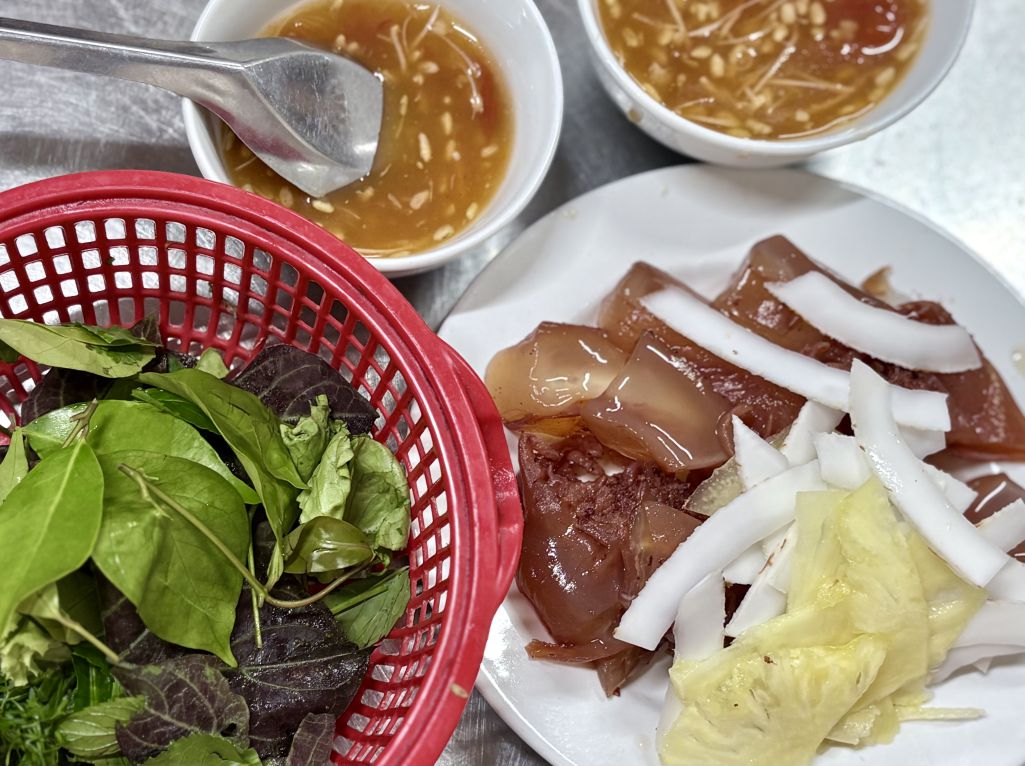
The biggest difference is nowhere else but in the dipping sauce bowl: Not suddenly but raw shrimp paste. Shrimp paste squeezed with lemon, added chili, foaming. Gourmets still joke that red jellyfish is no different from Hanoi's ordinary sashimi. Bare-handedly wrapping pieces of jellyfish like jellyfish with a faint salty taste of parsley, accompanied by slices of grilled tofu with a faint smell of charcoal, crispy coconut flesh with perilla and kinh giới essential oil... dipped in rich shrimp paste. The early summer heat seems gentle as soon as people just enjoy a piece of red jellyfish, dispelling the feeling of stuffiness in their body.
Unlike the somewhat elaborate red jellyfish trays in the North, in the Central region, jellyfish have a completely different appearance: rustic, simple but no less sophisticated.
In the Central region, jellyfish are not as reddish-brown as in the North, but are usually slightly yellowish-brown, clear and firm after being treated with astringent leaves such as guava leaves, dung leaves or lau leaves. Jellyfish after being caught are cleaned, chopped, then soaked in leaf juice for a few hours to "soak" them, making them crispier and less fishy, then rinsed with cold water to clarify and drain.
People in the Central region - especially in Thanh Hoa, Nghe An - have a very unique way of eating: Jellyfish dipped in cheo. Cheo is made from familiar things such as peanuts, a little roasted rice powder, sugar, sugarcane honey, shrimp paste, galangal, garlic, lemongrass, chili... stewed until thick and fragrant. When eating, use banh da nem or leaves such as sung leaves, lot leaves, perilla, kinh gioi... to wrap the jellyfish with raw vegetables, then dip it in a bowl of rich and buttery cheo.
No matter how you eat it, jellyfish in any region is a true cooling dish in the hot early summer days. Some people are fascinated, but many people are hesitant at first because of the "not alive but not cooked" nature of jellyfish. Even those who are used to eating jellyfish have their own taste: Some people like crispy and rough jellyfish legs, while others prefer soft and juicy stems.
Jellyfish are indeed a cool treat for those who are willing to try. Once they are used to it, people easily become "addicted", and every season they invite each other to eat jellyfish as a habit that is hard to give up. In the scorching heat, a piece of cool, crispy jellyfish is perhaps the simplest way to feel that summer is very near.


