
After the rains, the forests and mountainsides in the highlands are bustling with people going to scout rocky mountain snails. This snail species that lives naturally in rock crevices, under the forest canopy, has a characteristic crispy, sweet meat, becoming a product favored by many restaurants and tourists.
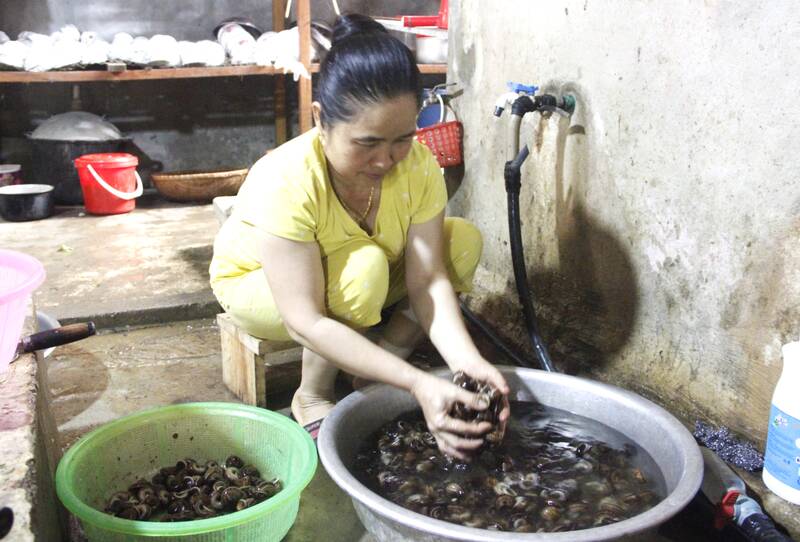
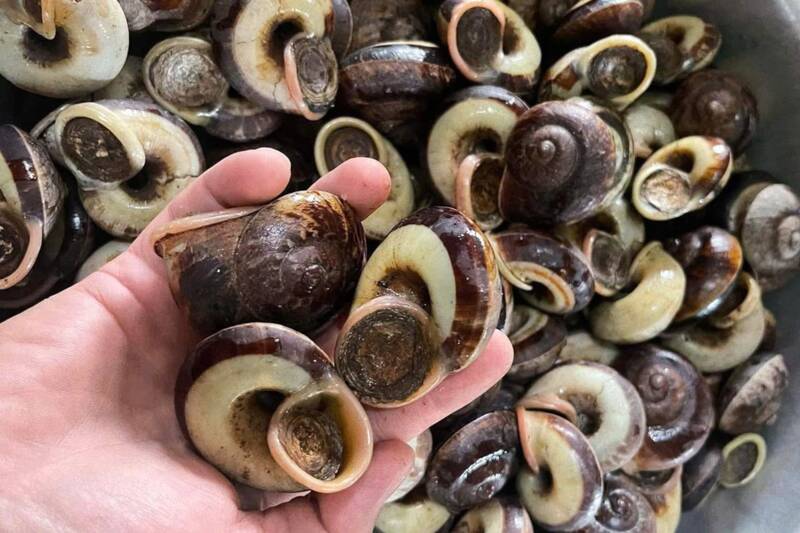
In areas such as To Mua, Van Ho, Bac Yen, Phu Yen, Thuan Chau, Muong La or Sop Cop, people often take advantage of the evening or early morning after rain to go into the forest to catch snails.
This snail species only lives in areas with good cover and high humidity, so its output completely depends on natural conditions.
Mr. Nguyen Manh Thang, Chairman of To Mua Commune People's Committee, said that for many years, mountain snails have become a secondary source of income for people during the rainy season. When the weather is favorable, people take advantage of catching snails to improve meals or sell to traders at prices from 60,000-80,000 VND/kg, which may be higher during times of scarcity.
In the Ba Kho slope area, Gia Phu commune, snail purchasing activities are quite active, many people are selling right on the side of National Highway 37.
Ms. Lo Thi Sieu, a snail buyer in Phu Yen, said that in the peak season, she buys tons of snails every day to supply to eateries in the province and transfers them to Hanoi, Hung Yen, and Phu Tho. However, the supply is completely dependent on nature, so it is unstable.
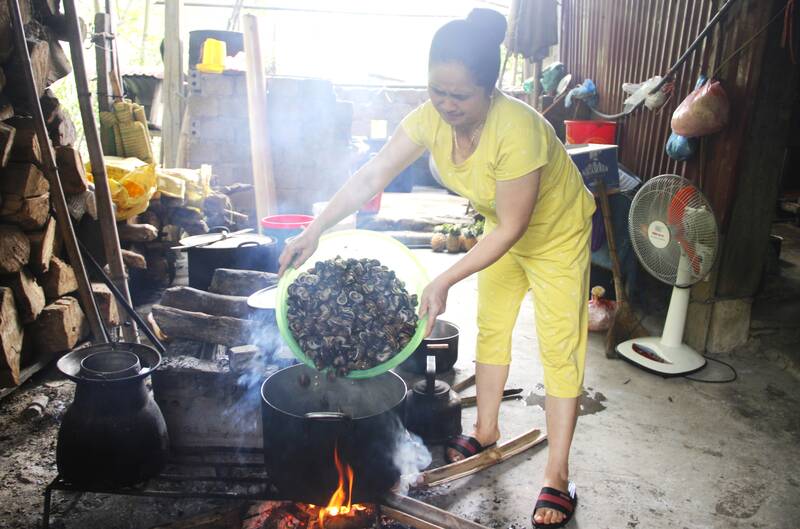
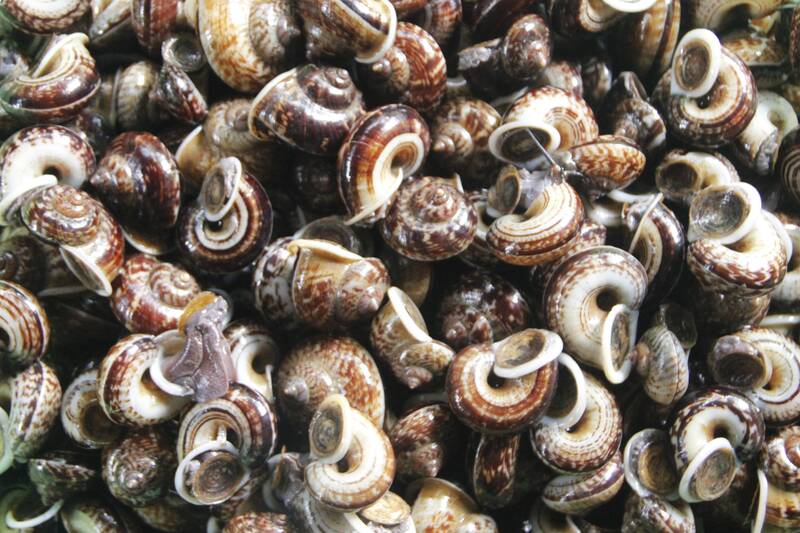
The attraction of mountain snails lies in their crispy, chewy, sweet and naturally fragrant flesh. According to local people, snails eat leaves, moss and herbs in the forest, so they have a distinctive flavor, less fishy than many other freshwater snails.
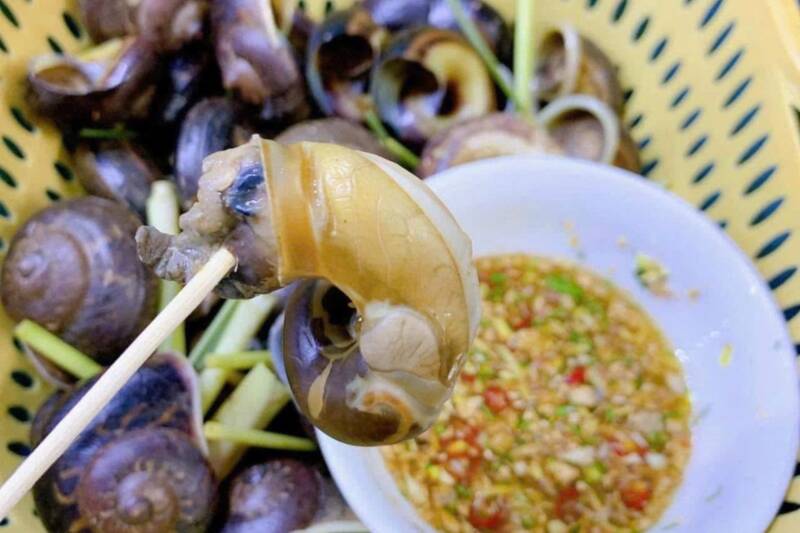
To retain the original flavor, stone snails are usually processed quite simply. The most common is boiling or steaming with lemongrass, chili and then dipping in chẳm chéo - a traditional spice of the Thai people made from mắc khén, chili, garlic and herbs. In addition, snails are also cooked in sour leaf soup, stir-fried with forest bamboo shoots or processed into many other rustic dishes.
Ms. Nguyen Thi Thuy Huong - a tourist from Hanoi - said that what impressed her the most was the unique crispy sweetness of rock snails. "I have tasted many types of snails, but this is the first time I clearly feel the flavor of the mountains and forests in such a rustic dish" - she shared.
Not only appearing in family meals, rocky mountain snails are now present in the menus of many homestays and restaurants in Son La.
At community tourist destinations such as Van Ho, Bac Yen or Muong La, many tourists are excited to follow the people to see snails after rain, process and enjoy them themselves by the fire.
According to Mr. Luong Van Kim, Secretary of the Party Cell, Head of Mat village, Muong Leo commune, many tourists passing through National Highway 4G and Provincial Road 105 often stop to buy stone snails to enjoy or as gifts. Before the increasing demand, the locality also promotes propaganda to people to exploit rationally, protect the environment and preserve natural resources.
Rustic but imbued with identity, rocky mountain snails are not only a specialty of the rainy season but also contribute to enriching tourism products, promoting culinary culture and creating more livelihoods for people in the highlands of Son La.


