
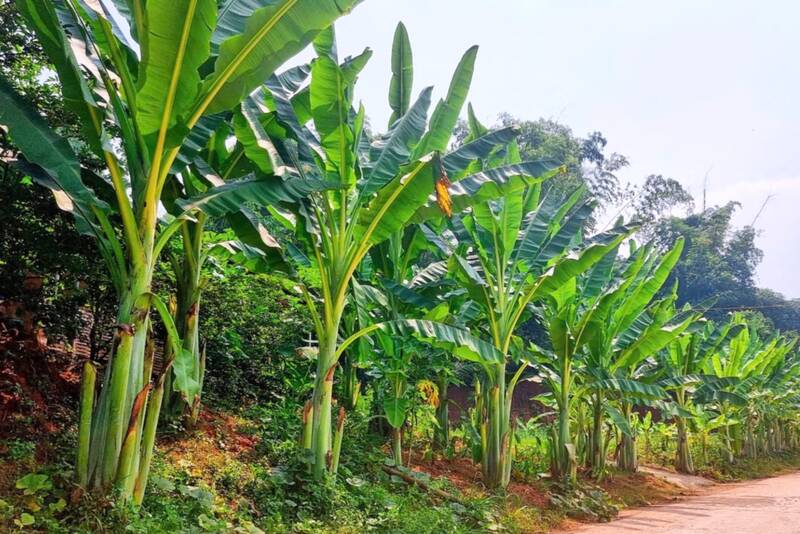
In the "sweet banana - fragrant mango" countryside of Yen Chau, nguon banana trees have long been familiar to the Black Thai people. Unlike ordinary banana varieties, nguon bananas grow separately, do not branch, and are often brought from the forest by people to plant around gardens and on fields for convenient use.
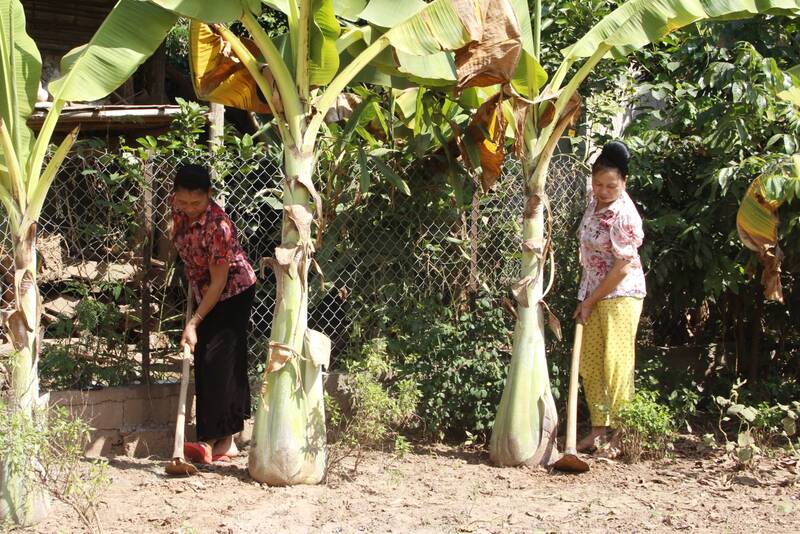
According to the elderly in the village, nguon bananas were previously mainly known for their use in soaking the fruit in alcohol, creating a unique flavor. Later, during their lifespan, people began to experiment with using the young skin to cook soup.
Mr. Lo Van Phong, Bung village, Yen Chau commune said: "In the past, people only used ripe bananas to soak in wine. Later, the elders tried to cook soup from the young stems, realizing that the dish had a characteristic buttery and fragrant taste and gradually became familiar.
From an experimental dish, nguon banana soup gradually became a typical dish, appearing in both daily meals and important occasions of the village.
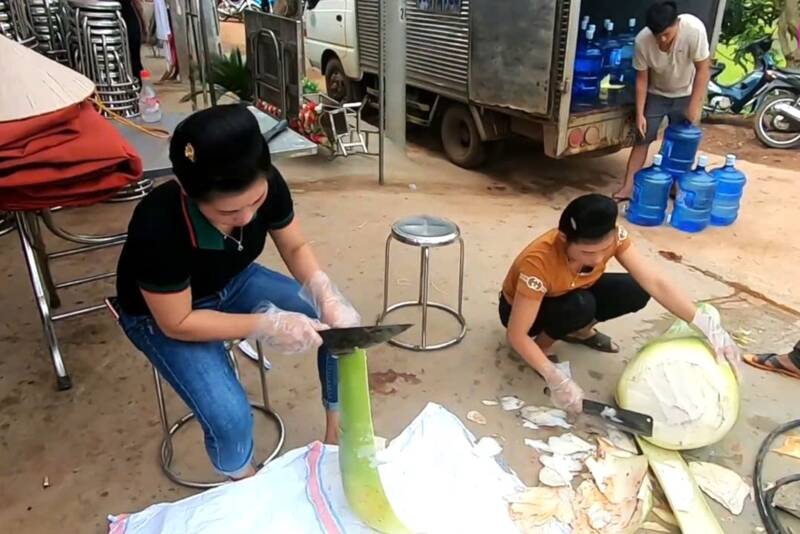
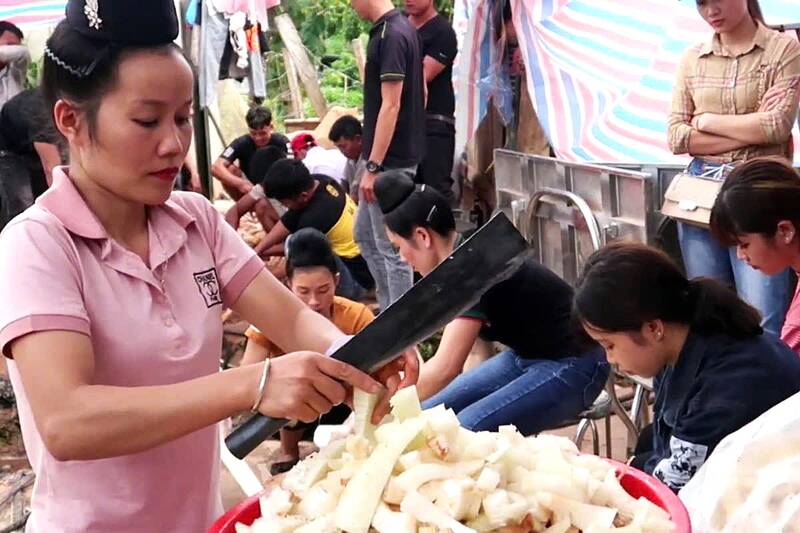
For the Thai people in Yen Chau, cuoi nguon soup is an indispensable dish in festivals, Tet, village festivals, especially in weddings. Every time there is a big event, people prepare ingredients together, creating a community-connecting atmosphere.
The processing of this dish is also clearly assigned. Young people are responsible for cutting bananas, bringing them back from the forest or fields. Men separate the panicles, remove the hard shell to get the young core inside. The core is then chopped, soaked in salt water to maintain color and crispness.
The soup cooking stage is usually undertaken by women. Bananas are put in a pot of bone broth or meat broth, cooked on a wood stove over even heat. The cook must cook thoroughly to make the bananas soft, mushy but not mushy.
Mr. Lu Van Thanh, from Tum village, shared: "When cooking nguon soup, it must be cooked for a long time for the bananas to absorb the flavor. When it is almost cooked, season it and add forest vegetables to create a characteristic aroma.
Thanks to the combination of vegetables and forest leaves, the bowl of cuoi nguon soup has an ivory white color, the buttery taste of bananas blends with the sweet broth, creating a rich and easy-to-eat flavor.
According to Ms. Hoang Thi Thoat, Head of the Dan Thai Cultural Club, Tuoi nguon is not only a dish but also a unique cultural feature of the Black Thai people.
“On holidays or happy days of the village, this soup is almost indispensable in the feast. This is a dish that has existed for a long time, associated with the memories of many generations,” Ms. Thoat said.
Although life is changing more and more, many new dishes have appeared, but cuoi nguon still maintains its own position in local culinary culture. Not only the elderly, young people are also familiar and participate in the processing process.
Lu Thi Huong, a resident of Tum village, shared: "Since I was little, I have been familiar with nguon soup cooked by my grandmother and mother. Every time the village has something to do, we also participate in preparing, thereby understanding more about the customs and wanting to preserve this dish.
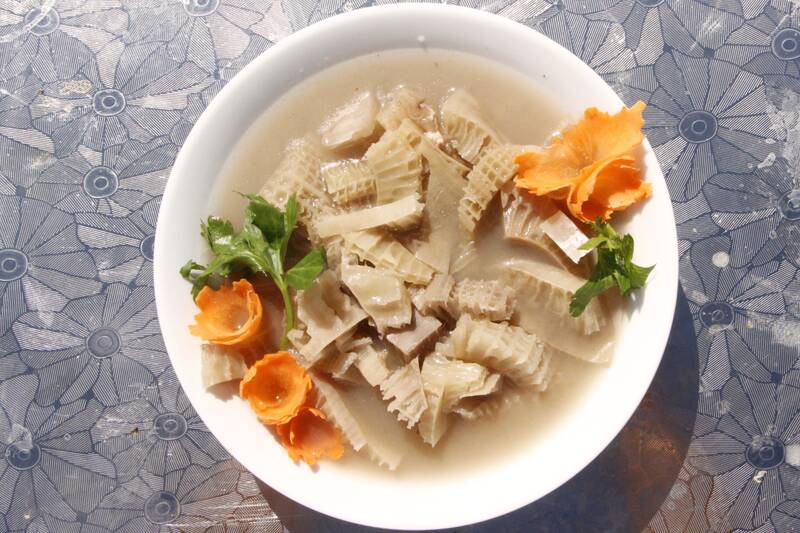
Today, besides famous specialties, "cuoi nguon" has also become a dish that tourists seek to enjoy when coming to Yen Chau. Not only bringing the flavor of the mountains and forests, the soup also expresses community cohesion and cultural beauty passed down through many generations.


