
From early morning lotus flowers to a cup of tea imbued with culture
When the sun has not yet set, the lotus ponds along Hanoi have begun to bustling with the footsteps of craftsmen. In the early morning mist, Bach Diep lotus flowers have just bloomed, exuding a gentle fragrance in the cool space of the new day. That is also the time when artisan Nguyen Thi Trinh Nuong - who has been attached to the Tay Ho lotus tea making profession for many years - begins her familiar work, the journey of creating lotus tea cups imbued with the soul of the capital land.
According to artisan Trinh Nuong, to make a batch of lotus tea that meets traditional standards, the first important thing is to choose a suitable lotus variety. Among many types of lotus, Bach Diep lotus from West Lake has long been considered a precious ingredient because of its pure fragrance, and more fragrant than other types of lotus.
If the choice of lotus decides half of the tea quality, the other half lies in the processing technique and experience of the artisan. After selecting a standard source of raw materials, the processing stage really begins.
Bach Diep lotus flowers are just beginning to bloom, opening their mouths with a layer of pink petals embracing the ivory white lotus rice inside, harvested from early morning and quickly brought to the processing place. Here, the artisan urgently separates each layer of flower petals to get the lotus rice - the tiny grains surrounding the lotus seeds, which retains the most pure aroma of the flower. This is also the most precious ingredient in the traditional lotus tea making profession, deciding most of the flavor and quality of each batch of tea.
According to artisan Trinh Nuong, to make 1kg of finished lotus tea of good quality, depending on the size and plumpness of the lotus rice, the craftsman must use from 1,000 to 1,500 fresh lotus flowers. From about 5 am, when the lotus flowers are still fully fragrant, the lotus flowers are picked from the pond and quickly transported to the processing place. Immediately after that, family members start working to separate the petals, separate the lotus rice and complete the preliminary processing stages before noon to preserve the purest fragrance of the flowers.
To create a traditional lotus tea batch, craftsmen must go through many consecutive "marinage - drying" times. Lotus rice is mixed evenly with tea, so that the tea absorbs the natural aroma and then continues to dry. This process is repeated many times to bring lotus fragrance deep into each flower petal.
Behind each lotus tea batch are dozens of hours of meticulous labor and high concentration of the artisan. The marinating time does not have a fixed formula but depends on many factors such as tea quality, environmental temperature and the amount of lotus rice used in each marinating. In particular, the tea drying stage requires experience and almost absolute accuracy. If the drying temperature is too low, the tea will not reach the necessary dryness, easily affecting the preservation quality; conversely, a temperature that is too high can cause the tea petals to turn red, losing the inherent flavor and beauty of traditional lotus tea.
The tea profession does not allow hastiness. Each stage requires patience and experience accumulated over many years. There are successful tea batches but there are also batches that have not achieved the desired results. It is these times that help practitioners learn lessons and perfect their techniques," artisan Trinh Nuong shared.
In addition to the traditional tea marinating method, artisans also apply the technique of marinating tea in fresh lotus flowers. The tea is put directly inside the newly bloomed lotus flowers, then stuck in water overnight to absorb the full natural aroma.
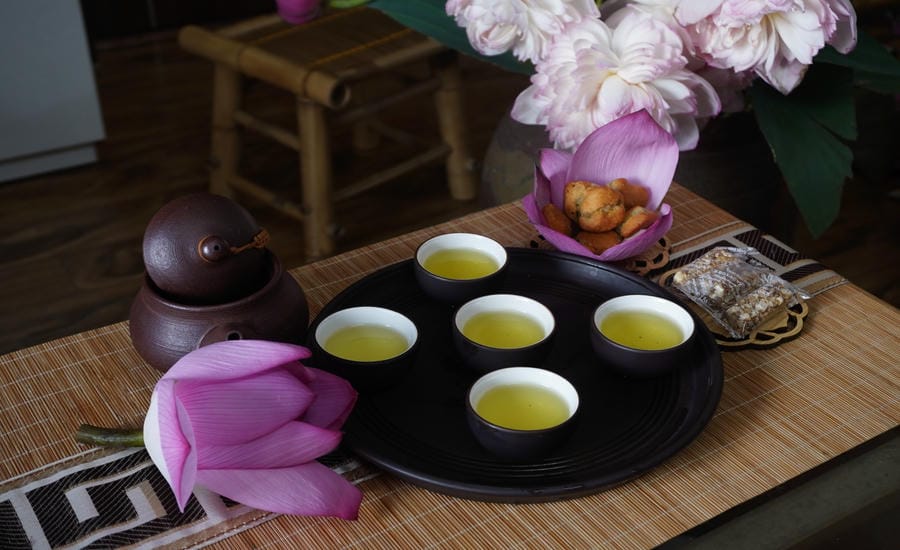
The harmony between tea essence and lotus essence
According to artisan Trinh Nuong, lotus is not precious enough, the base tea must also be carefully selected to create perfect harmony. The type of tea she often uses is Tan Cuong green tea from Thai Nguyen. This is a tea region famous for its special soil conditions and farming and drying techniques passed down through many generations.
Tan Cuong tea has a mild astringent taste, deep sweetness, and clear yellowish-green water. When combined with Bach Diep lotus fragrance, the two ingredients complement each other, creating a delicate balance between fragrance and taste.
The lotus fragrance must be prominent but not overwhelming the tea. The tea must be strong enough to enhance the lotus fragrance but also not too harsh. After drinking, tea lovers will feel purity, comfort and relaxation," artisan Trinh Nuong said.
That harmony has created the special value of Hanoi lotus tea - a drink not only for quenching thirst but also a cultural enjoyment culture nurtured through many generations.
Amidst the increasingly bustling modern pace of life, artisans like Nguyen Thi Trinh Nuong are still quietly preserving the fragrance of lotus and the traditional values of Hanoi. In each fragrant cup of tea, there is not only the taste of tea and lotus fragrance but also the enthusiasm, love for the profession and the desire to bring Vietnamese culture closer to the domestic and international public.
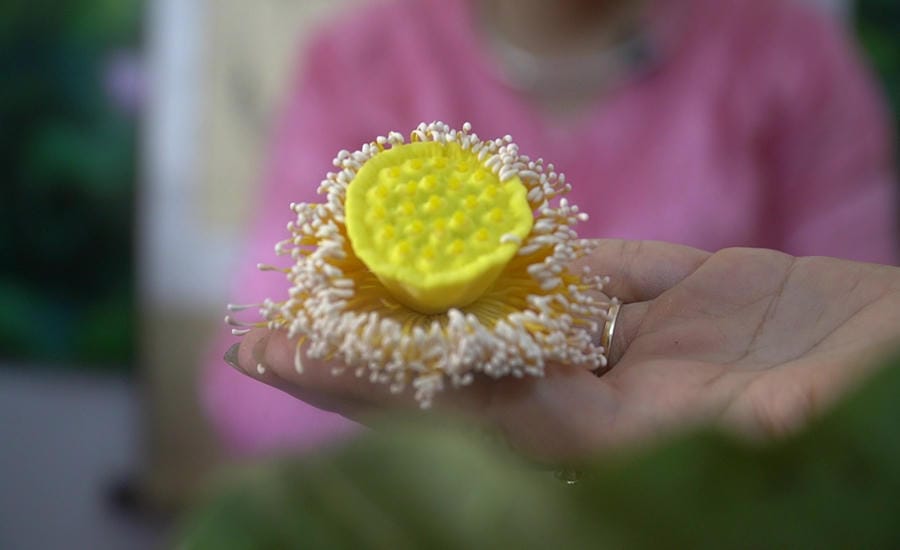
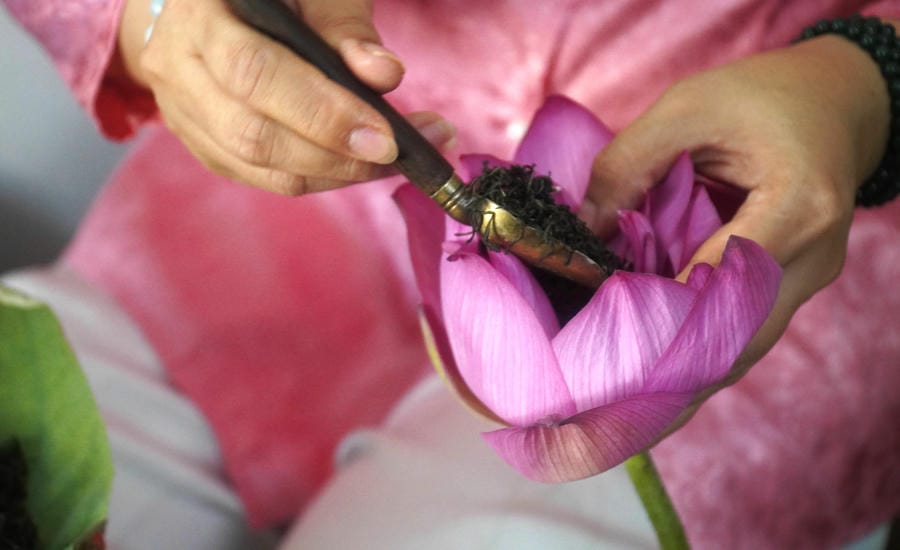
If lotus tea marinated in traditional methods has a rich, thick and lingering fragrance, fresh lotus tea marinates a feeling of freshness and lightness, as if taking tea lovers to sit in a lotus pond in full bloom.


