
Hanoi is a place that preserves a system of relics associated with the life, career and thought of President Ho Chi Minh.
According to statistics from the cultural sector, there are currently hundreds of locations, works, artifacts and memorial spaces related to Uncle Ho in the city.
In which, many relics have become famous destinations, with special value in history, culture and revolutionary tradition education.
The first destination and also the most sacred place is the relic complex: Ho Chi Minh Mausoleum, Presidential Palace, Ho Chi Minh Museum, Ba Dinh Square.
In the vast and solemn space of the country's political center, the silent line of people queuing to the Mausoleum to pay respects to Uncle Ho has become a familiar image every May.
Right behind the Mausoleum is the Ho Chi Minh Presidential Relic Site at the Presidential Palace with Uncle Ho's stilt house, Uncle Ho's fish pond and rows of green trees.
The small, simple stilt house in the middle of a large garden always moves many tourists with his simple and approachable lifestyle. This is also a place chosen by many families to take their children to visit and learn about history on May 19.
Not far away, the Ho Chi Minh Museum is home to thousands of valuable documents and artifacts about the life and revolutionary career of President Ho Chi Minh.
The museum space is modernly designed, recreating Uncle Ho's journey of wandering to find a way to save the country and the major milestones of national history.
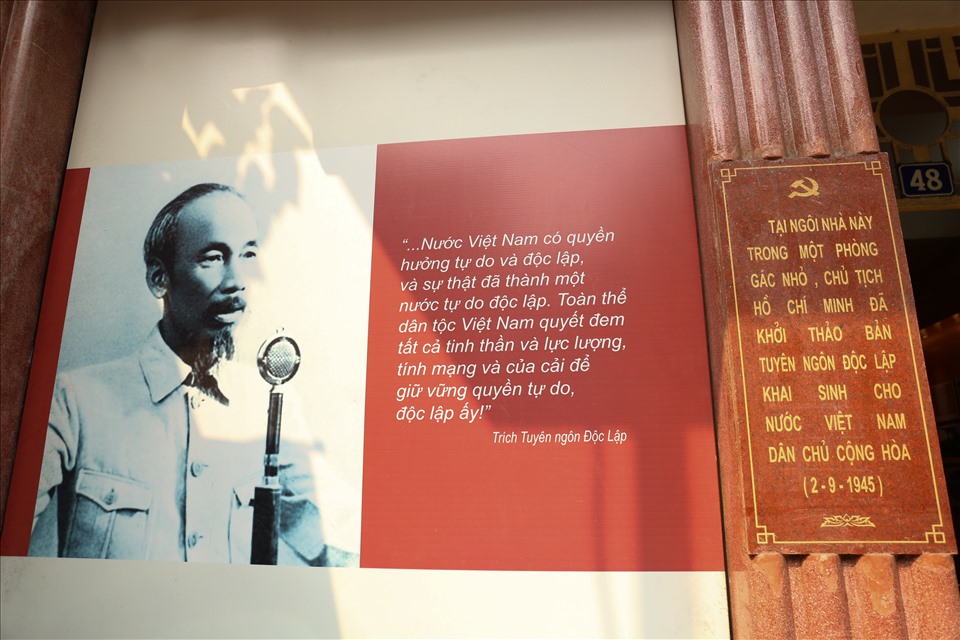
If you want to combine exploring history with experiencing the space of the Old Quarter, visitors can visit house number 48 Hang Ngang.
This is where President Ho Chi Minh wrote and completed the Declaration of Independence before he read it at the historic Ba Dinh Square on September 2, 1945.
The house still preserves many original artifacts, recreating Uncle Ho's simple working space in the historic autumn days.
Another meaningful address is the house of Mrs. Nguyen Thi An's family in Phu Thuong ward, Hanoi.
This is the stopover of Uncle Ho from the Viet Bac war zone returning to Hanoi on August 23, 1945 to prepare to meet the national people.
Ms. Nguyen Thi An's house was originally a revolutionary base, once nurturing and protecting many high-ranking Party cadres.
Also here, Uncle Ho worked with comrades Truong Chinh, Vo Nguyen Giap, Tran Dang Ninh... After that, Mrs. Nguyen Thi An's family was also honored to welcome Uncle Ho to visit in 1946.
In Ha Dong ward, the Ho Chi Minh Memorial House in Van Phuc silk village is also a destination with a strong historical imprint.
Not only famous for traditional silk weaving, Van Phuc is also a land rich in revolutionary traditions.
It was here that President Ho Chi Minh wrote the National Resistance Call on December 19, 1946 and together with the leaders of the Party and Government resolved important revolutionary tasks.
On December 18 and 19, 1946, President Ho Chi Minh chaired the Expanded Conference of the Standing Committee of the Central Committee, launching a nationwide resistance war against French colonial invaders, through the "National Call for Resistance" drafted by Him.
In addition to the central area, many tourists also come to K9 Da Chong - a relic located in the middle of Ba Vi mountains and forests.
This used to be the workplace of President Ho Chi Minh. The green, peaceful space here brings a feeling of contemplation and sacredness to many generations when visiting.
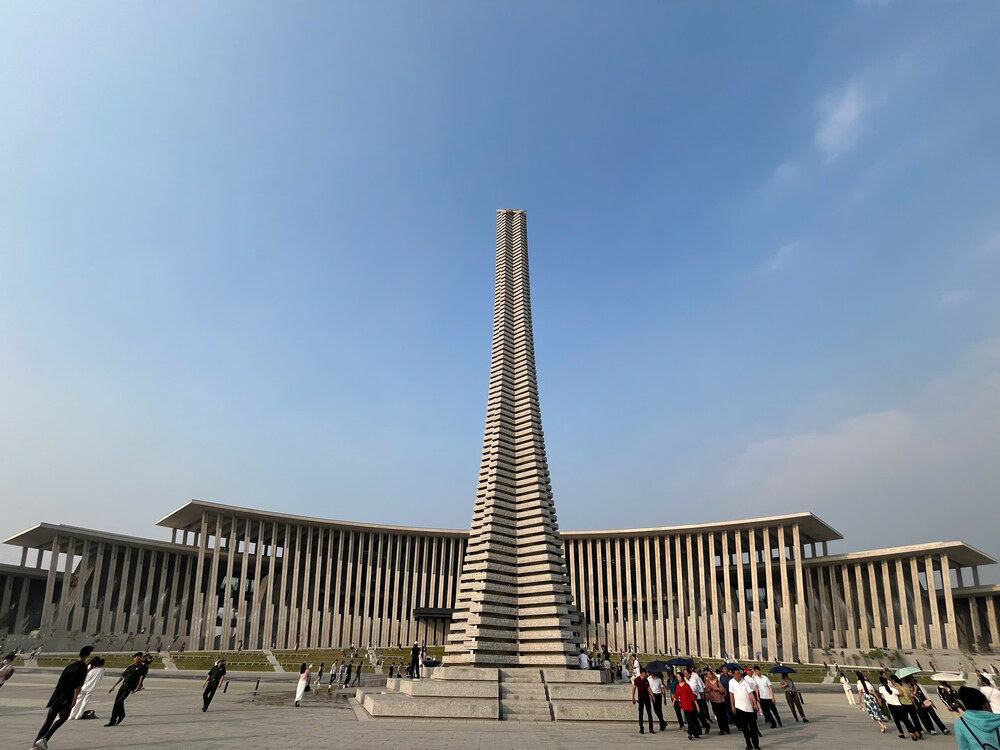
In addition, many historically valuable places such as the Vietnam Military History Museum are also chosen by tourists on their journey to explore Hanoi on May 19.
These spaces not only preserve the heroic historical memories of the nation but also contribute to helping viewers feel more deeply about the patriotic tradition and revolutionary spirit of previous generations.


