
Mr. Vu Chi Dung (70 years old) and Ms. Tran Thi Giang (67 years old), living in Hoang Mai, Hanoi, are a couple passionate about travel who have made many journeys to explore all over the country from 2015 to now.
In more than a decade of roaming on the roads, the couple has crossed Vietnam 3 times by motorbike along with dozens of long-day trips to provinces and cities from the northern border region to the south of the Fatherland.
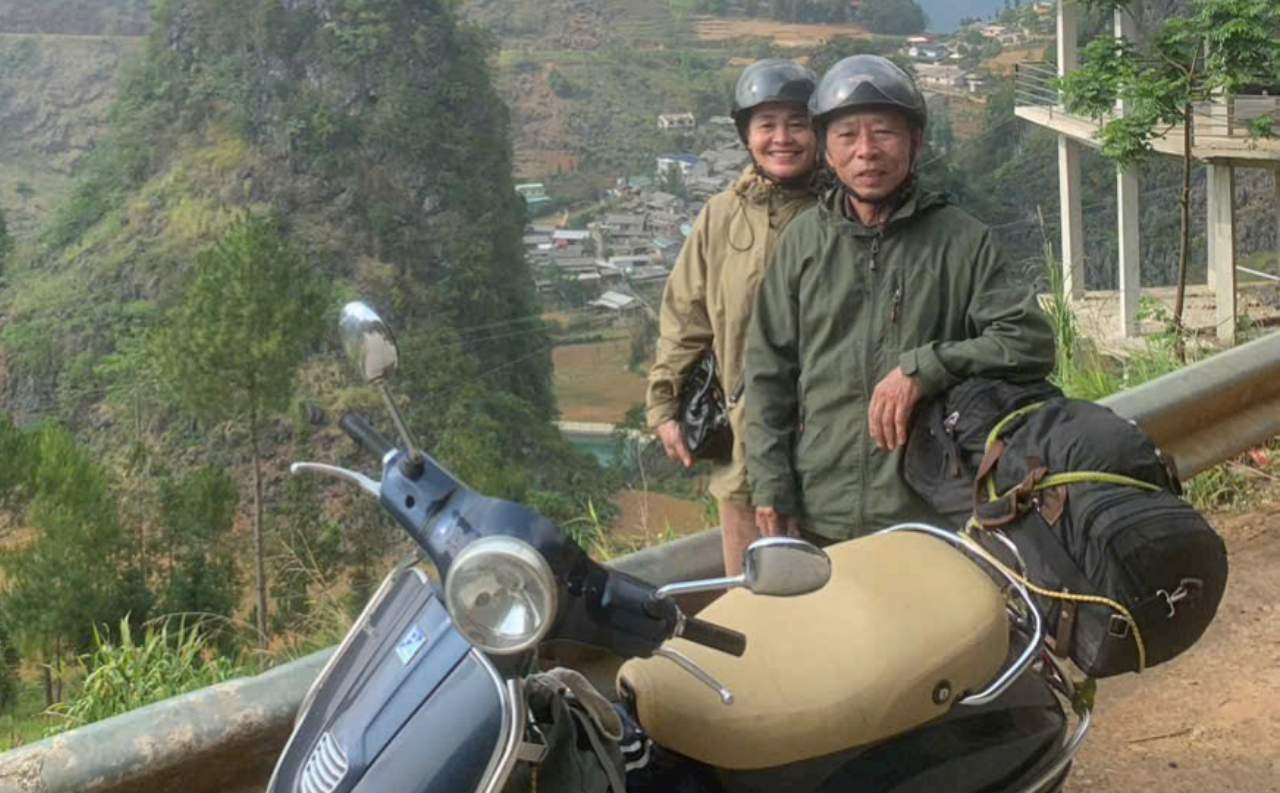
Although often traveling through dangerous mountainous roads by scooter, Mr. Dung said that he has never been too worried because he has many years of long-distance driving experience.
According to him, just knowing the technique and operating principles of the vehicle, going downhill can still ensure safety.
He said that the most important technique when going down to high and long passes is to absolutely not turn off the engine or lower the throttle as low as possible.
At that time, the clutch will lose grip with the engine, causing the car to plunge downhill inertia, posing a potential risk of loss of control.
To go downhill safely, the driver must keep the engine running and steering evenly to maintain a speed of about 25-35 km/h.
At that time, the clutch still clings to the engine, creating the force of the engine to slow down the car's speed, similar to using a low gear on a manual motorcycle," Mr. Dung shared.
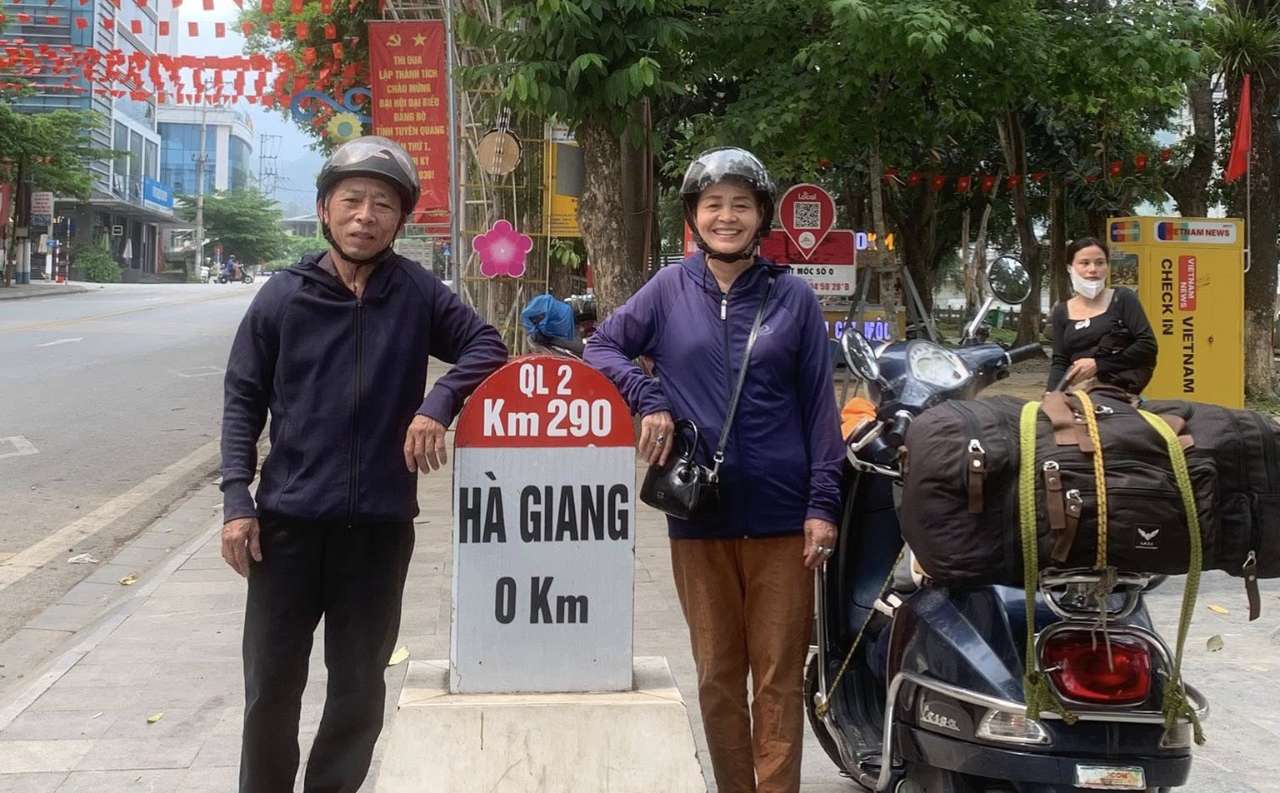
According to the experience of a 70-year-old backpacker, the driver needs to coordinate evenly between the front and rear brakes, in which the front brakes should be slightly squeezed in front for a beat to create braking force on the brake disc and then harmoniously combined with the rear brakes.
Abusing the rear brake for a long time can cause the braking system to overheat, reduce braking ability and increase the risk of slipping or losing control of the car.
Therefore, the driver needs to coordinate braking reasonably, because when going down a long pass, braking technique is as important as keeping the accelerator correctly.
Ms. Giang said that in each trip, the couple always prioritizes carrying as compact luggage as possible for convenient travel.
However, essential items for daily life are still brought fully such as clothes, medicine, raincoats or a small electric kettle so that you can boil warm water in the middle of the road.
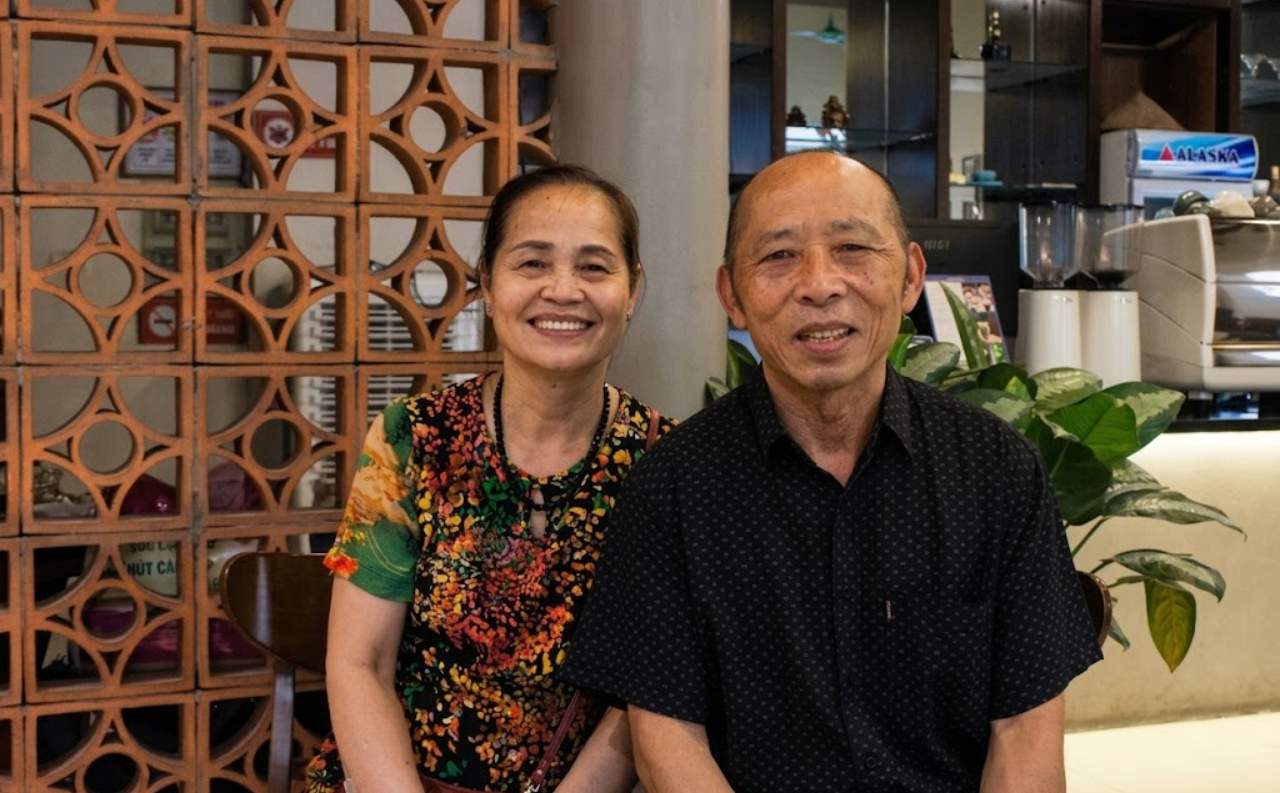
Mr. Dung shared: "There are days when we drive continuously hundreds of kilometers, but we both still feel happy because wherever we go there are beautiful scenes and friendly people. For me, the happiest thing is to personally take my wife through the places she wants to set foot in.
In the next journey, he will choose a zigzag route, going deep into the border roads, pristine villages and the remaining provinces and cities that his wife has never set foot in.
Humans only live once, so when I am healthy enough and can still travel, I want to explore more places with my wife. For me, old age will be more meaningful when both are still accompanying each other on each journey," Mr. Dung confided.


