
The meeting of heritage sounds
Amidst the vibrant life of Hanoi's Old Quarter, the Cultural and Artistic Center No. 22 Hang Buom these days has become a special destination for heritage. Here, the program focuses on honoring two types of intangible cultural heritages, Chieng Muong and Khmer Ngu Am music - unique folk art forms, crystallizing the spiritual life, beliefs and long-standing cultural identity of the Muong and Khmer communities.
This is the third consecutive year that the Tourism Information Center (Vietnam National Administration of Tourism) has organized an exhibition and introduction of intangible cultural heritage, continuing the series of programs that have made a positive impression in 2023 - 2024.
First is the Muong gong space - a type of music closely associated with the spiritual life of the Muong people in Phu Tho (old Hoa Binh). The gong sound sound is profound and profound, carrying the rhythm of the mountains and forests and the depth of local beliefs.
According to the artist, Muong gongs are not only musical instruments, but also sacred objects, present in important rituals of human life and the community such as weddings, celebrating new homes, seasonal prayers or funerals. Each gong set and each gong has its own rules, reflecting the worldview and life concept of the Muong people.
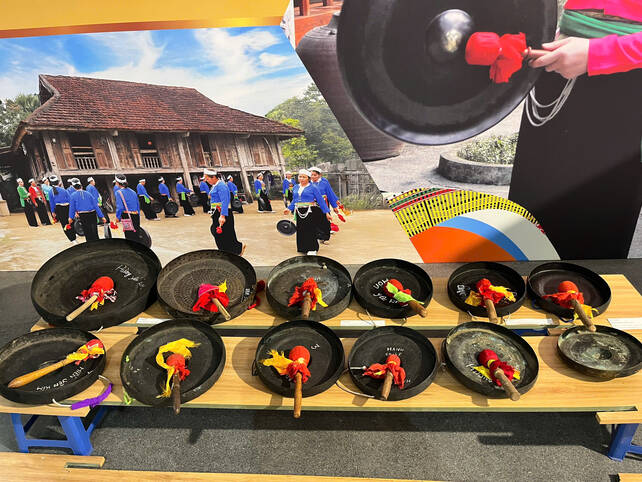
Muong gong is not only a folk performance art but also a vivid expression of the beliefs and spiritual life of the Muong people, present in most important events of the community.
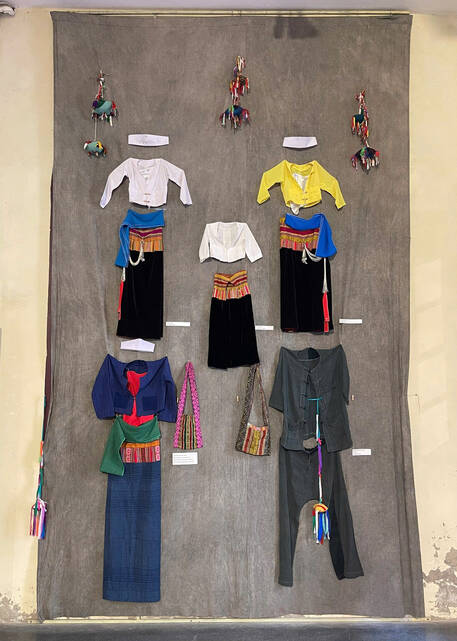
Today, Muong gongs continue to resound in the village, gongs preserve spiritual values through festivals, conservation and creativity in clubs, teaching activities for the younger generation... At the same time, promoting the value of gongs when stepping onto the contemporary stage, participating in performances at festivals and becoming an attractive community tourism product.
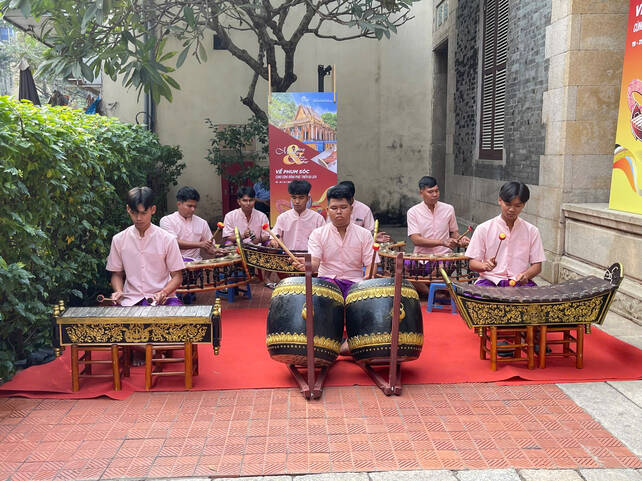
If Muong gongs carry the quiet sound of mountains and forests, Khmer pentatonic music brings a bustling, flexible and ritualistic musical space. Built on a system of five basic sounds, pentatonic music is a typical traditional music form of the Khmer people in the South, closely associated with Buddhist life and community festivals.
Ngu am music is a form of concert music with a ritualistic and religious nature, associated with the lives of the Khmer people according to the Theravada Sub- overlordism in pagodas, villages and villages. The origin of this music genre is influenced by the royal court and religion of India and some countries in Southeast Asia.
The orchestra's structure is imbued with the five elements principle, demonstrating balance of the five elements (Metal, Wood, Water, Fire, Earth) and harmony of yin and yang. Each set of musical instruments is made from five different materials to create five unique timbres: iron set (Kim: Roneat Dek instrument); Wooden set (Carpentry: Roneat Ek, Roneat Thung); wind (Water: Srolai Pinn Peat trumpet); bo dong (Hoa: Kuong Vong Toch, Kuong Vong Thum, Chhung); set of skins (Earth: Sampho drum, Sko Thum).
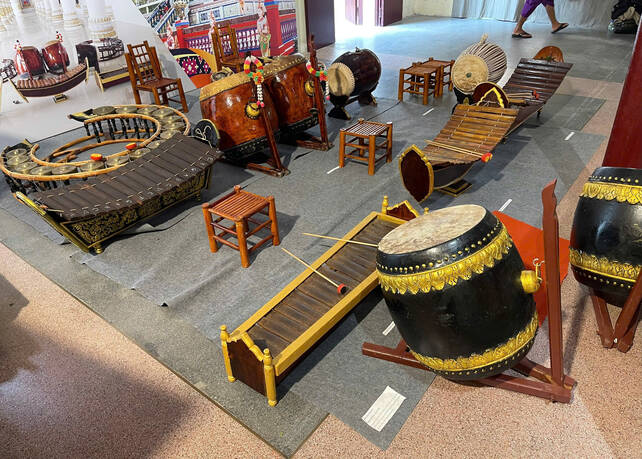
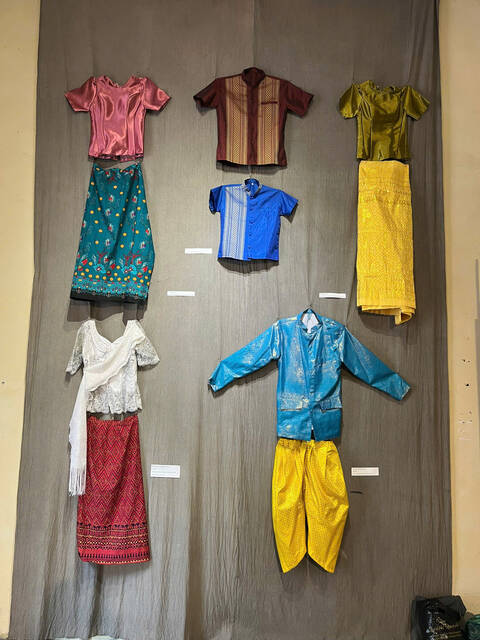
The pentatonic orchestra with its signature musical instruments has partly recreated the Khmer festival space right in the heart of the capital. Each rhythm, each rhythm carries the spirit of community, joy and cohesion in the cultural life of the Khmer people.
Bringing heritage closer to the public
Through heritage exhibition and introduction activities, we expect cultural heritage values to be widely spread, creating a bridge for heritage to reach closer to the public and tourists. At the same time, gradually effectively exploiting the value of intangible cultural heritages to form attractive tourism products, attracting tourists", Mr. Hoang Quoc Hoa - Director of the Tourism Information Center (Vietnam National Administration of Tourism), shared.
With Muong gongs, this art form is closely associated with the spiritual life and community activities of the Muong people and is listed in the National Intangible Cultural Heritage List. Activities to preserve and promote Muong gongs not only bring in income but also arouse pride, help the community proactively preserve heritage, continue to spread Vietnamese identity.
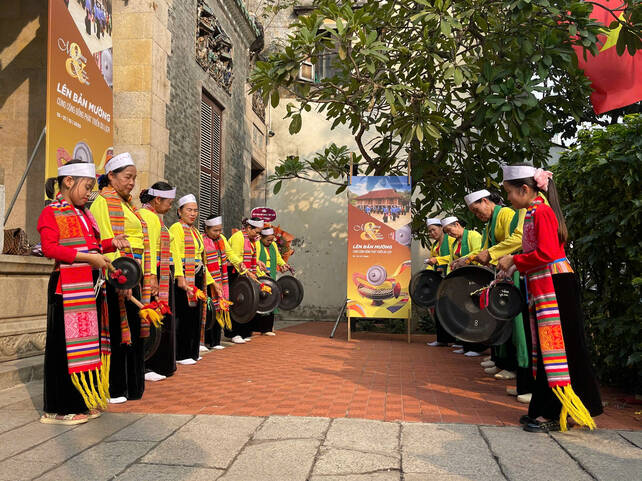
"I do not directly participate in gong performances, but I always look for opportunities so that the villagers have the opportunity to go and interact with the locality and abroad. The gong language is always associated with Muong village in rituals. When performing and interacting, many people will improve their skills and become more and more loved and proud of their identity. Performing to serve tourists is our desire because it will help women both be happy and have income to support more in life", Ms. Duong Thi Bin - Head of the traditional agricultural and textile cooperative of Luc Nghiep Thanh, Phu Tho province - shared.
For Khmer pentatonic music, bringing an orchestra including drums, horns, instruments, etc. to perform in the center of the capital has created a new experience for people and tourists. In the contemporary context, the performance space and scope of music applications have changed to meet social needs. In addition to its traditional role associated with Buddhist rituals at the pagoda, this orchestra is also owned and operated by agencies, organizations and individuals in the Khmer community.
As of 2025, Vietnam has been honored 6 times by the World Travel Awards as "World's Leading Heritage Destination". Along with that, 17 representative intangible cultural heritages of humanity were recognized by UNESCO. The numbers not only reflect the richness and uniqueness of Vietnamese cultural identity that is internationally recognized, but also show the depth of human values that have been preserved through many generations. These recognitions contribute to affirming efforts to preserve heritage, while enhancing the image and position of Vietnam on the international cultural - tourism map.
By introducing two types of heritage into urban cultural space such as 22 Hang Buom, heritage is no longer limited to the original community but is placed in the flow of modern life. This approach not only contributes to spreading national cultural values, but also creates conditions for young people and tourists to understand, care for and accompany the long-term heritage conservation work.
