
Located at the foot of Quan Ba Heaven Gate, Lung Tam linen weaving village (Lung Tam commune, Tuyen Quang province) has long become an attractive destination for domestic and foreign tourists.
Not only famous for its sophisticated brocade fabrics, Lung Tam linen weaving village also preserves the traditional linen weaving craft with a history of hundreds of years. This handicraft is closely associated with the cultural and religious life of the H'Mong people on the Ha Giang stone plateau.
For the H'Mong people, linen is not simply a textile material but also carries a special spiritual meaning. They believe that when they die, everyone must wear clothes made of linen to find their way back to their ancestors. A woman before going to her husband's house must also prepare a linen outfit to be welcomed and blessed by her husband's ancestors.
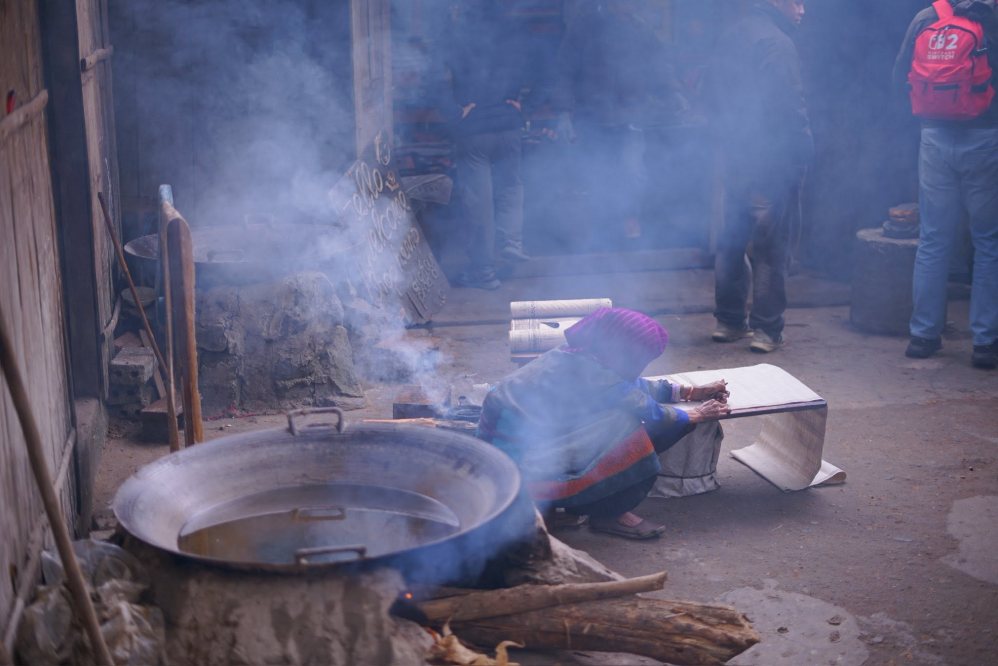
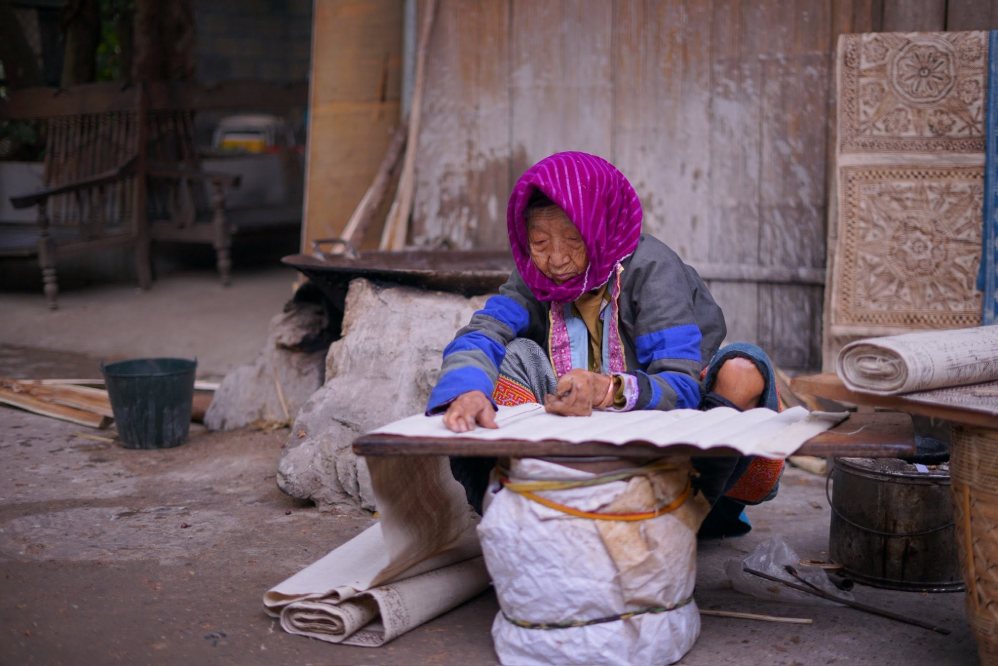
To complete a traditional linen cloth, the H'Mong people must go through up to 41 completely manual stages. Each step requires dexterity, meticulousness and a lot of time.
After harvesting, the flax stem is separated for fibers and then sewn into rolls. H'Mong women often take advantage of sewing fibers in their free time, so they always carry flax rolls with them. To make the fibers firmer and evener, people also use a special tool to help coordinate smoothly between hands and feet, which can sew many fibers at the same time.
The bundles of yarn are then soaked and boiled many times with kitchen ash water to soften and naturally bleach. In the final boiling, beeswax will be added to help the yarn become smoother and more slippery. Finally, the bundles of linen yarn are placed on a round piece of wood, on top of which is a flat stone slab. The woman uses her feet to rub evenly so that the stone slab rolls back and forth, helping the linen yarn become soft and bright white.
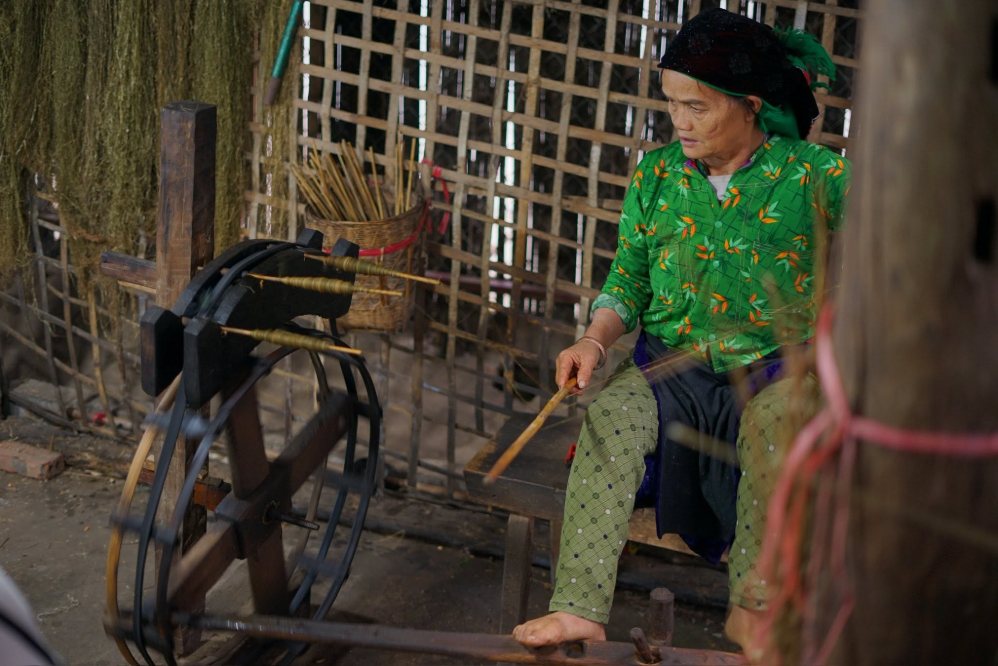
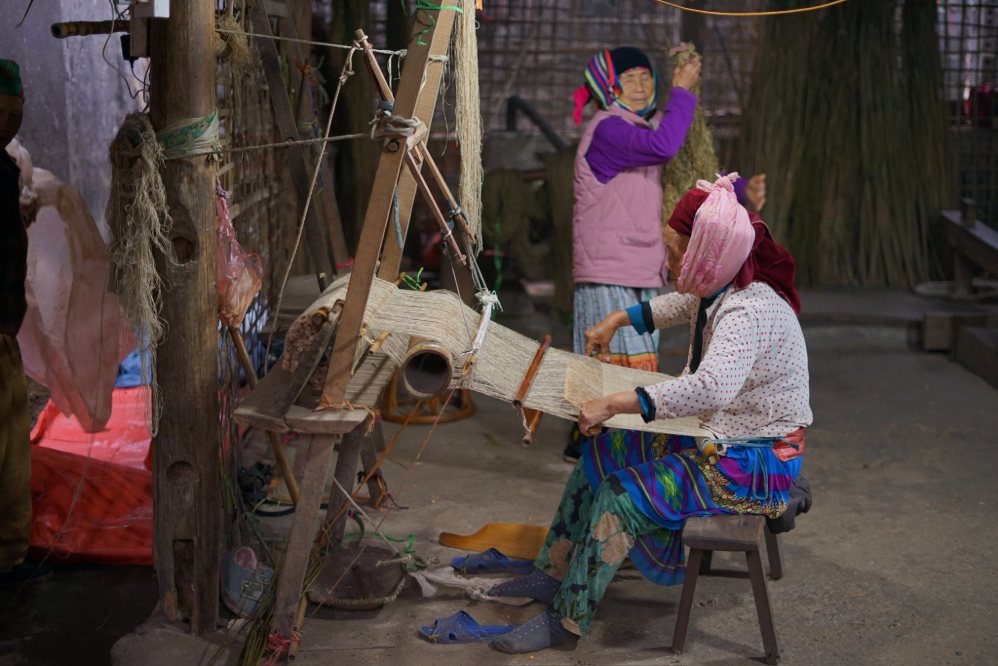
When the yarn meets the requirements, the woman starts to put it on the weaving frame to weave. This is a month-long work because they can only take advantage of it after completing farming and taking care of the family.
After weaving, the fabric continues to be boiled, washed, dried, and then rolled flat before entering the dyeing stage.
The H'Mong people use their own indigo dyeing technique for linen fabric. The fabric is often dyed many times to achieve the desired color. In addition to indigo, they also take advantage of leaves, roots, wooden bark and many natural materials to create beautiful and durable colors over time.
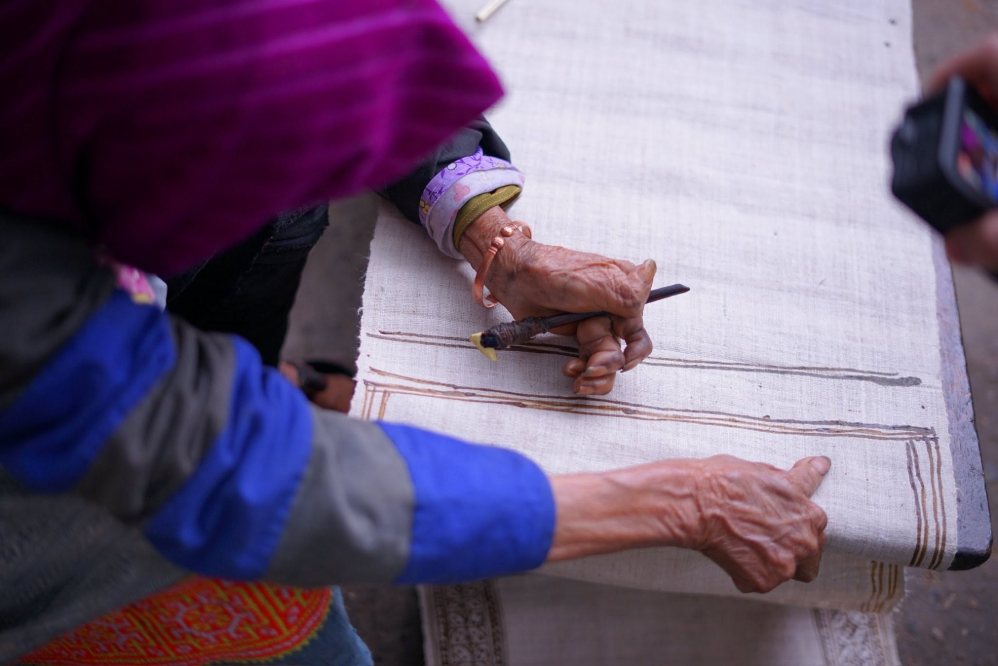
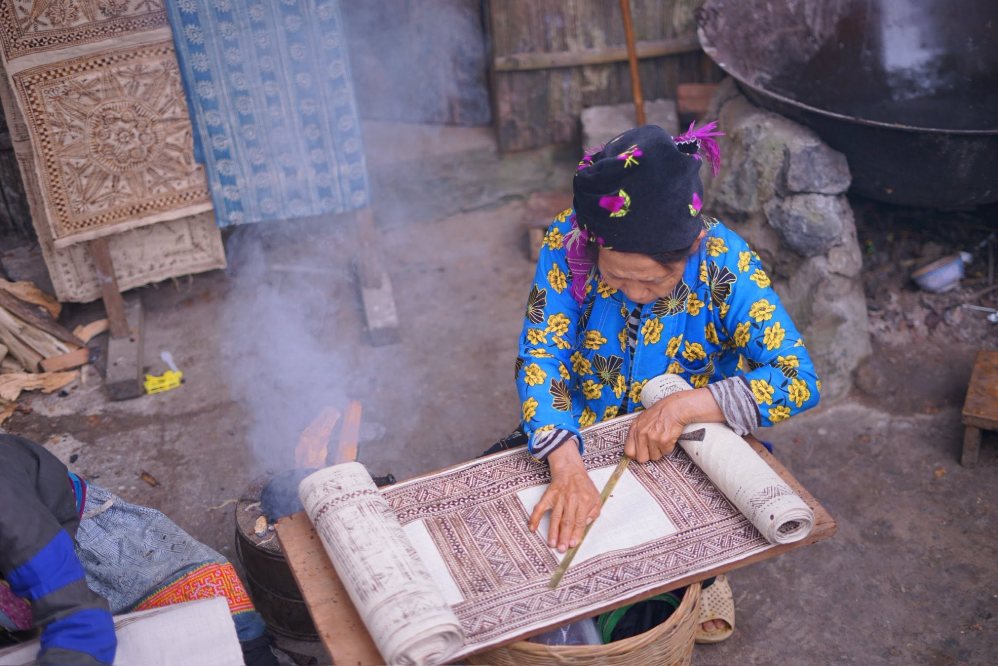
The most special point lies in the beeswax drawing stage. Handmade pens are dipped in melted beeswax and meticulously create patterns such as spirals, triangles, coins, bird's legs or crosses. Each pattern has its own meaning, reflecting the concepts of the universe, nature and life of the H'Mong people.
Because of that meticulousness, to complete a traditional costume, the craftsman sometimes has to spend nearly a year of continuous labor.
Today, in the face of modern life, the traditional linen weaving profession once faced the risk of fading away, when many young people are no longer interested in a job that requires too much time and effort.
The turning point came in 2001 when Lung Tam Linen Weaving Cooperative was established. This model helps people have a stable income and create more jobs for women in mountainous areas. From the initial 10 members, the cooperative has grown to more than 100 workers, mainly local women.
Besides traditional fabrics, artisans also create many products to serve travel needs such as handbags, scarves, wallets, pillows, clothes, accessories... All are made from local flax fiber combined with traditional patterns typical of the H'Mong people.
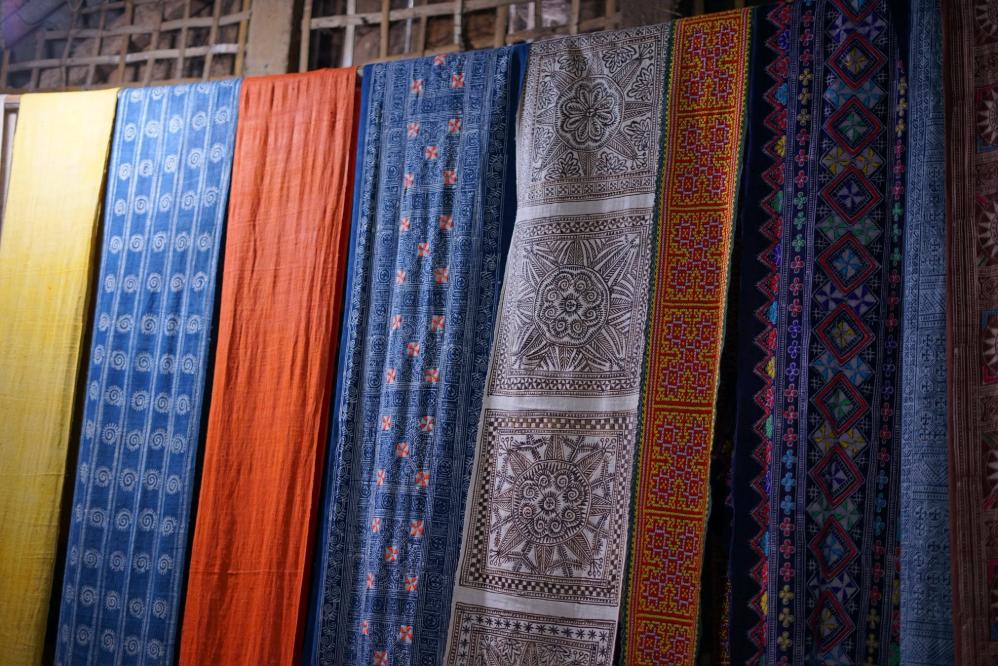
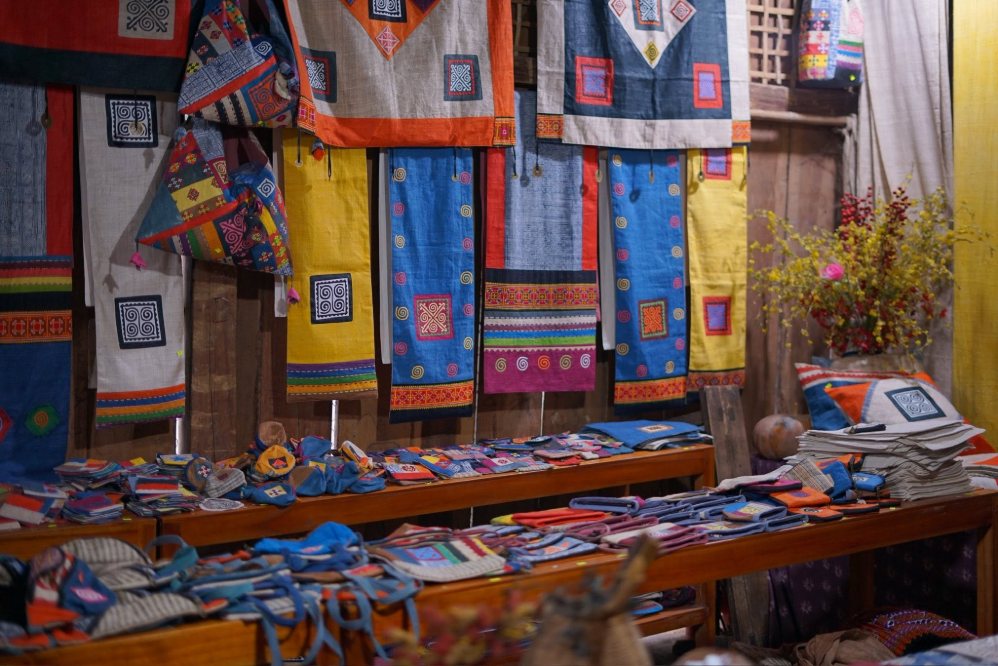
Today, visiting Lung Tam linen weaving village, visitors not only learn about the process of making a linen cloth but also have the opportunity to directly observe artisans spinning, weaving, dyeing indigo and painting with beeswax right at the workshop.
Mr. Dang Phuong, a tourist from Hanoi, shared that Lung Tam linen weaving village is not only a place to preserve the traditional linen weaving craft of the H'Mong people but also tells a story about the persistence, ingenuity and dedication of highland women.
From simple linen fibers, they create sophisticated fabrics, bearing a strong cultural imprint. Each weaving line, each pattern is like recreating the beauty of the mountains and forests and the simple aspirations of the H'Mong people," Mr. Phuong said.


