
The beautiful intersection of Eastern and Western architecture
In the heart of modern Can Tho city, there is still an ancient house that fully preserves cultural and historical values, which is Binh Thuy Ancient House.
Located on Bui Huu Nghia street (Binh Thuy ward, Can Tho city), Binh Thuy ancient house (also known as Duong family church) is a familiar cultural and tourist destination for tourists from all over when coming to Tay Do land.
First built in 1870 and completed in 1911 by Mr. Duong Chan Ky, the project has a unique feature due to the harmonious cultural intersection between Eastern and Western architecture.
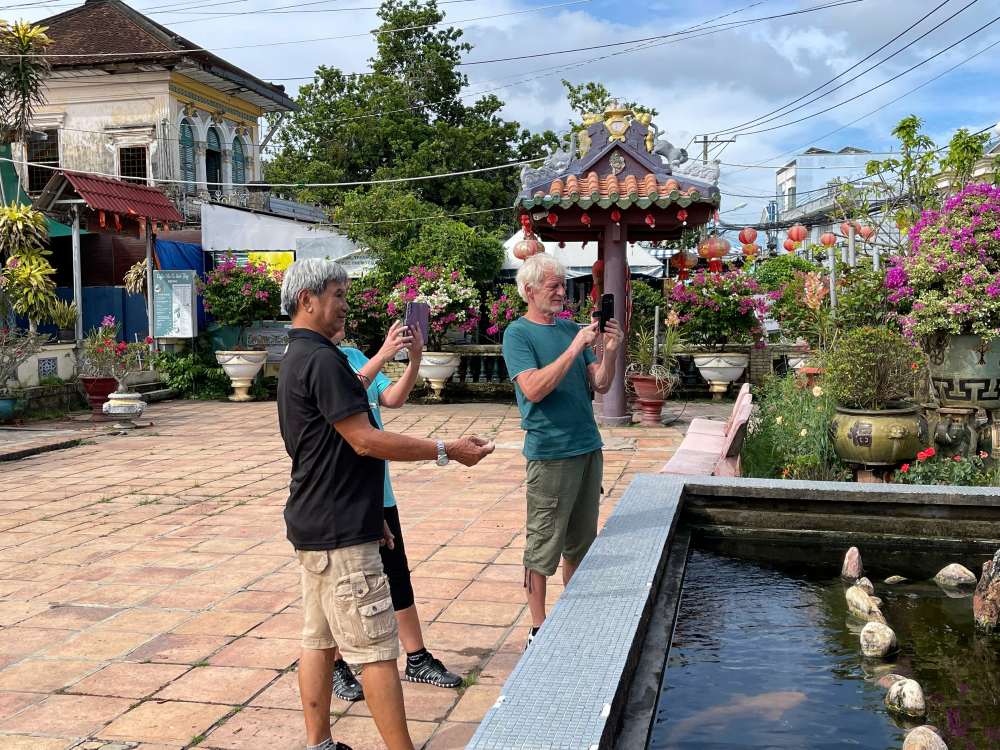
Looking from the outside, the house has the shape of a French-style mansion with the trendy Art-Nouveau architecture of the early 20th century. However, when stepping inside, the space is imbued with pure Vietnamese tradition.
The 352m2 house is divided into 3 parts: the front house, the middle house and the rear house. In which, the middle house area is the most solemn place, used as a place of worship with incense tables, altars, and parallel sentences made of finely carved acacia wood.
Not only that, Binh Thuy ancient house was also the setting for a series of famous movies such as The Hundred Knot Bamboo Tree, The Poor Man and the French movie "The Lover" (L'Amant) directed by Jean-Jacques Annaud.
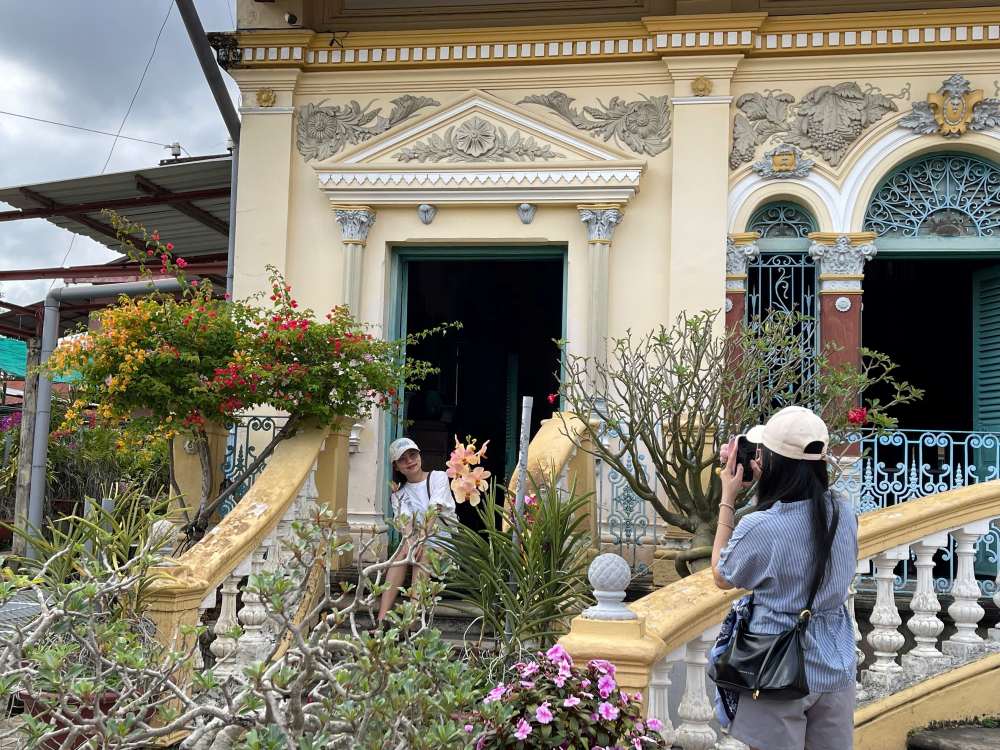
With special historical and artistic values, on March 27, 2009, the Ministry of Culture, Sports and Tourism issued Decision No. 314/QD-BVHTTDL ranking the Duong family temple as a National-level architectural and artistic relic.
After visiting, Ms. Nga (a tourist from Quang Ngai, currently working in Ho Chi Minh City) excitedly shared: "I learned about the ancient house of Binh Thuy through videos shared on social networks, so I chose this as my first destination as soon as I set foot in Can Tho. Stepping into the ancient space here, I am very impressed with the Western architecture combined harmoniously with the traditional Southern culture".
According to Ms. Nga, the house brings a nostalgic feeling, helping visitors easily imagine the old days. This place really has many beautiful photo angles that make her unable to stop shooting.
Conservation efforts
Having gone through two fierce wars, the Duong family temple is still fortunate to stand firm thanks to the protection and consensus of successive generations. Currently, the daily care and management at the relic is entirely under the responsibility of descendants in the clan.
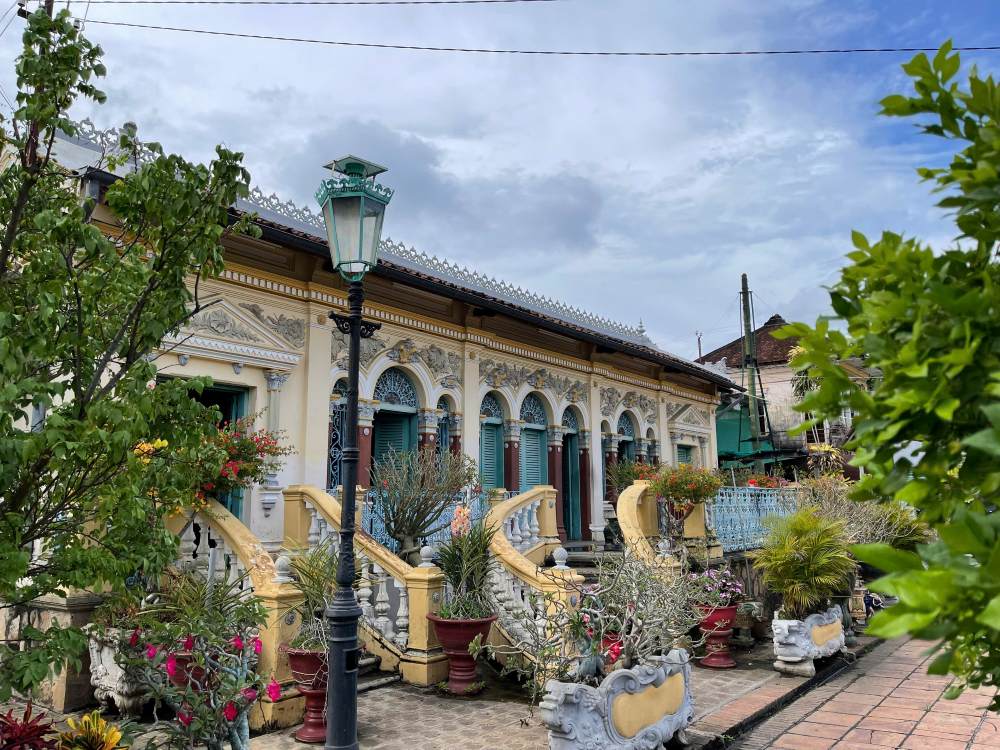
Mr. Luan, the 7th generation grandson of Mr. Duong Chan Ky, who is directly taking care of the ancient house, shared: "From the revenue from tourist entrance and photography fees, the family tries to proactively manage to compensate for daily expenses such as electricity and water bills, flower and ornamental plant care, and most importantly, maintenance and termite control costs regularly".
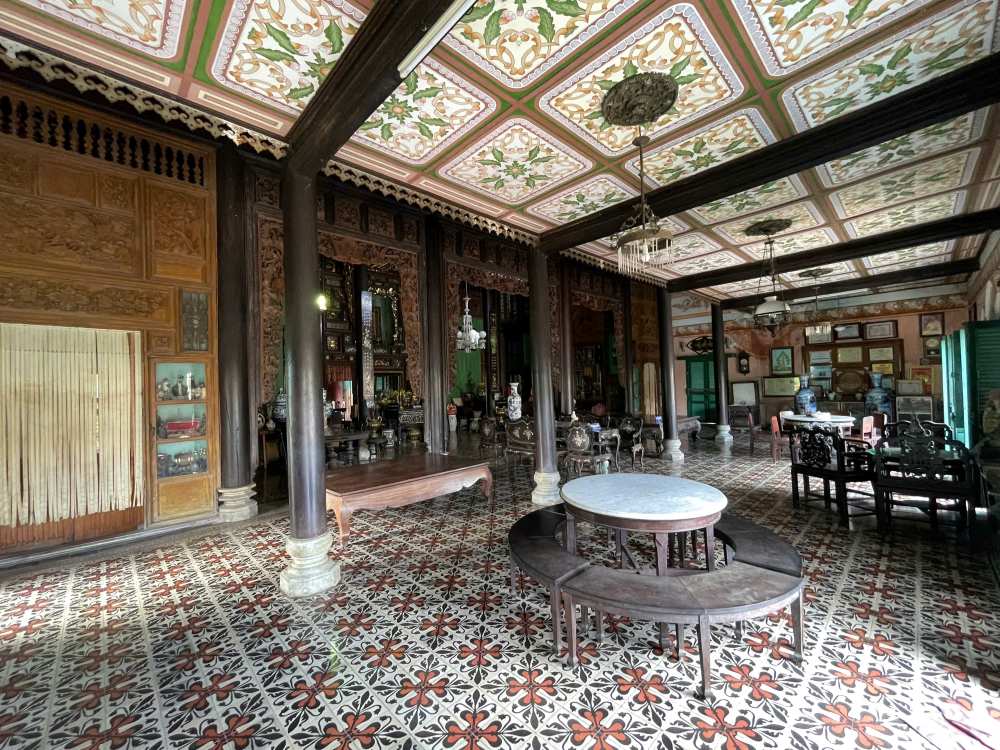
According to Mr. Luan, maintaining a wooden architecture that is more than a hundred years old is a big challenge. Due to the specific weather, just a leaking tiled roof, rainwater seeping down will easily damage the system because the beams are made of precious wood underneath. Therefore, the family always proactively checks in-depth, and immediately repairs if there are signs of minor damage to protect the house frame.


