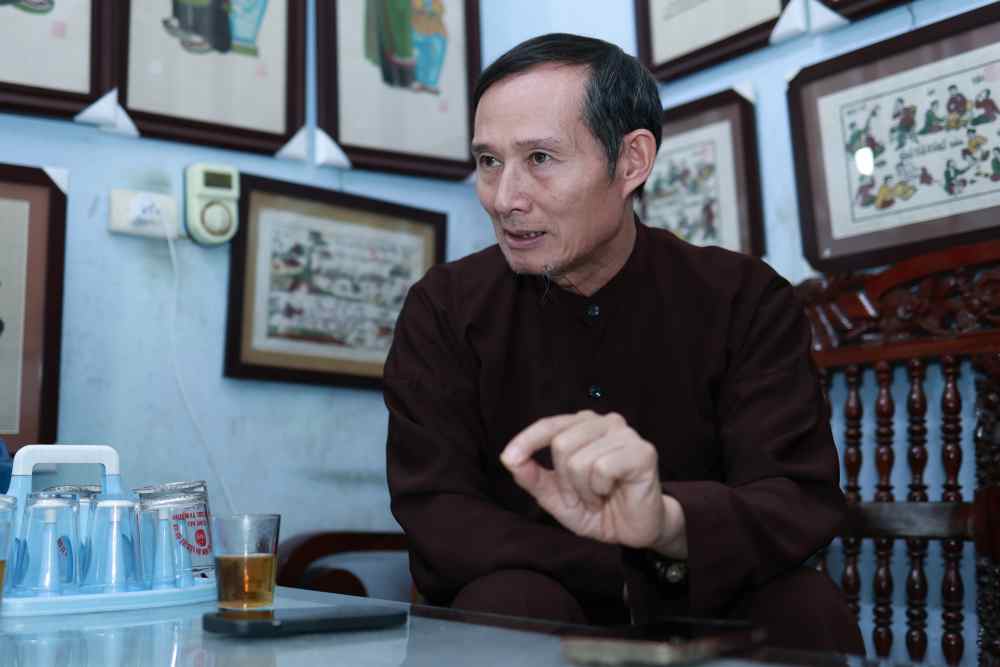
Lao Dong Newspaper had an interview with Mr. Nguyen Huu Qua - one of the last artisans of Dong Ho painting village (Thuan Thanh, Bac Ninh), the 500-year-old painting making craft has just been recognized by UNESCO as an intangible cultural heritage that needs urgent protection.
Dong Ho painting has existed for about 500 years, associated with the people of Dong Ho village for many generations. So, what is the image of Dong Ho village in the old memories of artisans?
- My childhood was associated with the bustling painting atmosphere every Tet holiday. At that time, almost every village was busy: the harp and fountain were built to cover the yard, the wooden carvings were displayed everywhere, the adults took turns mixing colors and printing paintings, while the children ran around, watching and following.
During the prosperous period of Dong Ho painting, the whole village had 30-40 households making Dong Ho paintings, when the peak was up to 200 workers. During Tet, households work day and night. Adults in the family allowed our younger generation to participate in painting as much as possible, earning more money to spend on Tet.
As an artist who has been involved in and researched folk paintings for many years, what is special about Dong Ho paintings compared to other folk paintings in Vietnam?
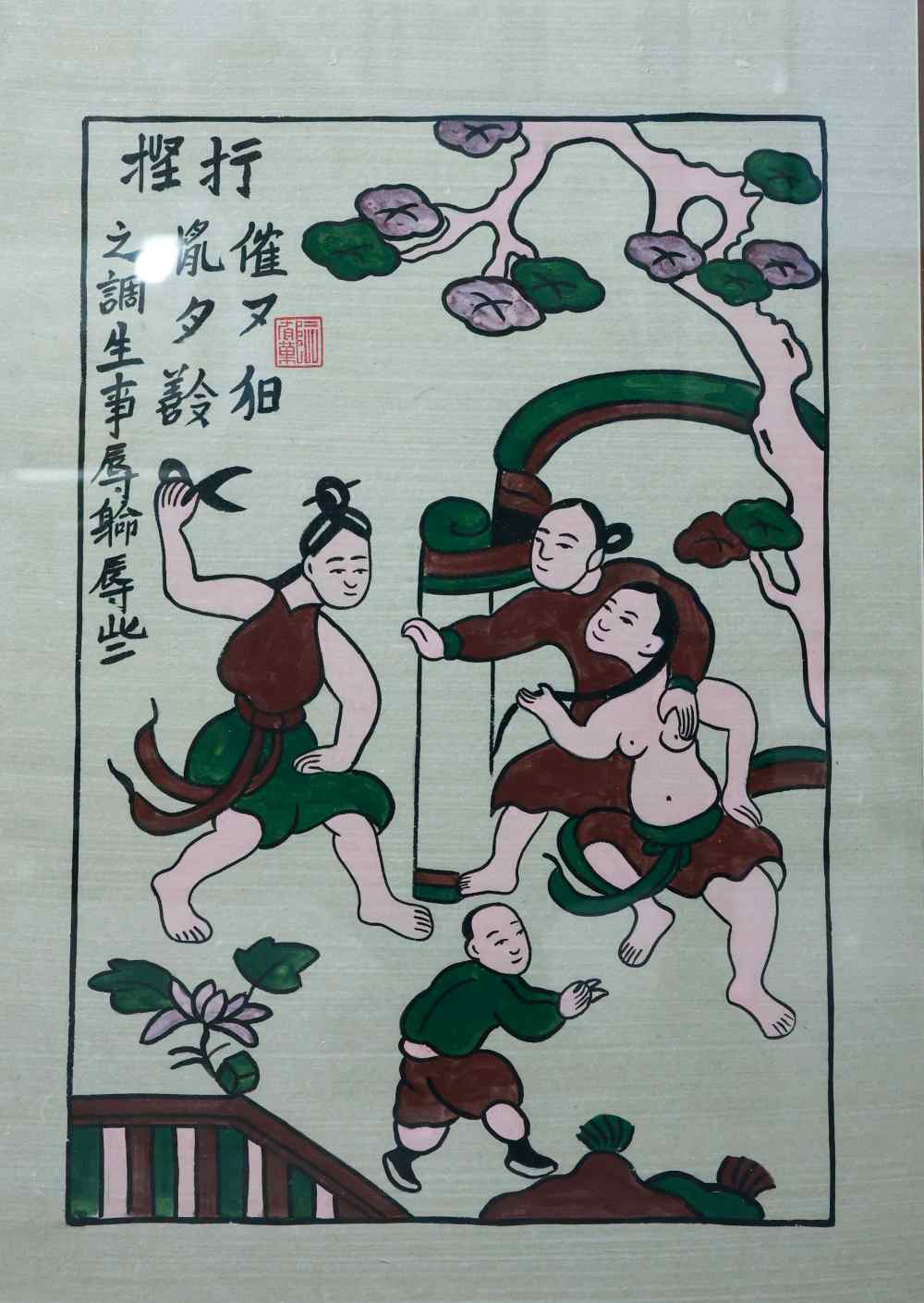
- Dong Ho paintings have very unique characteristics, expressed in many aspects, creating a difference from other types of woodcut paintings in Vietnam such as Hang Trong, Kim Hoan, Hue paintings or paintings by some ethnic minorities.
First of all, it is paper. Dong Ho paintings use scarf paper, swept from scarf powder, creating a shiny surface, both durable and has a unique visual effect that no other painting genre has.
Second is the material color. The color in Dong Ho paintings is completely natural: red is taken from small grated silkworms, yellow is from Sophora japonica flowers, green is from eucalyptus leaves, white is from the scalp, while black is created from the ashes burning straw and bamboo leaves. It is this natural color group that creates a rustic, close but colorful look over time.
Another special feature is the woodwork printing technique. Dong Ho paintings are printed in front and black behind to shape, this is a technique that is not only different from other Vietnamese folk paintings but also from many native carpentry paintings in the world.
The overlapping color layers - possibly two or three layers - create beautiful intermediate colors, such as white overlapping with red, yellow overlapping with blue... This color effect can only be achieved with manual woodblock printing.
However, to create that harmony, it requires aesthetic eyes, experience and skill of each artist in distributing colors. This is the factor that determines the artistic value of each Dong Ho painting.
As someone who has been attached to Dong Ho painting for many years, witnessed a period of prosperity and then decline, now there are only about 3 households still following the profession, according to artisans, what is the reason why Dong Ho paintings are increasingly fading away and are difficult to preserve and pass on to future generations?
- The death of Dong Ho paintings did not happen in a day or two, but was a process that lasted for decades. The underlying cause began during the economic difficult period, around the 1970s-1980s. When life is still lacking, the demand for painting and hanging paintings has decreased sharply, leading to a narrowing of product output.
In the past, people often bought Dong Ho paintings hanging on Tet. After the year, if the old paintings break down, I buy new ones. The consumer circulation occurs regularly, many buyers are also making a living from the job. But since paintings have been framed and hung for decades, the demand for buying has decreased significantly. paintings are no longer consumed as evenly as before, their circulation is slow, output is reduced, and if a craftsman cannot make a living, he is forced to quit his job.
To be able to maintain a few households up to now actually requires many factors. These households have a family foundation, tools, capital, raw materials and accumulated vocational knowledge from before. However, they have only remained at a weak level for decades. Without timely attention and support, it is very likely that the "smooth" period will continue to narrow, even leading to the risk of a complete death, like many other craft villages that have passed away.
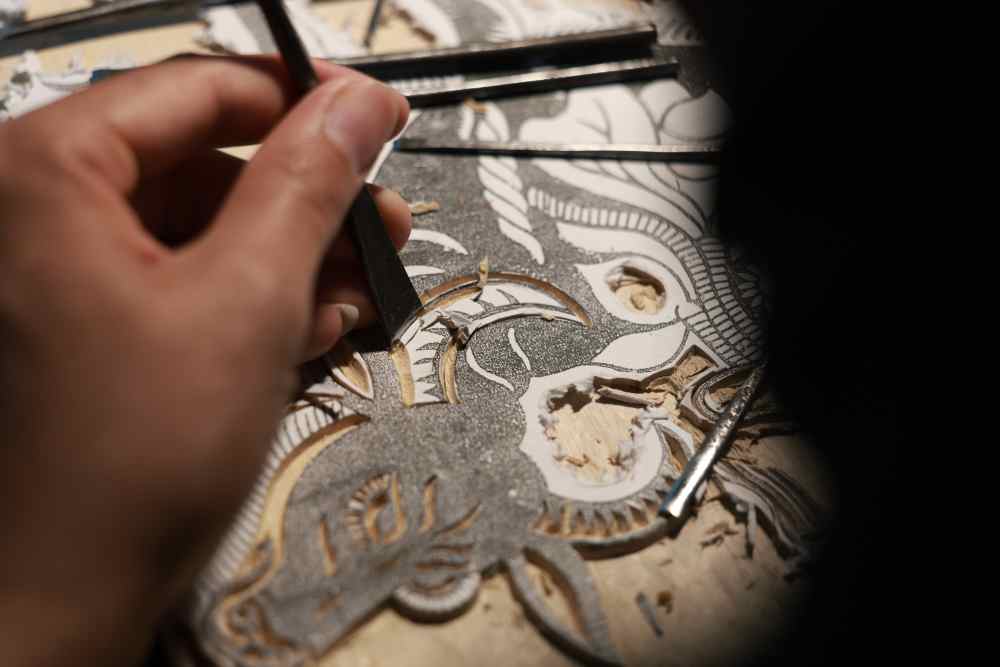
As one of the rare artisans still pursuing Dong Ho paintings, in the past time, what have you done to preserve and promote this painting genre for the next generation, artisans?
- To keep Dong Ho painting, I have made efforts and contributed for a long time. First of all, it is propaganda and introduction work. I try to convey the good values, beauty, and depth of Dong Ho painting so that everyone understands and loves it, from which I have the need to play painting and keep painting.
This propaganda is not only domestic but also with international friends. Many foreigners, such as in Italy, Spain, China... are very interested in and appreciate Dong Ho paintings. Some people I go to interact with, some relatives come here to learn and research. Since the development of social networks, connection has become much more convenient. In the past 5 years, many international friends have connected with me online, and some have come directly to the village to stay and research.
In addition to promotion, I also focus on preserving the craft. Old traditional cultural values are still maintained, and painting making activities in the family are maintained regularly. I also try to train young people in them.
However, in reality, it is very difficult. Many girls learn a trade, but when they get married, they follow their husbands and quit their jobs. This is a common situation in many craft villages today.
For decades, I have directly supported many students of the following schools: Foreign Trade, Journalism, National University, University of Culture, Fine Arts, Architecture...
Each major, each group of students approaches Dong Ho paintings from a different perspective, from culture, economy to fine arts, architecture. I support them from documents, explanations, to practical guidance, thesis, research.
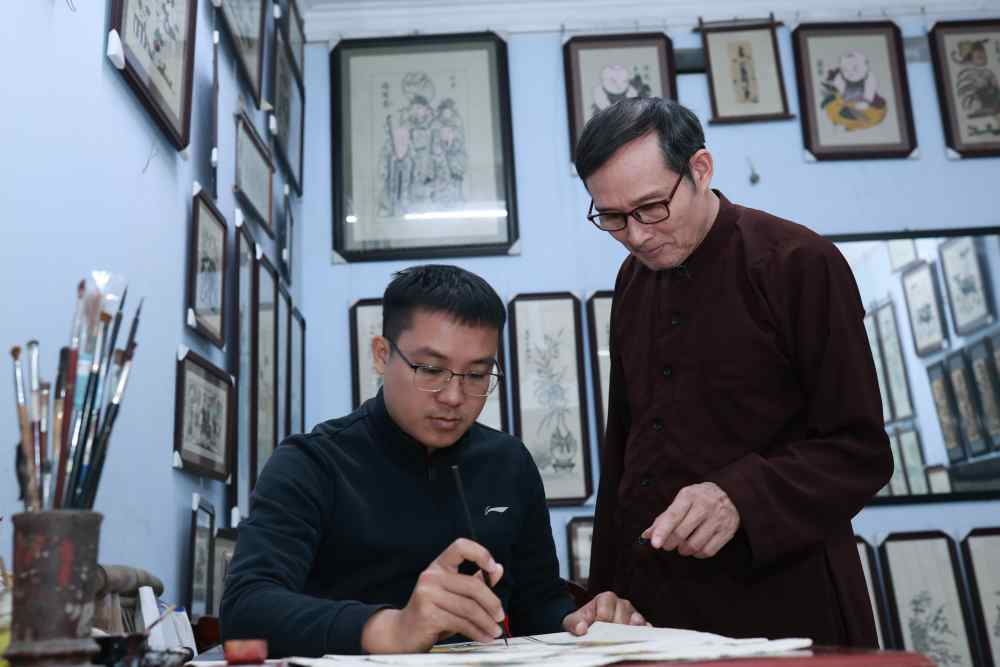
In addition to directly passing on the craft, what work will you focus on to preserve the core values of Dong Ho paintings?
- One thing I pay special attention to, even consider the most arduous and quiet, is to research and edit the Han - Nom language in Dong Ho paintings. Many people can print paintings, but not everyone can do it with the correct or incorrect words, understanding correctly or incorrectly. There were times when I was almost alone in pursuing this job.
I spent decades studying and researching Han - Nom to accurately determine the origin, story, and profound meaning of each word on the painting. When I went deeper, I fully understood the ideological and cultural values that Dong Ho paintings contained, and from there could pass them on to the next generation.
The Han - Nom road is really very difficult. It's like swimming into a big ocean, swimming until you don't have enough strength. There are words that have been learned for a long time, but if you don't read them for a few years, you will forget them immediately. Therefore, we have to go back and forth to study continuously. But only thanks to that, I understand the roots of painting, understand why Dong Ho painting is so special.
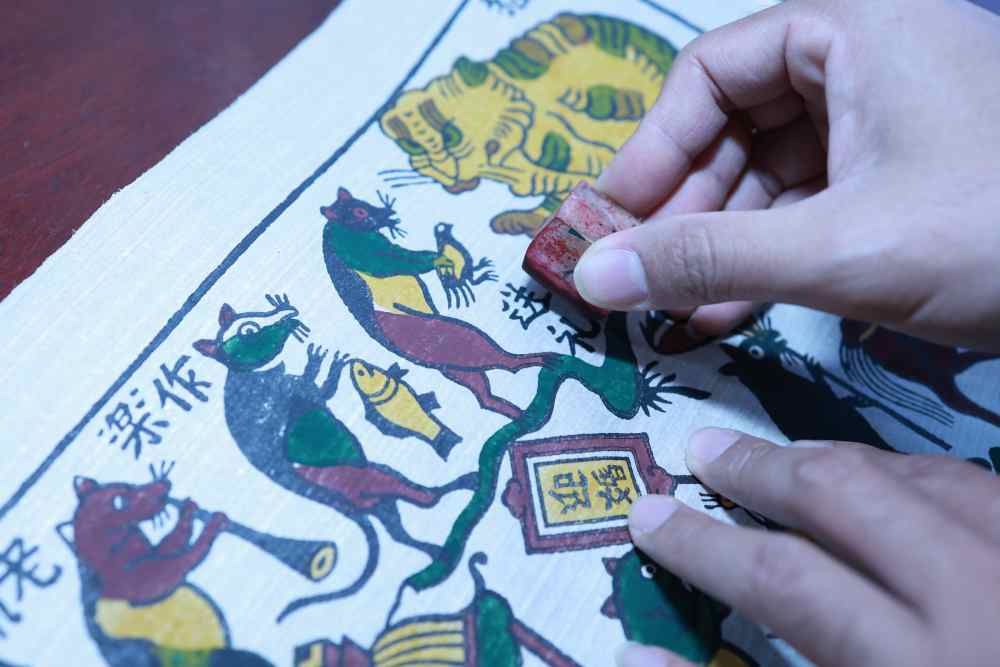
According to the artist, what are the core solutions for Dong Ho painting to develop sustainably?
- In my opinion, it is necessary to do a good job with 4 groups of solutions: One is to ensure a source of traditional raw materials. Two is to preserve and train artisans, including understanding the Han - Nom language and correctly understanding cultural values. Third, it creates output for the product.
Finally, there is a unified management orientation to avoid distorting the nature of the painting. If you do not understand the cultural roots, it is easy to introduce incorrectly, distorting the value of Dong Ho paintings.
Maintaining the profession is not only about printing paintings, but also preserving the soul and cultural core. If you swim to the big sea without knowing the roots, not knowing where to return, that will be a real failure.