
Exit fees are not necessarily included in airfares
According to CNN, Kevin Miller considers himself quite professional in traveling by air. This photographer said he can stuff all the camera equipment into a handbag and switch to "airplane mode" as soon as the taxi door closes, to help the airport transit process take place quickly and most effectively.
However, during a trip to Bali (Indonesia) in 2013, everything did not go as planned.
Miller completed check-in, chose seats, spent all the remaining Indonesian rupiah to buy souvenirs at the airport and quickly passed the security checkpoint. After that, he was suddenly asked to pay the exit fee.
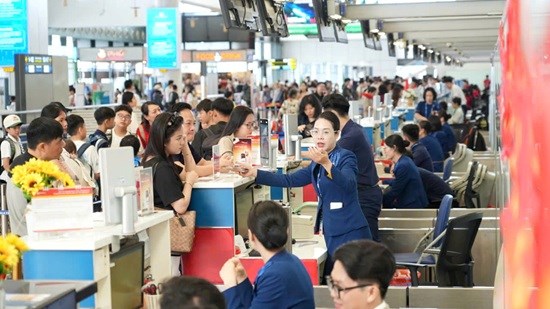
Miller said he felt extremely annoyed but still had to rush to find a way to get cash to leave the airport. However, it was too early at that time, the exchange counters were not open and no ATMs were working.
Finally, a kind American tourist gave Miller the necessary amount of money. When he asked for a business card to return later, the man just shook his head and said that he himself had been in a similar situation.
It felt like a shock because that fee appeared from nothing," Miller said.
Due to taking more time running around the airport, he and his wife missed the flight to Kuala Lumpur. After that, both had to take the next flight and pay for that flight themselves, because this is an airport issue, not the airline.
Fees that not everyone knows
Thousands of passengers around the world have to pay a departure fee every day, but most do not realize it.
While some countries still require tourists to pay in cash before leaving the airport, most fees are now added directly to airfares. Indonesia - where Miller was in trouble - has also switched to this system since 2014.
However, these fees are still very common. Most of the money collected is used for infrastructure projects, including the maintenance of the airports where fees are collected.
According to a report by the International Air Transport Association (IATA), airports around the world collected a total of 60.4 billion USD from exit fees and similar fees in 2024, equivalent to an average of 6.8 USD per passenger.

IATA said Argentina is the country with the highest fee in 2024, averaging up to 138 USD per passenger. Followed by Mauritius, Mexico, England, Dominican Republic, USA, Egypt and Kenya.
Some countries even have their own names for this type of fee. In Australia, this is "Passenger Transportation Fee", worth about 70 Australian dollars (40 USD). In the UK, the "Air Passenger Tax" can be up to 253 British pounds (336 USD) for long-haul flights. Meanwhile, Mexico allows each airport to set its own fee level through TUAs.
Japan also applied a "farewell tax" from 2019 at 1,000 yen/person, equivalent to about 6 USD, and is planning to triple it in the context of a sharp increase in international visitors.
According to Anna Abelson, professor of hospitality at the University of New York, what makes tourists uncomfortable is not necessarily having to pay, but the feeling of being surprised at the last minute before the flight.
Destinations should be more transparent and clearly explain why they need that fee," she said.
Abelson argues that many revenues are currently used to maintain airports, infrastructure or serve the protection of the tourism environment.
She cited the example of Palau - a small island nation in the Pacific, which requires all tourists to sign environmental protection commitments upon entry. Violators can even be fined up to $1 million.
Ironically, even Abelson once fell into a similar situation when traveling to Saint Lucia and found that he did not have enough cash to pay the departure fee at the airport, forcing him to borrow money from someone to go with him.


