
In the midst of the high mountains in the Northeast of Dien Bien province, Sin Chai commune appears as a pristine "stone land" with rolling cat ear mountain ranges stretching endlessly, unique and rare in the Northwest.
Not only possessing the majestic landscape typical of the Northwest highlands, this place also preserves a rare ancient Shan Tuyet tea tree complex, which has been preserved by the Mong people for generations.
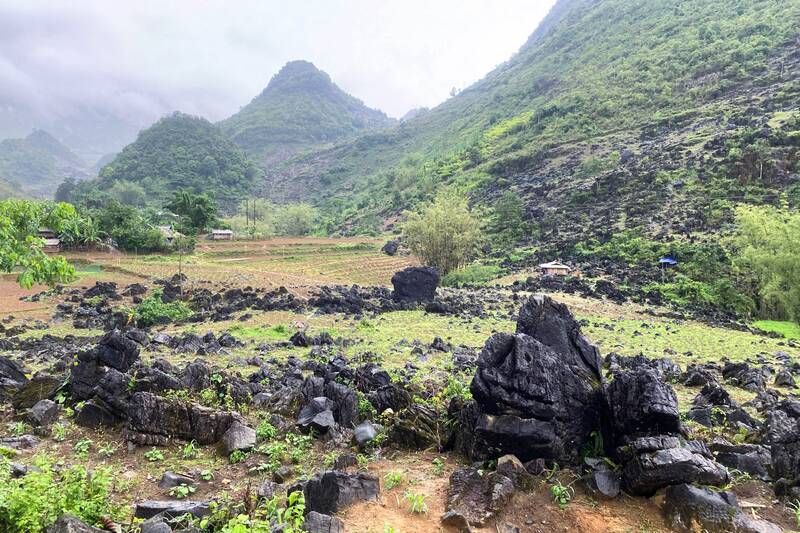
Passing through Ta Chinh, Hang Cho, and Thon 1 villages, visitors can easily see rows of cat ear rocks covering the mountainside, interspersed between houses and small fields, creating a very unique wild and majestic beauty of Sin Chai stone plateau.
Mr. Chu Huy Thanh, a tourist from Son La, shared: "When traveling in Sin Chai, I see that this place still has many pristine, peaceful features and the life and production of the people are closely linked to the rocky mountains, creating a very special feeling.
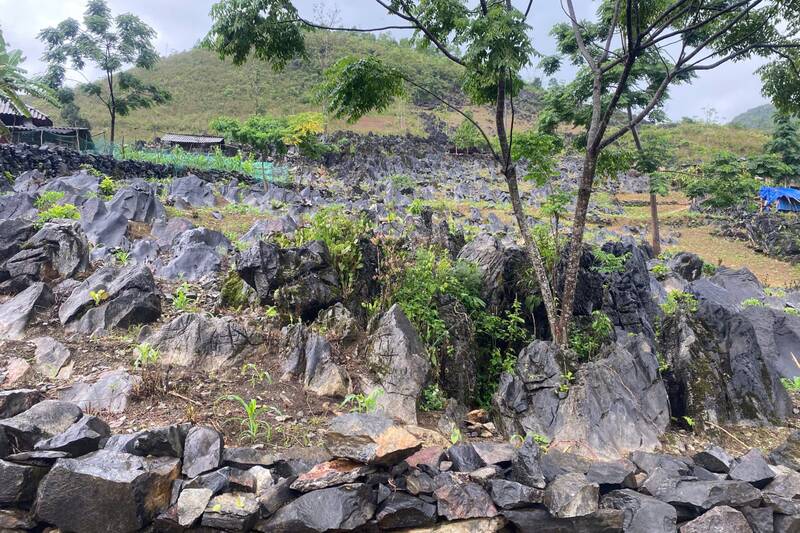
In the middle of that gray rocky region, ancient Shan Tuyet tea trees hundreds of years old are still persistently green all year round. This is considered a unique feature that creates attraction for Sin Chai.
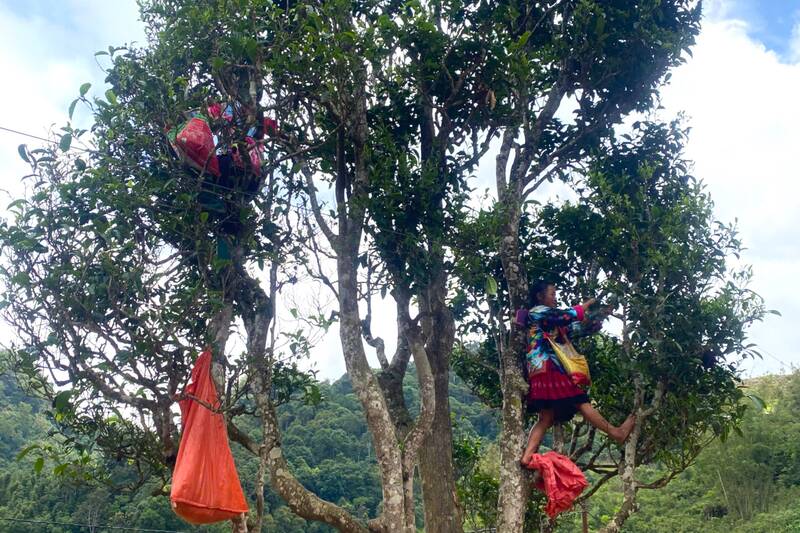
Currently, the whole commune has more than 6,000 ancient Shan Tuyet tea trees distributed in Hau Chua, Sin Chai villages... Many trees have a trunk diameter of 80 - 100cm, taller than roofs, covered with moss in mountain mist.
The special feature of Shan Tuyet Sin Chai tea lies in its growing conditions in the rocky plateau at an altitude of over 1,400 m above sea level, with a cool climate all year round and often covered by clouds and mist.
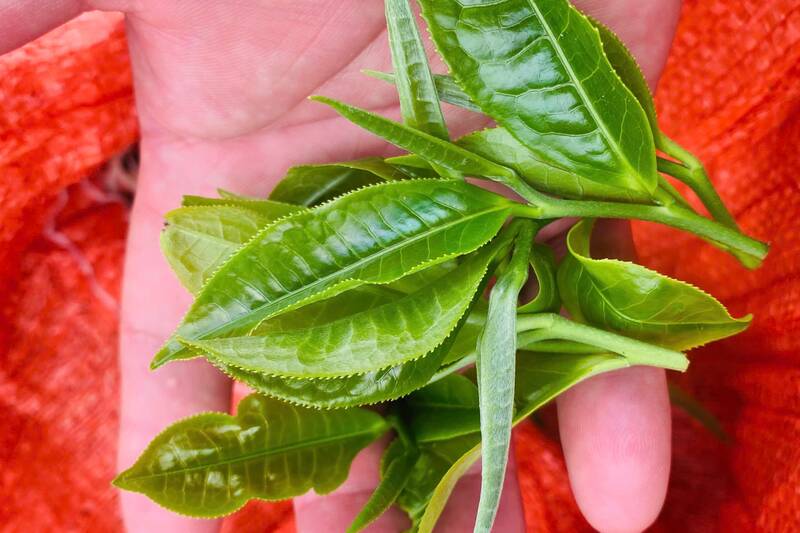
The tea tree grows naturally on cat ear rock crevices, grows slowly but gives thick buds, covered with snow-white silk. When brewed, the tea water is golden brown, has a mild aroma and a characteristic sweet taste.
The ancient Shan Tuyet tea tree complex in Sin Chai is currently mainly naturally exploited by people, minimizing the impact on tea trees and not using pesticides or chemicals. Tea is processed manually in an organic direction, meeting European Organic standards.
In Sin Chai village, Mr. Mua A Chinh's family currently owns more than 100 ancient Shan Tuyet tea trees and expanded nearly 2 hectares of newly planted tea. According to Mr. Chinh, Shan Tuyet tea here grows naturally on rocky mountains, so it retains its very unique flavor, and the tea is fragrant and characteristicly sweet.
Previously, people mainly harvested tea to use or sell fresh. In recent years, many households have invested in drying machinery to improve product quality, thereby having an additional stable income," Mr. Chinh shared.
Not only has economic value, Shan Tuyet tea has also become a unique tourism product of Sin Chai. Many tourists are excited to experience picking tea in the clouds and mountains, directly making handicraft tea, and enjoying hot tea in the wooden houses of the Mong people.
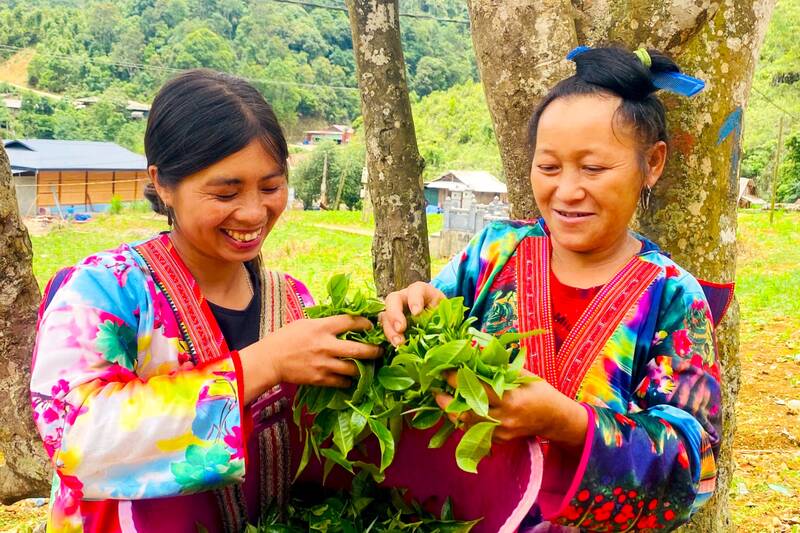
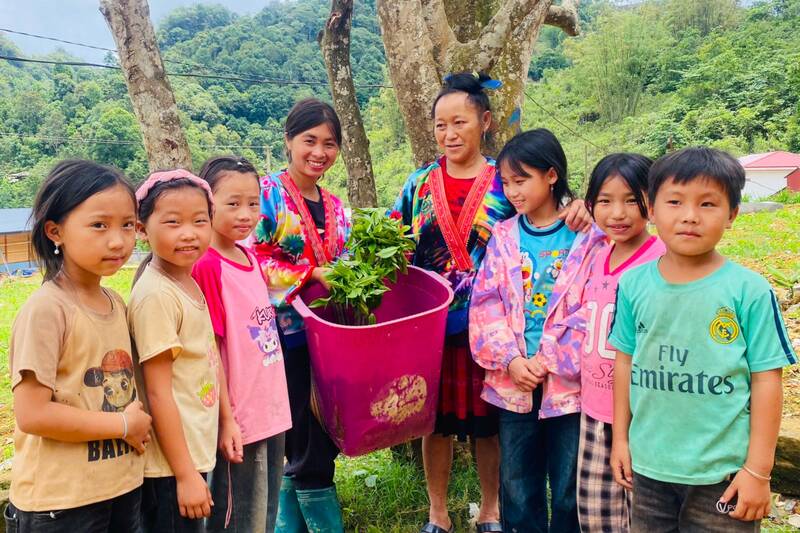
According to Mr. Thao A Lu, Vice Chairman of Sin Chai Commune People's Committee, the locality is orienting tourism development associated with preserving the ancient Shan Tuyet tea population and the traditional culture of the Mong people.
The commune identifies Shan Tuyet tea as a key crop, gradually developing experiential tourism to improve product value and increase income for people," Mr. Lu said.
Leaving Sin Chai, tourists still miss the pristine beauty of the rocky plateau and the ancient Shan Tuyet tea complex amidst the clouds of the Northwest mountains.


