
Appearing in the peaceful river space in Cu Lao Thoi Son (Dong Thap province), artist Thanh Hien brought viewers a lively experience when enjoying water coconuts right on a tourist boat.
According to the female artist's sharing, water coconut is not simply a cooling dish but also a plant that local people fully utilize in their daily lives.
In addition to the characteristic sweetness from the coconut, the dried coconut leaf is used to roof houses or make partitions; the coconut trunk (coconut peel) is separated into sturdy fibers for tying or knitting; while the water coconut shoots (also known as water coconut neck - the young core on the top) are a unique ingredient for processing into cool salad dishes.
Today, experiencing rowing boats through canals shaded by water coconuts and enjoying delicious dishes made from fresh water coconuts has become a unique pleasure that cannot be missed for tourists when coming to the Mekong Delta provinces.
The feeling of drifting on the river, personally peeling off each piece of soft, sweet coconut rice in the fresh natural space brings relaxation and helps visitors fully feel the hospitality and rustic culinary taste of the land of islands.
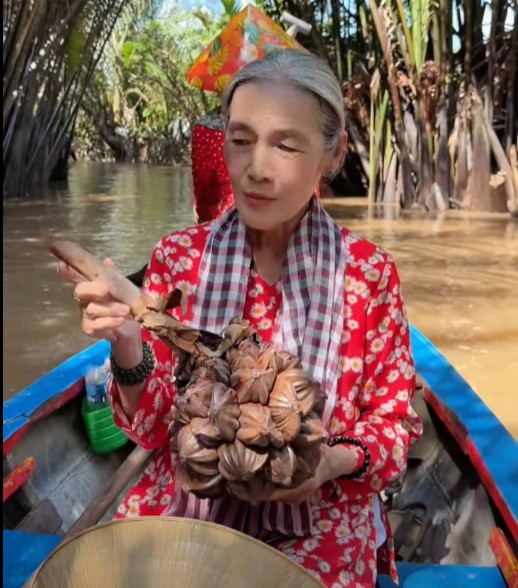
Scientifically, water coconuts are called Nypa fruticans, a characteristic plant that grows strongly in swampy areas and along mangrove rivers and canals. Unlike other areca trees, water coconut trunks grow underground under a deep layer of mud, with only long clusters of leaves and round bunches of fruit rising above the water surface.
The dense root system and underground body of water coconuts play an important ecological role in fixing alluvium, preventing riverbank erosion and protecting the coastal ecological environment from waves.
The coconut water pulp, when just cooked, has a cloudy white color, soft flexibility and a natural sweet taste. Local people often scrape coconut pulp with a little sugar, tangerines (lemon) and crushed ice to make a famous cooling drink on hot sunny days.
In addition, water coconut rice is also creatively made into many attractive dishes such as sweet soup, jam, or concentrated into mineral-rich water coconut honey.
According to nutritional studies, coconut rice water contains a large amount of water, soluble fiber and essential minerals such as potassium, sodium and calcium. In traditional medicine, this product is neutral in nature, helping to clear heat, diuretic and supporting the body to quickly replenish electrolytes when working or going to the sun.
Associated with both the material and spiritual life of residents in river and canal areas, water coconut trees have long become a symbol of the prosperity and resilience of the Southern alluvial plains.


