
Auspiciousness, authority and wisdom
On the occasion of the 2026 Binh Ngo Spring, the Hue Ancient Citadel Relic Preservation Center organizes a thematic exhibition "Horses and Dragon Horses in Nguyen Dynasty Court Culture" at the space of the Co Mat Vien relic.
The exhibition is an opportunity to learn about the image of horses and dragons, symbols of auspiciousness, power and wisdom in fine arts, rituals and court life of the Nguyen Dynasty; and at the same time feel the fresh colors of spring.
The exhibition on horses and dragon horses (horses transforming into dragons) in Nguyen Dynasty royal culture is considered the starting point for a series of spring welcoming activities at Hue heritage. The exhibition space takes viewers through many layers of time: from Eastern thought, court rituals to the daily life of ancient capital residents.
The exhibition does not stop at introducing artifacts, but evokes broader connections between symbols, power, beliefs and cultural language.
In the flow of Asian culture, the dragon horse is always considered a special mascot. It is a combination of many sacred images, often associated with wisdom, good omens and opening up.
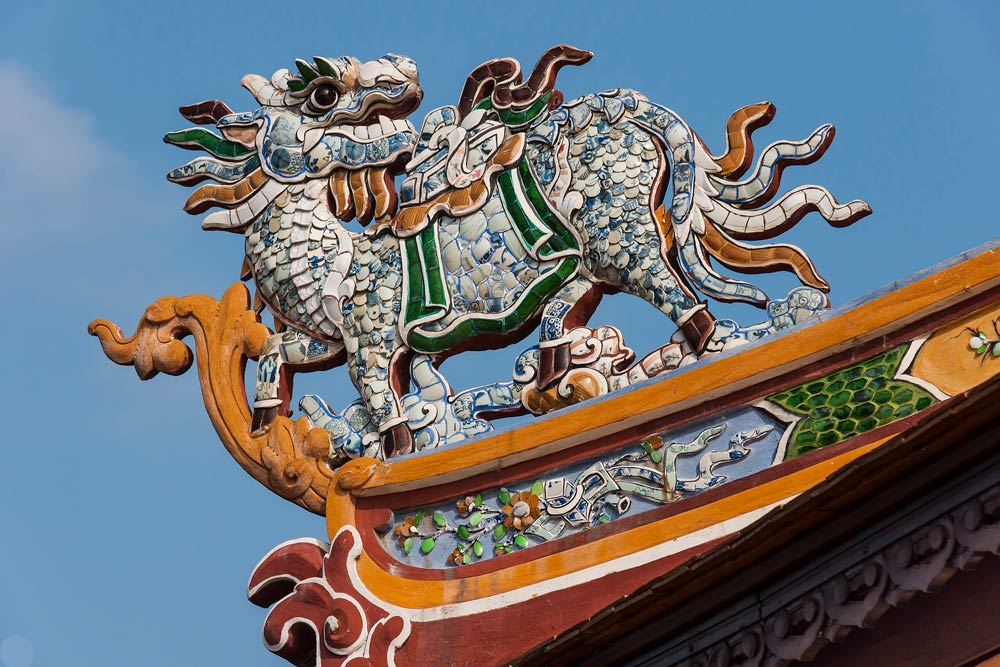
In Hue, dragon horses appear densely on screens, worship items, wooden boxes, jewelry or porcelain of the Nguyen Dynasty, as a way to send aspirations for order, prosperity and blessings to the nation.
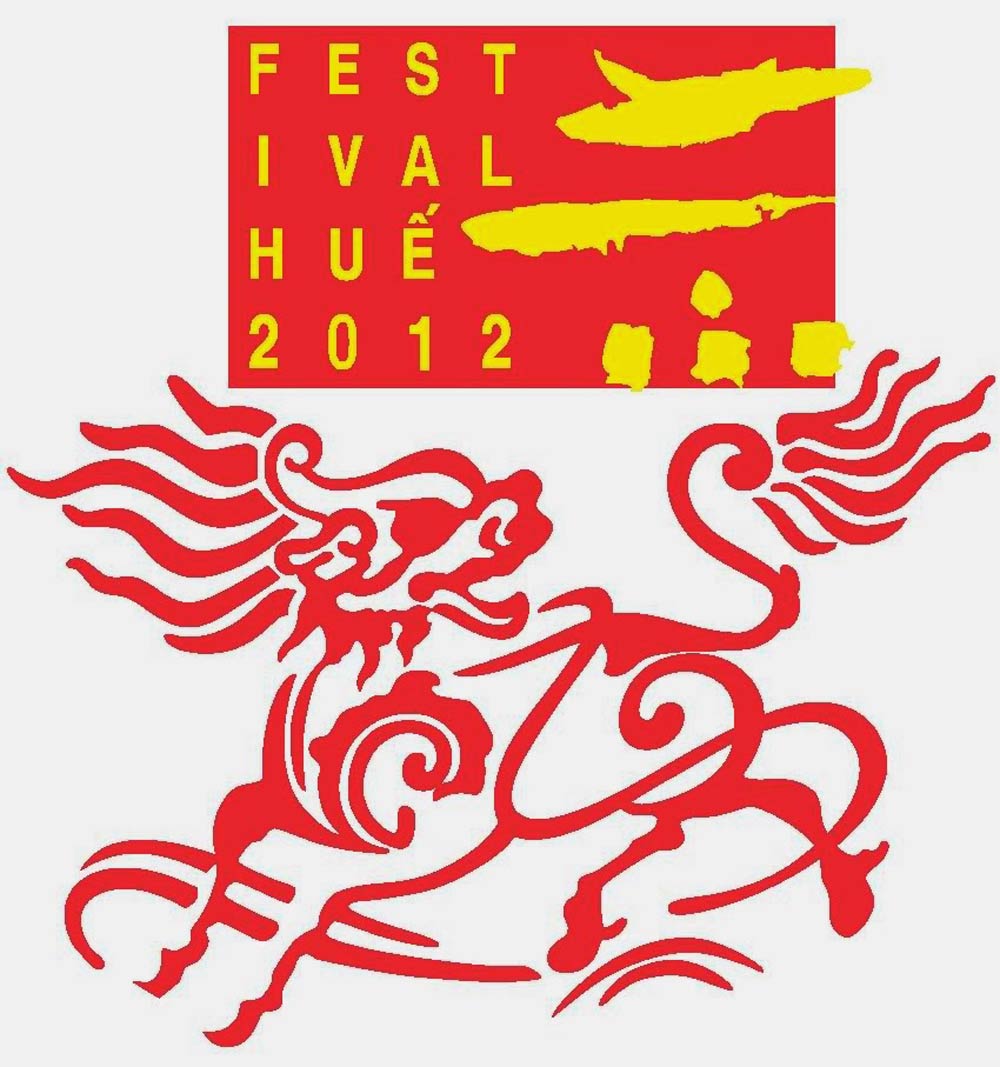
The fact that the dragon horse was once chosen as a symbol of the Hue Festival from 2000 also shows the contemporary vitality of this image in positioning the identity of the heritage city.
If the dragon horse represents the high level of thought and symbolism, then the horse is closely associated with the specific operating rhythm of the court. Under the Nguyen Dynasty, horses were not only a means of transportation or military service, but also directly participated in rituals, ceremonial sceptres and activities of power performance.
The image of the horse is clearly depicted on the Nine Tripods - a national treasure - as well as on sacks of swords, mirror paintings, bronze, ceramics... showing the special position of this animal in court art.
From royal court to folk
From the royal court space, the image of horses has stepped into Hue folk life through a very unique path, which is language.
The idiom "rần rật như ngựa Thượng Tứ" - now few young people still use 0 was once a way of speaking that was both humorous and sharp of the mothers and grandmothers of Hue to criticize girls who were considered lacking virtue and courtesy. Behind that seemingly joke-like way of speaking is a whole cultural - historical foundation.
Thuong Tu Horse" is associated with the Thuong Tu Institute in Hue Citadel - where the Nguyen Dynasty raised and trained horses to serve the court.
According to historical documents, under the reign of King Minh Mang, the Institute of Thuong Tu was organized very well, clearly classifying royal horses, exposed horses, suspicious horses and wrong horses, accompanied by a strict system of regulations on care and training.
It is from this environment that the biological characteristics of horses, especially when they reach puberty, have been observed, associated and transformed into language images with a social criticism.
The idiom "rần rật như ngựa Thượng Tứ" is therefore not simply a joke, but reflects the way Hue people in ancient times perceived and evaluated social behavior through a symbolic lens. It shows the sophistication but also the strictness of moral standards in a society deeply influenced by Confucianism and court rituals.
Those layers of cultural meaning are today being "awakened" again in a softer way. On the occasion of Binh Ngo Spring 2026, the spring decoration space in the area near Thuong Tu gate, in front of Quoc Tu Giam Hue, has recreated the image of the horse mascot in a new context: both carrying the breath of a festival and evoking memories of heritage.
People and tourists walking through here not only admire the scenery, but also unconsciously touch old stories that once existed in Hue's life.
From thematic exhibitions in relics to outdoor public decoration spaces, it can be seen that Hue is approaching heritage in a storytelling direction - placing symbols in the current life.
Horses and dragons, therefore, are no longer static images on ancient artifacts, but become a bridge between the past and the present, between the royal court and the folk, between tangible heritage and cultural memories.
Xuan Binh Ngo 2026 in Hue, seen from the mascot horse, is not just the story of a zodiac animal. It is a story about how a heritage city renews itself with long-standing cultural sediments - where each symbol has life, each idiom has history, and each spring opens up a new understanding of Hue.


