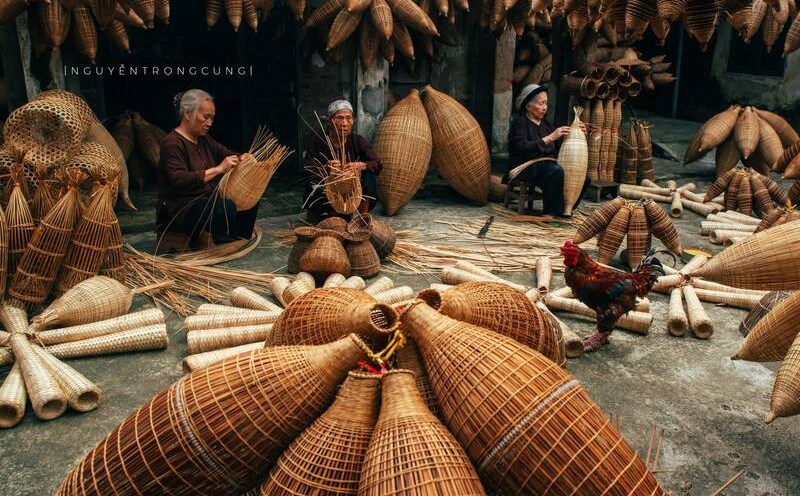
Preserving traditional crafts
After many generations, the incense-making profession in Quang Phu Cau has been deeply imbued with the lives of the people here. Huong Quang Phu Cau is famous for its mild, rich aroma, made fromepidder, cinnamon, salmon and natural herbs. Each incense burner is not only a consumer product, but also has cultural and spiritual values associated with the worship beliefs of the Vietnamese people.
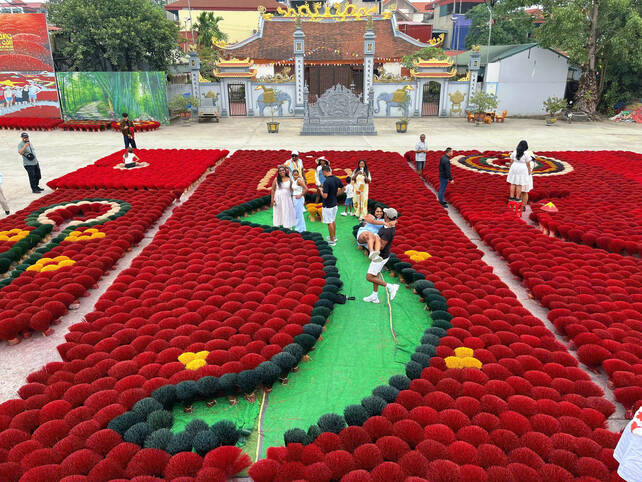
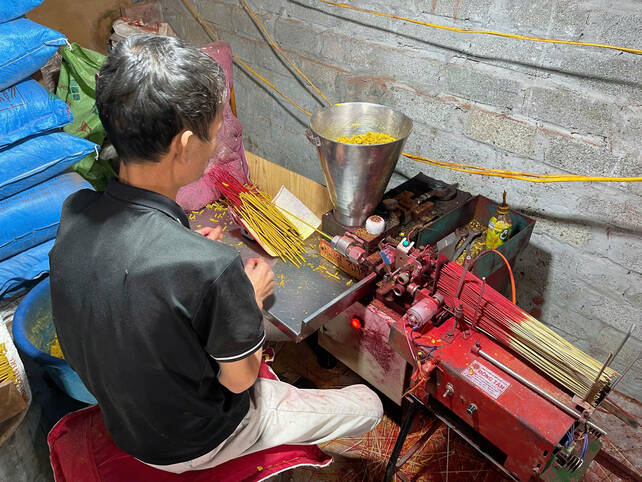
The incense making process requires meticulousness and heart of the craftsman. The main ingredient is the scented butter, carefully selected, old enough to burn evenly when burning incense, beautifully curved. Before making incense sticks, the dyed bamboo toothpick must be dried in the sun to avoid mold. incense powder is mixed from natural herbs such as sedge, sedge, cinnamon, star anise, etc., ensuring a mild aroma and safety for health.
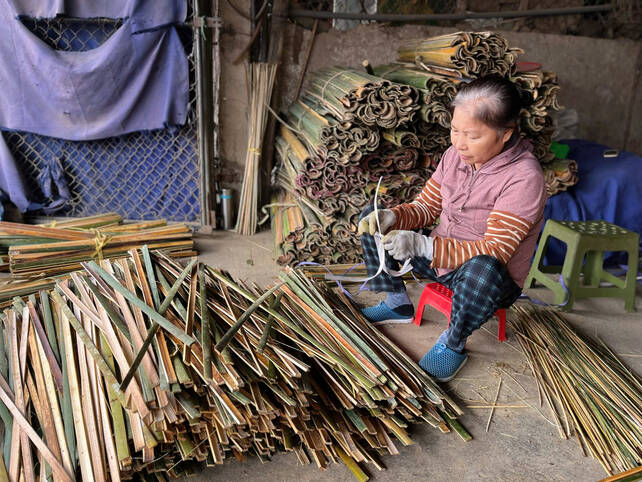
The profession of making incense sticks in Quang Phu Cau is a year-round profession, however, the last 3 months of the year are the "golden" time for incense-producing households to meet the increased demand at the end of the year. To create a perfect product, each incense tree requires the dedication of the craftsman.
After being dried, the scent must be dried in a high, clean place, sunny enough, and not melted until it dries and allowed to last long. If it is the rainy season, people have to use the incense drying kiln until it meets the requirements. The dry weather can dry the incense.
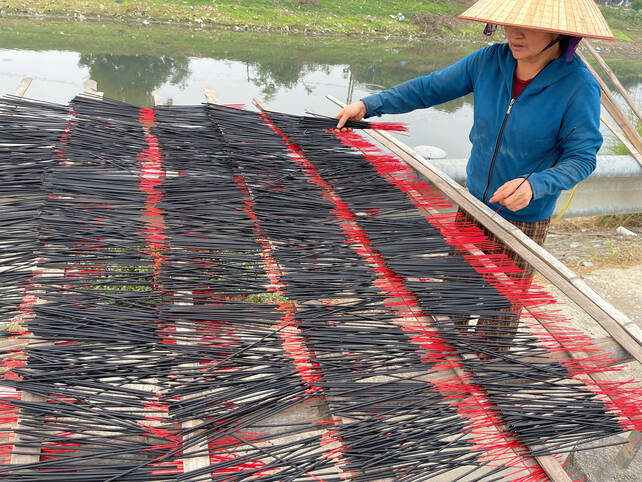
It takes about half a month to make a piece of incense, from drying the fat for a dozen days, then tearing it out and then grinding it to make it smooth, then picking the incense because most of the stages have to be done by hand with only a hand, the incense has been made by machine in recent years.
During the time near Tet, the demand of the people increased, and they had to produce 10,000 incense sticks a day to move to package. Only this peak season determines most of the year's income, said Ms. Dong, the fourth generation in a family of traditional incense makers.
From a traditional craft village to a popular check-in spot
Quang Phu Cau incense village (also known as Xa Cau incense village) has long been famous for its traditional incense making craft. Not stopping at the role of preserving traditional values, Quang Phu Cau is gradually transforming to keep up with the breath of the times.
For nearly a decade, in addition to traditional production activities, craft villages have developed more types of experiential tourism. Phu Cau Quang attracts more and more culture-loving tourists to explore.
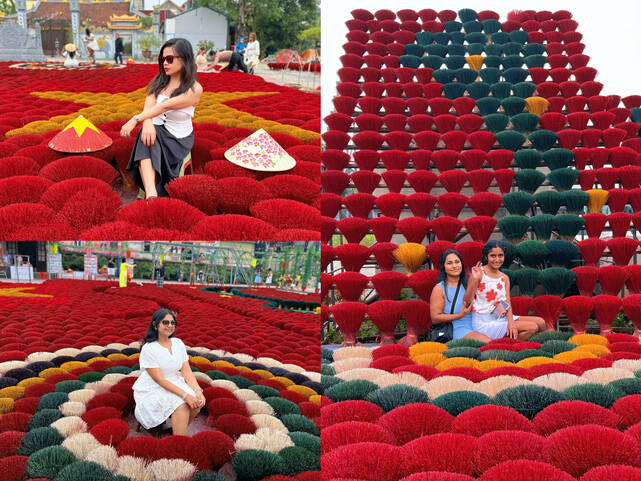
The Hanoi People's Committee has recognized the "Quang Phu Cau Aromatherapy Village Tourist Destination". According to the Hanoi Department of Tourism, this is an important step forward, affirming the tourism potential and value of craft villages, creating momentum to promote local economic development...
Quang Phu Cau incense sticks craft village tourism destination has rich cultural tourism resources, there are 6 villages recognized by the People's Committee of Ha Tay province (old) as traditional craft villages including: Traditional incense sticks craft village of Phu Luong Thuong village and traditional incense sticks craft village of Phu Luong Ha village; Traditional black incense sticks craft village of Xa Cau village; Traditional incense sticks craft village of Dao Tu village; Traditional incense sticks craft village of Cau Bau village and traditional incense sticks craft village of Quang Nguyen village.
According to the orientation for developing Hanoi craft villages by 2030, the Hanoi Department of Tourism identifies Quang Phu Cau as one of the key craft village tourism destinations in the capital.
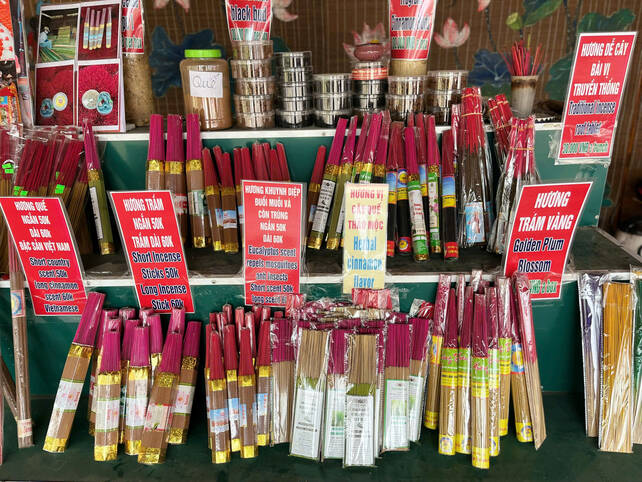
Currently, Ung Hoa incense village is operating with the persistent labor of craftsmen who are attached to the job, both making a living and preserving a familiar traditional value.
There are still many challenges ahead as production costs increase, consumer tastes change and the younger working class is increasingly scarce. For the incense craft to continue to survive and develop, it not only requires the efforts of the craftsman, but also new directions in promotion, connecting the market and preserving the space of the craft village. When the tradition knows how to adapt to modernity, the scent of Ung Hoa craft village can continue to spread, lasting over time.
Quang Phu Cau is improving the quality of visitors' reception points; Organizing "Quang Phu Cau incense village festival" in December; Training people for community tourism; Building a tour route "A day as an incense artician".
Linking craft villages to build effective tourism products
Aiming at the goal of developing craft village tourism towards green, responsible and sustainable tourism, Hanoi tourism industry has been coordinating with districts, towns, and cities in the past and present, such as wards and communes, to build tourist routes to contribute to preserving and promoting the value of craft villages.
The Hanoi Department of Tourism has organized the construction and announcement of the tour route "Nam Thang Long - Hanoi Heritage Road", with two topics "Documents of origin" and " quintessence of Vietnamese craft villages".
The tourist route "Destination to the origin of the rain" has a tour, connecting the center of Hanoi - Thanh Oai - Ung Hoa - My Duc associated with learning and experiencing activities at Dinh (Tern) Noi Binh Da - Binh Minh commune, Thanh Oai district (now Binh Minh commune); Quang Phu Cau incense trading village - Ung Hoa district (now Ung Thien commune); Phung Xa silk and lotus silk craft village - My Duc district (now Hong Son commune).
The tourism route with the theme "The quintessence of Vietnamese craft villages" connects Lang Ngau, Tam Hiep commune, Thanh Tri district (now Dai Thanh commune); Traditional handicraft village of Duyen Thai commune, Thuong Tin district (now Hong Van commune and Ngoc Hoi commune); Cuu ancient village, Van Tu commune, Phu Xuyen district (now Chuyen My commune).
In addition, the Southern Village Tourism Destination, Ba Vi Commune, Ba Vi District with the theme "Healing - Peace of mind - medicine" is associated with the study of indigenous culture and the profession of Nam medicine of the Dao Quan Chet people in Ba Vi Commune, Ba Vi District (now Ba Vi Commune).
In 2025, the capital's tourism industry will continue to perfect the Muong Coc community tourism model in My Duc commune in conjunction with preserving and promoting the cultural identity and traditional crafts of the locality. The Hanoi Department of Tourism also supports consulting on community tourism models associated with practical experiences of cultural values and traditional crafts of the Muong people in Yen Xuan commune and the Dao Quan Chet people in Hop Son village, Ba Vi commune.
In today's picture of Hanoi's tourism development, many craft villages are looking for ways to continue amid urbanization pressure and market changes. The general story is still how people can make a living by making a living, so that culture is not separated from life, and so that tourism becomes a connection, not a force to push and fade away the original cultural values. While craft villages still keep the fire, Hanoi still retains its own unique features, where tradition continues to appear naturally in the ever-expanding urban life.