
From "healing" to the journey of conquering oneself
On weekends, instead of going to resorts or "check-in" cafes, many young people choose to pack their backpacks and put on shoes to conquer tens of kilometers of trekking routes.
As someone who started trekking from the end of 2025, Ms. Khuat Bao Ngoc (24 years old, Hanoi) said that initially she came to this type of trekking because she wanted to immerse herself in nature, temporarily leaving her phone and social networks after stressful working days. However, what keeps her attached to trekking is the feeling of conquering her own limits.
Trekking is not just about healing or sightseeing. It is a serious preparation process both physically and mentally. There are times when physical strength is no longer the decisive factor, but it is willpower that helps me continue to the top of the mountain," Ms. Ngoc shared.
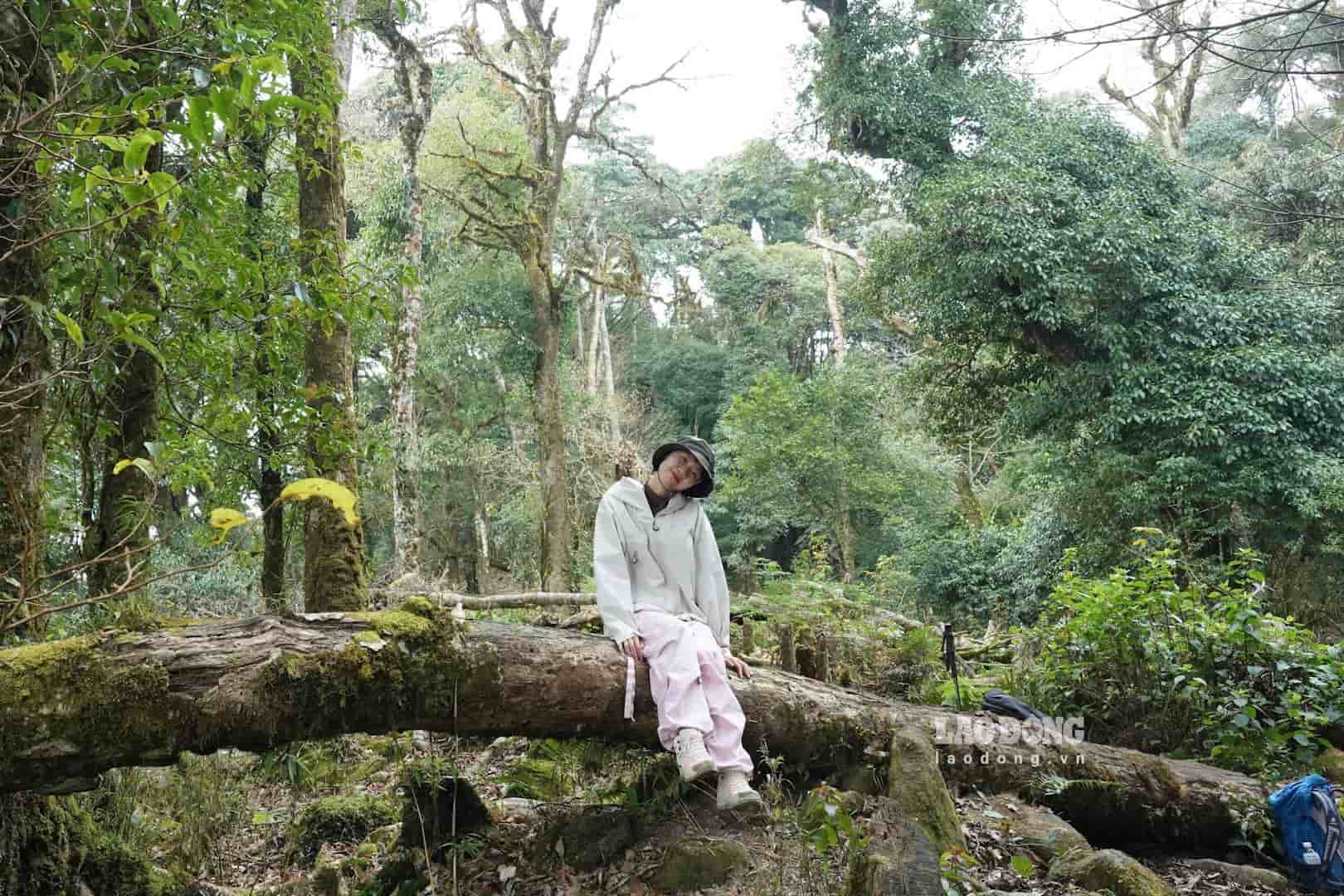
The trekking trips have brought Ms. Ngoc many positive changes in her health and lifestyle.
The days when there is almost no phone signal in the mountains and forests help me temporarily put aside work pressure, feel nature more fully. I also learned basic survival skills, connected with people through direct conversations instead of phone screens and realized that I am stronger than I once thought. Since then, I have maintained regular training to be able to continue conquering new routes," Ms. Ngoc shared.
According to Ms. Ngoc, trekking requires participants to maintain regular sports training to ensure fitness, and at the same time strictly comply with the safety regulations of the group, avoiding subjectivity in the face of terrain and weather.
Mr. Le Viet Hoang (27 years old, Ninh Binh) said that before, every vacation he often chose resort trips. However, after his first trekking trip in Ta Nang - Phan Dung, he gradually changed his views on tourism.
What I remember most is not the beautiful photo, but the feeling that the whole group encouraged each other to overcome the slope, cook together and sleep in nature. After each trip, I feel healthier and have more motivation to exercise," Mr. Hoang shared.
The shift in the travel demand of young people
According to Ms. Le Thuy Nhung - Deputy Director of the Northern Retailers Center (Vietravel), trekking is no longer a "neckline" tourism but is becoming an important part of the experiential tourism picture.
Ms. Nhung believes that this development comes not only from the need to explore but also reflects the change in the way young people care about physical and mental health.
Trekking brings a dual experience when it both helps participants exercise and improves mental health by immersing themselves in nature," Ms. Nhung said.
According to her, in the context of high workload and increasing digital device usage time, the need to "disconnect" from phones and social networks to regenerate energy is becoming one of the important driving forces for many people to choose trekking.

From a market perspective, Ms. Nhung said that activities belonging to the "soft adventure" group such as trekking or hiking are dominating because they are easy to access, do not require too high technology and have a lower risk level compared to specialized extreme sports. This is also a type suitable for many subjects, especially those who are new to experiential tourism.
According to Ms. Nhung, what young people are looking for today is no longer simply a vacation, but in-depth experiences, helping them conquer challenges, train their health, connect with nature and discover their own values.
The development of trekking not only reflects a shift in tourism demand, but also shows a change in the way young people choose to experience life. However, for this type to develop sustainably, besides the attraction of nature and services, the awareness of participants in ensuring safety, preserving the environment and respecting the local community is still a decisive factor," Ms. Nhung emphasized.


