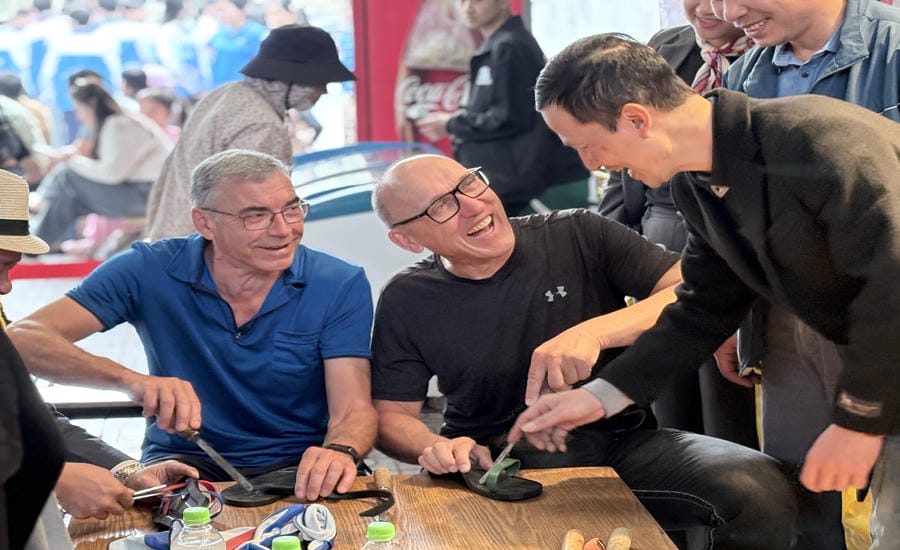
Visiting a small corner in the Ho Chi Minh Museum, visitors can see with their own eyes rubber tires being "revved" into legendary tires of a time.
The person behind that revival is artisan Pham Quang Xuan - who is affectionately called by many tourists "Strap King". More than 60 years of attachment to the profession, he not only makes sandals, but also preserves a living part of the nation's memory.
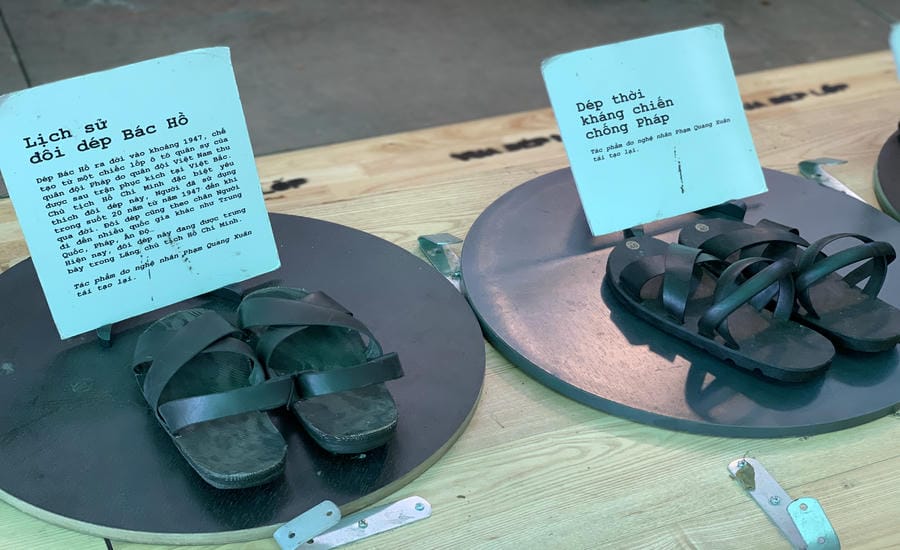
Sandals were once a symbol of a difficult period. Born in the early years of the resistance war against France, sandals were made from old car tires - a readily available material, durable and suitable for battlefield conditions. Those simple sandals are light, soft, water-resistant, and can protect feet from broken glass, barbed wire or hot soil. Not only associated with our soldiers in the 2 resistance wars against French colonialism and American imperialism, sandals also accompanied President Ho Chi Minh as a partner. Rubber sandals lifted the steps. The person who wandered for more than 20 years is also affectionately called: Uncle Ho sandals or Uncle Ho sandals.
In 1970, Mr. Pham Quang Xuan was one of 5 workers selected to remake 10 pairs of Uncle Ho's sandals according to orders from the Ho Chi Minh Museum. These products are still displayed at important locations such as the Presidential Palace and the Ho Chi Minh Museum. Among the workers of that year, now only he continues to be attached to the profession.
However, after the country was unified, the market opened, and industrial products became more diverse, causing the tire making profession to gradually decline. Mr. Xuan once had to switch to another job to make a living, but his love for the profession did not allow him to leave for too long. Only 4 years later, he returned to his familiar rubber pieces.
Not stopping at recreating the prototype, Mr. Xuan also breathed new life into the flip-flops. He does not follow fixed molds, but flexibly creates according to the needs of each customer. Two typical models were named by him "Uncle Ho's flip-flops" and "Uncle Giap flip-flops", imitating the flip-flops of President Ho Chi Minh and General Vo Nguyen Giap. Later versions all have their own stories such as Khe Sanh flip-flops 1968 and Liberation Army flip-flops 1975.
The story of the legendary pair of sandals does not stop at one generation. Mr. Xuan's love for the profession has spread to the whole family, especially his son-in-law Nguyen Tien Cuong. In 2013, Mr. Cuong decided to leave the position of deputy director of a technology company to study tire making. Initially, Mr. Xuan opposed his son-in-law because he was worried about the hard work and precarious future. But before his son-in-law's persistence, he agreed to pass on the profession.
Not only continuing his father-in-law's profession, Mr. Cuong also finds ways to bring flip-flops to the international market, spreading the story of Vietnamese culture and history. "Currently, the product has been exported to more than 60 countries, but we want to promote Vietnamese cultural history to foreign visitors through workshops," Mr. Nguyen Tien Cuong shared.
He said that the workshop idea has received great attention from travel businesses and tourists. Tourists from more than 10 countries participated in the experience and were very excited to turn rubber tires into sandals for themselves.
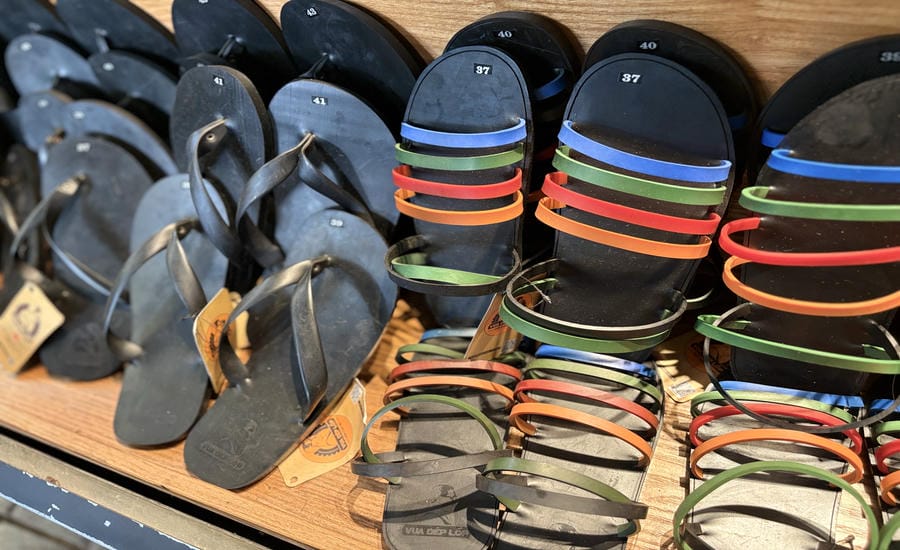
Foreign tourists are very curious and do not understand how a tire can make a pair of sandals. They appreciate this job for its environmental protection significance. Visitors come here like experiencing "buffet sandals" when comfortably choosing designs, colors, measuring feet and self-fabricating sandals with the support of artisans. The sandals they bring home are not only for display but also for use, thereby spreading the story of Vietnamese tire sandals," Mr. Cuong expressed.
Mr. Nguyen Thanh Luan, a Vietnamese tourist, directly participated in the workshop making tire locks at the Ho Chi Minh Museum. "My first impression was extremely surprised because at the Ho Chi Minh Museum there is such a modern and "Western" workshop. Instead of just watching artisans perform or watching movies, tourists can touch Vietnamese culture through this experience," Mr. Luan expressed.
Representatives of some travel businesses highly appreciate the tire workshop for visitors, especially international visitors. This can become an interesting stop at the end of the tour including Ho Chi Minh Mausoleum, Stilt House and Ho Chi Minh Museum, helping to increase the value of products. Spending about 1 to 1.5 hours more experiencing making tires will help tourists learn more about Vietnamese history.