
The name Vung Ro sounds quite strange, but its original name is even stranger: O Ro. This is a typical plant of the Central region, originally belonging to the herbaceous type, growing in low bushes, with lush branches, with many thorns on the trunk. This plant grows very well in arid lands like here, and then creates the name Vung Ro.
However, if we ignore the sharp thorns of the ô rô, Vung Ro deserves to be a fairy with a rustic and simple name. Vung Ro Bay is formed by a rugged strip of land stretching southwest towards the sea, shielding the entire bay from the waves and winds of the East Sea, especially on rainy and stormy days.
Seen from above, Vung Ro looks like a closed water area, locked from 4 sides: To the West bordering Deo Ca pass, to the North bordering Da Bia mountain, to the East bordering Mui Dien Cape, to the South guarded by the dangerous Hon Nua islet, playing the role of a natural guard post at the entrance to the bay.
Thus, Vung Ro is not only a scenic area but also an ideal natural port, almost year-round calm seas, suitable for boats to shelter and farm aquatic products in calm water in a raft house method.
The advantage of terrain makes Vung Ro own clear blue water, calm like a lake mirror. To admire the overall beauty of Vung Ro, you must go up to the top of Deo Ca Pass and then look down at Vung Ro.
In our vision at that time, a jade-green water trough appears brilliantly under the golden sunlight, bordered by golden sand beaches and dotted with row house squares released on the calm water. Small and elegant like a delicate bonsai composition.
Vung Ro has a water surface area of thousands of square meters, the deepest place is more than 50 meters, the shallowest is 15 meters. Across the bay, floating fishing boats painted light blue and eyes painted at the head of the boat. At first glance, it seems like this is a resort for large fish swimming in from the sea to "chill chill".
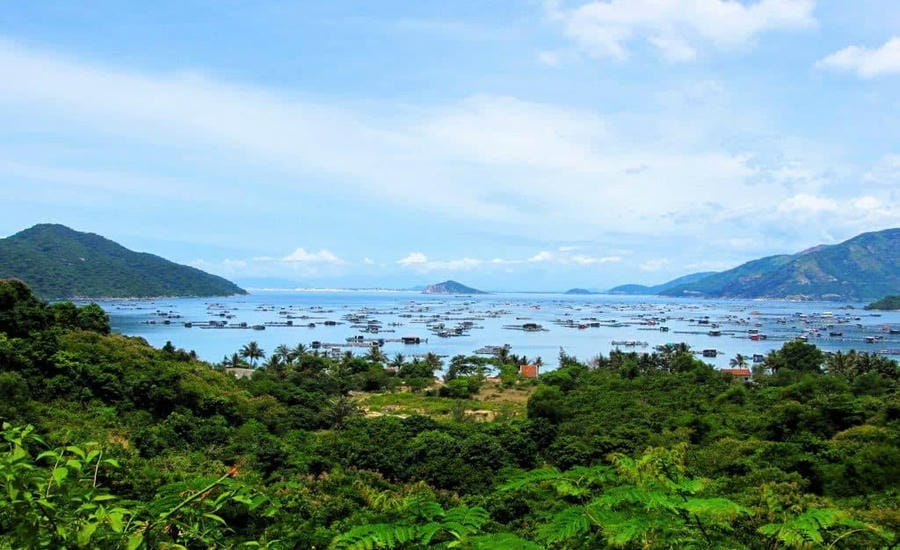
But the majestic and poetic beauty of Vung Ro is not only felt by standing up looking down, but also through close-up viewing. Sit on a fishing boat, run at a slow speed to admire Vung Ro in sight and from low to high.
Looking up in the opposite direction to the view from Deo Ca pass, we will see around Vung Ro are overgrown cliffs of exotic flowers and meteorites, standing upright and covering the water like the Five Element Mountains of the Buddha sealing the Great Sage Qitian.
On the dark green color of the mountains and forests, a North-South train suddenly appeared slowly winding on the pair of railway tracks running through part of the West of Ca Pass with winding, long and short tunnels connecting each other.
The train whistle suddenly rang out as if sending words of admiration from passengers on the train to seafarers floating on the bay surface and residents living leisurely in peaceful fishing villages scattered somewhere around Vung Ro Bay.
Vung Ro has 12 tiny beaches, but they are also enough to form paradise highlights such as Lách beach, Mù U beach, Ngài beach, Chùa beach, Chân Trâu beach, Hồ beach, Hàng beach, Nhỏ beach, Chính beach, Bàng beach, Lau beach, Nhãn beach. These beaches are considered the most green and clean beach areas in Vietnam thanks to their pristine nature, separated from modern life.
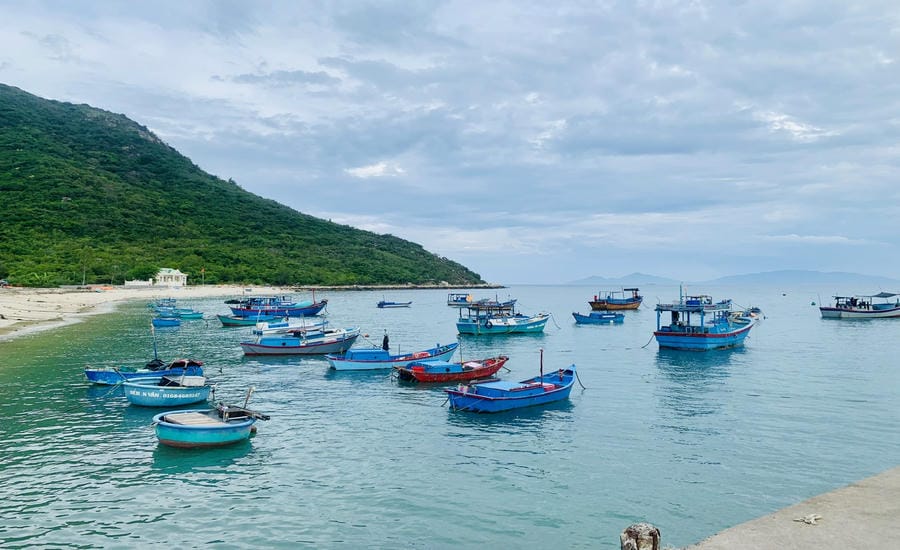
Smooth white sand, clear blue sea water clearly visible to the bottom, gradually drifting away, the beaches in Vung Ro also have cool freshwater streams flowing from the mountains down here, never dry all year round, hidden in the green eucalyptus forest, creating a truly poetic scene.
Waking up in the quiet, peaceful sea, with only the sound of dune trees rustling, waves whistling, and then living a whole day with the brilliant colors of noon and the afternoon sea turning light blue, then bursting with orange and purple at the end of the day, you can fully feel the poetic beauty located next to the long road of Vung Ro.
Vung Ro has a particularly famous and delicious seafood dish, which is "con vú nàng", a type of sea snail attached to cliffs near the water's edge, mostly at Da Den peak, under the railway tracks. The "vú nàng" snail meat is pink, protruding like a areca nux, like a virgin's nipple, grilled and eaten with salt and pepper squeezed with lemon, has a sweet aroma, crispy when chewed, and is considered a local specialty.


