
Flight canceled, waiting for confirmation of a series of routes from Hanoi
On the morning of March 3, the Civil Aviation Authority of Vietnam updated the situation of air transport operations before the war in the Iran - Israel area. Accordingly, many flights between Hanoi and the Middle East were directly affected.
Accordingly, from March 3 to 1 pm (Vietnam time) on March 5, Qatar Airways canceled a total of 13 flights to/from Vietnam. Including 8 flights at Tan Son Nhat International Airport, 5 flights at Noi Bai International Airport, affecting at least 2,565 passengers.
Emirates has not announced the operating plan for flight EK395 from Hanoi to Dubai scheduled to take off at 0:25 on March 4. Similarly, Etihad Airways has also not confirmed the status of flight EY433 from Hanoi to Abu Dhabi at 8:00 on March 3.
Meanwhile, Turkish Airlines still maintains normal operation of passenger flights between Istanbul and Hanoi on March 3.
Noi Bai International Airport statistics from February 28 to 9:00 am on March 3, there were a total of 16 canceled flights (an increase of 03 flights compared to March 2). 3,800 passengers affected by the journey (an increase of 1,000 passengers compared to yesterday). The airport is implementing a plan to reduce parking fees to support affected airlines.
More than 6,000 flights canceled, Asia-Europe transit almost paralyzed
The escalating military situation in the Middle East is creating an unprecedented crisis for the regional aviation industry. International data shows that on February 28 alone, more than 1,800 flights of airlines in the region were canceled.
On March 1st, this number skyrocketed to more than 3,400 flights at 7 major airports as most of the airspace was closed for security reasons. In total, after two days, more than 6,000 commercial flights were canceled.
Three major transit hubs, Dubai, Abu Dhabi and Hamad (Doha), are almost paralyzed. Under normal conditions, about 9,000 passengers transit through these three points every day to connect between Asia and Europe.
When airports and airspace suddenly closed, the transcontinental passenger flow was seriously disrupted. Thousands of passengers were stranded, many had to stay temporarily at the terminal while the hotel system around the airport quickly became fully booked.
The Civil Aviation Authority of Vietnam updated that as of 8 am on March 3, some flight information areas (FIR) in the Middle East were affected by the war.
Completely closed FIRs:
Bahrain FIR (OBBB): Fully closed from 21:34 UTC on March 2nd to 04:00 UTC on March 3rd, 2026.
Tehran FIR (OIIX - Iran): Closed until 08:30 UTC March 3, 2026; warning conflict could spread to the Persian Gulf and the Oman Sea.
Doha FIR (OTDF - Qatar): Closed until 04:00 UTC March 3, 2026.
Jordan FIR (OJAC): Closed daily from 15:00-06:00 UTC period 02-05. March 2026.
Limited FIRs, apply special measures:
Emirates FIR (OMAE - UAE): Partially closed; only allowed to fly at designated routes, transiting West through LUDID; some M318, M550 routes temporarily closed; Ras Al Khaimah airport temporarily stopped; ATC at Sharjah not available according to NOTAM.
Jeddah FIR (OEJD - Saudi Arabia): Applying backup operations; many ATS lines are unavailable; adjusting EB/WB routing via L550 and alternative points.
In addition, Iran, Syria, Israel, Iraq, Qatar, Kuwait and Bahrain all completely closed their airspace. The UAE partially closed, while Jordan closely monitored to reopen every time frame.
Faced with complicated developments, the Civil Aviation Authority of Vietnam has requested domestic and foreign airlines operating in Vietnam to proactively adjust flight routes between Vietnam and Europe to avoid affected airspaces and ensure safety for passengers and crews.
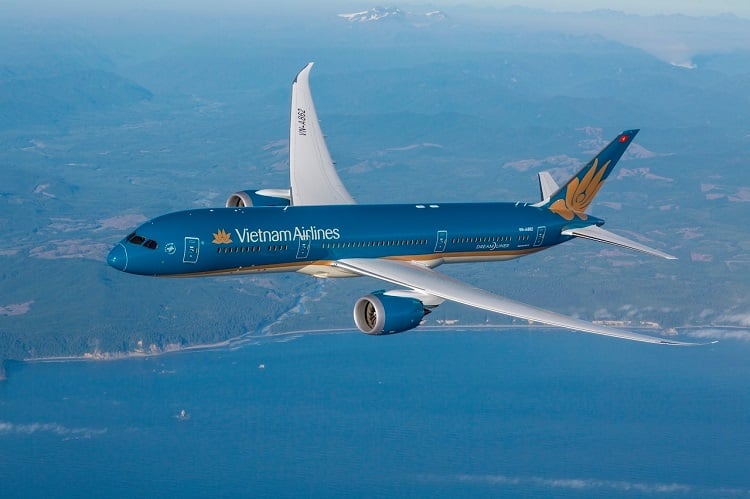
Vietnam Airlines said that all flights between Vietnam and Europe operated by the airline have been and are having routes far from the war zone, and are being carried out safely according to plan. However, the adjustment of routes may cause longer flight times and increase fuel costs.
A representative of the airline added that, due to many airlines adjusting flight routes to safe corridors, the operating density on European routes has increased. Flights to Europe currently record a large seat occupancy rate, especially during the peak period after Tet when travel demand increases sharply.
In the context that the conflict has not shown signs of cooling down and many airspaces in the Middle East are still closed, the aviation industry is forecast to continue to be affected in a chain reaction in the coming days. Management agencies and airlines recommend passengers to regularly monitor flight conditions through official channels before moving to the airport to proactively plan their travel.


