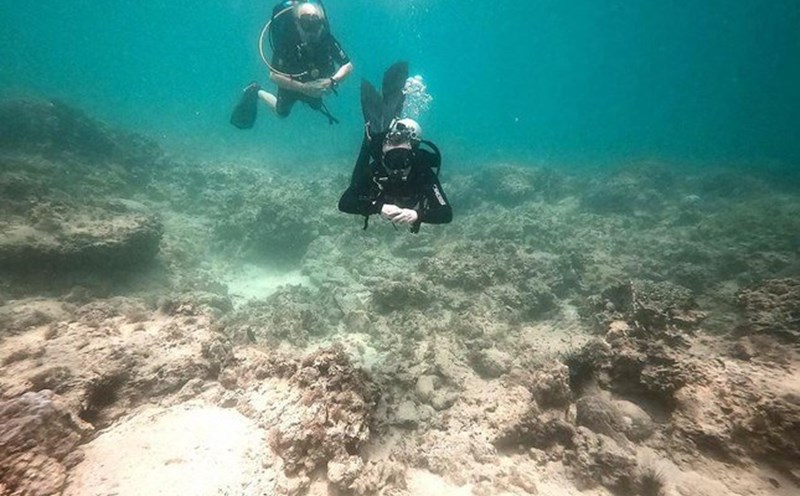
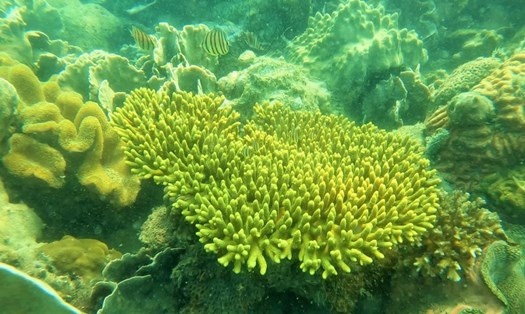
On July 19, the Nha Trang Bay Management Board coordinated with the People's Committee of Bac Nha Trang ward and related units to work with a group of 10 tourists from Dong Nai after the coral break in Hon Chong sea area.
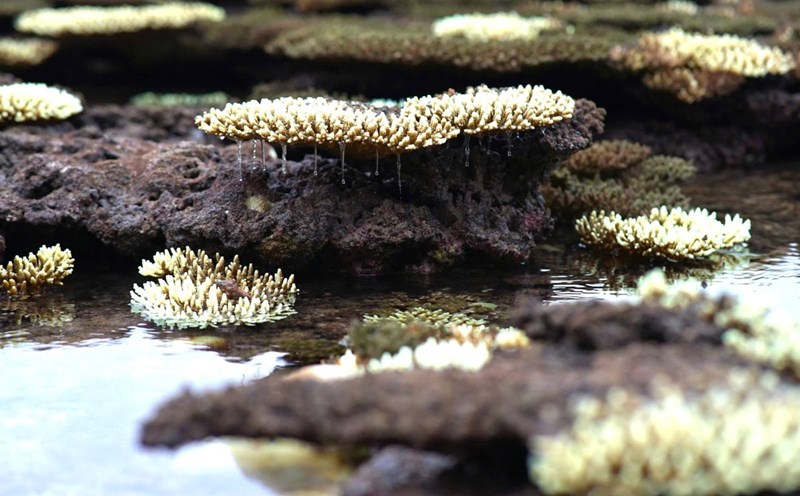
Through verification, functional forces determined that two male tourists, 50 and 62 years old, were the ones who directly broke about 10.5 kg of horn coral (Acropora) to bring back as souvenirs. This act was discovered by people, recorded images and spread on social networks, causing public outrage.
At the meeting, the two said that they did not know that the Hon Chong sea area was a protected area, restoring coral reefs, so they broke coral and brought it ashore. However, according to functional agencies, horn coral (Acropora) is a group II aquatic species in the list of endangered, precious, and rare aquatic species protected by law.
The People's Committee of Bac Nha Trang ward has made a record of administrative violation against two tourists for the act of illegally exploiting aquatic species of group II in the list of endangered, precious, rare aquatic species or belonging to Appendix II of the CITES Convention. Representatives of the ward People's Committee said that each person is expected to be fined about 25 million VND.
The incident occurred in the Hon Chong area - where about 11 hectares of coral reefs are being zoned for protection and restoration from May to the end of August every year. Nha Trang Bay Management Board has installed warning signs, strengthened patrols and advised people and tourists not to trample, break or collect coral. However, the high number of visitors in the summer makes control work difficult.
According to Decree 38/2024/ND-CP of the Government, the act of illegally exploiting aquatic species of group II in the list of endangered, precious, and rare aquatic species or species of Appendix II of the CITES Convention that are not serious enough to be criminally prosecuted will be subject to administrative penalties. The penalty level is determined based on the type of subject and the volume of violating exhibits.
Regarding the incident that occurred at Hon Chong, based on the prepared dossier, functional agencies plan to fine each tourist about 25 million VND for the act of illegally exploiting group II aquatic species.
In addition to illegal exploitation, Decree 38/2024/ND-CP also stipulates a fine of 50-100 million VND for the act of using fishing gear, equipment or vehicles to destroy aquatic resources, aquatic ecosystems or destroy the habitat of aquatic species on the list of endangered, precious, and rare species.
In case the violation is serious, with sufficient elements to constitute a crime, the violator may also be prosecuted for criminal liability according to the provisions of law.
According to marine conservation experts, corals are the foundation of marine ecosystems, creating habitats and breeding grounds for many species. Each coral reef takes many years, even decades, to form and recover.
Therefore, breaking, collecting or damaging corals not only causes damage to biodiversity but also has a long-term impact on marine ecosystems and aquatic resources.