
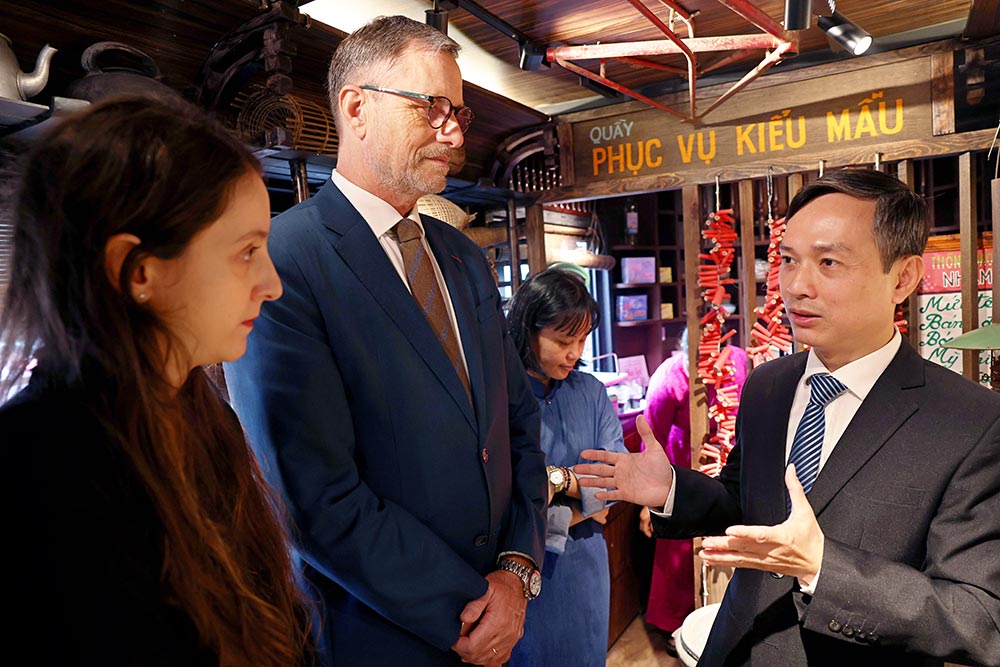
Four unique heritage discovery journeys of the Capital have just been officially launched, bringing new experiences. The journey is supported by an interactive map system, H-Heritage application and QR code system at many relic sites in the city center. These tools allow people and tourists to access information about heritage in a more intuitive, convenient and synchronous way, through the form of searches right at the destination.
The journeys are designed as exploration routes connecting the story: the journey of the four Thang Long temples, the temples of the Mother; the communal houses worshiping the ancestors of the craft in the old town and the pagodas. Users only need a smartphone to "touch history", in a more visual and vivid approach.
The project is implemented within the framework of EFER-R Patrimoine with funding from the French Ministry of Europe and Foreign Affairs, through the French Embassy and the French Institute in Vietnam (IFV), in coordination with the University of Social Sciences and Humanities - Vietnam National University, Hanoi National University, the French Far East Institute of External Affairs (EFEO), the University of French Language (AUF) and the People's Committee of Ba Dinh Ward.
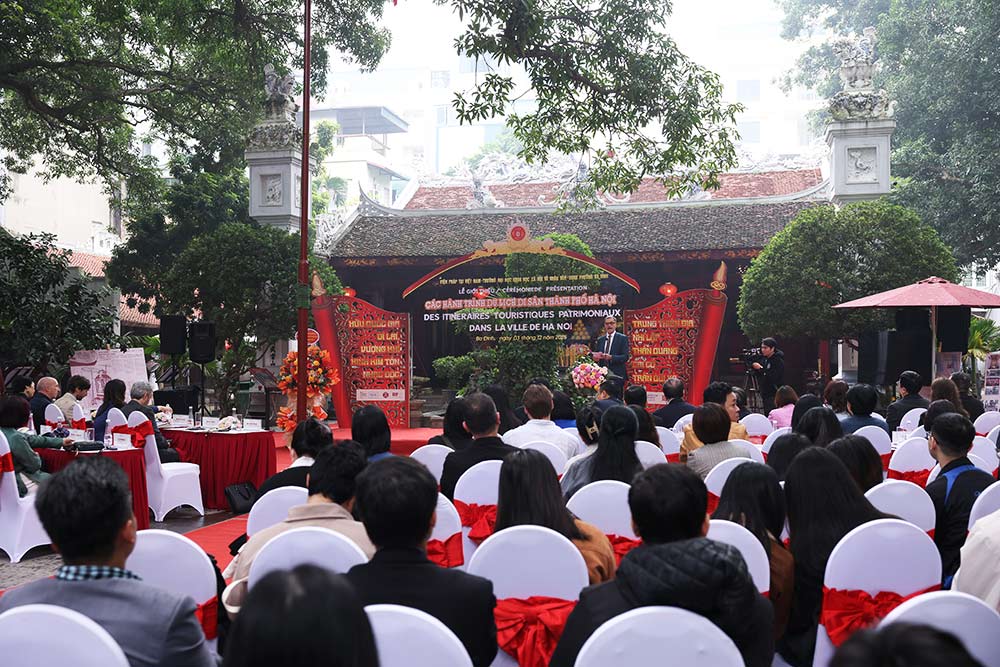
Speaking at the launching event of the project "Heritage tours in Hanoi City" at the Holy Temple on December 3, French Ambassador to Vietnam Olivier Brochet emphasized that Hanoi owns a rich heritage treasure trove, but the approach has long been unsynchronized, especially for young people.
According to him, applying heritage is like "a bagged encyclary", helping each person better understand their city in their daily walks: when suddenly encountering an ancient pagoda, a French villa or a location that has witnessed historical events.
The Ambassador expressed his hope that digital technology, especially QR codes and interactive maps, will contribute to making Hanoi one of the pioneering cities in Asia in digitizing heritage data.
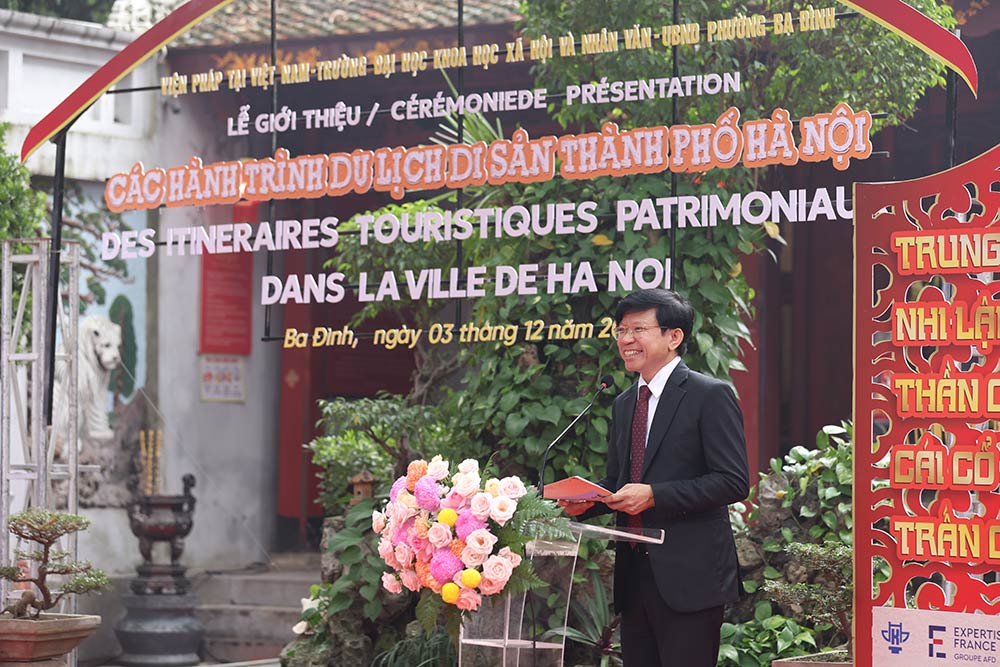
Prof. Dr. Hoang Anh Tuan - Principal of the University of Social Sciences and Humanities affirmed that this is a completely new heritage approach model, helping to bring seemingly ancient values closer and more accessible to young people and international tourists. The school expects the project to continue to be expanded and replicated in other districts of Hanoi and many localities across the country.
Over the past year, French - Vietnamese expert groups have surveyed more than 100 relics, processing large amounts of documents in French, Chinese - Nom and Vietnamese, to build a foundational dataset for the digitalization system. From the process of surveying and analyzing documents, the research team selected 28 typical relics to build into four heritage journeys according to four traditional beliefs of the Vietnamese people.
According to Ms. Nguyen Thi Hiep - the project's technical team leader, the large document warehouse is exploited, processed and systematized according to scientific standards, creating a foundation for fully recreating each relic, from description, document photos to geographic location data. All are integrated into the interactive system, accessed via QR code and H-Heritage application.

The project also aims for three functional groups. First of all, the tourism function is to support people and tourists to explore directly at the destination. Second is the scientific function, providing a source of data for researchers, lecturers and experts. Third is the function of education, contributing to the application of heritage knowledge in the curriculum and extracurricular activities at high schools and universities.
At the launching ceremony, Ba Dinh ward - where many important heritages of Hanoi are gathered - shared about models applying technology in developing cultural tourism in recent times. Chairman of Ba Dinh Ward People's Committee Pham Thi Diem said that the pilot products have initially brought positive results; this is considered an important direction in preserving and promoting heritage values in a modern spirit while preserving identity.

4 heritage tourism journeys of Hanoi
Journey 1: "Thang Long Tu Toan" ( Four Guardians of the City)
Visitors will explore the four sacred temples: Bach Ma, Voi Phuc, Quan Thanh and Kim Lien, the four Guardians of the East-West-South-North of Thang Long Imperial Citadel. The journey to honor the sacred cultural identity and unique spiritual structure of Hanoi, which not only needs to be protected by humans but also needs to be God to ensure security.
Journey 2: "Mother's temples"
The journey will connect eight temples, worshiping Mother Lieu Hanh and the Holy Mother, representing the belief of the Three Governmentes - an intangible cultural heritage honored by UNESCO. The journey will explore the temples: Dong Ha, Vu Thach, Ba Kieu, Xuan Yen, Den Dau, Vong Tien, Phu Tay Ho, Long Bien incense tree. This unique belief of the Vietnamese people blends ceremony, music, dance and the spirit of honoring the Mother.
Journey 3: " Dinh to tho To Nghe"
Visitors explore Hanoi's Quang Ngai communal houses such as: Kim Ngan (feriture group), Dong Lac (old- age braised group), Pha Truc Lam (leather and shoe braised group), Ha Vi communal house (painting group), Phuc Hau temple ( mirror carving group), Tu Thi communal house (end embroidery group), Lo Ren communal house (forging group), Ngu Xa communal house (copper casting group).
Journey 4: "Hanoi Pagoda"
The destination on this journey is the pagodas associated with the name Sa Mon An Thien (Phuc Dien) - one of the typical ancestors of Vietnamese Buddhism. From Bao Thien Pagoda, there are now only memories left in Lien Tri, Ham Long and Lien Phai... The journey to recreate the historical and spiritual flow of Thang Long, where memories, technology and faith meet, telling the story of loss - survival - regeneration and preservation of heritage.


