
The international conference "orientation of the global carbon market and Vietnam: Assessments after COP30 and the next direction" organized by the University of Economics - Vietnam National University, Hanoi in collaboration with CARE Vietnam and British Columbia University (Canada) took place over 2 days, November 25 - 26, in Hanoi.
The workshop aims to enhance understanding of opportunities and challenges in establishing and operating Vietnam's carbon market - including the forest carbon market - while linking domestic efforts with global development trends.
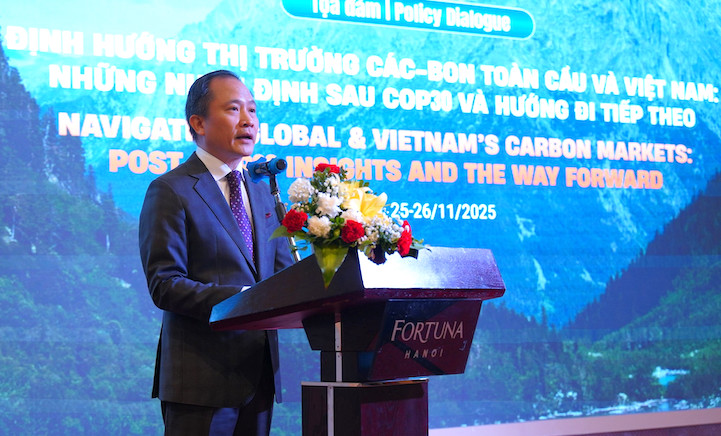
Speaking at the opening of the workshop, Associate Professor, Dr. Le Trung Thanh, Principal of the University of Economics, Vietnam National University, Hanoi, shared: The world is witnessing strong changes in efforts to respond to climate change. After COP30, global agreements, especially those related to Article 6 of the Paris Agreement, are opening a new phase for the carbon market, where countries, businesses and the scientific community join hands to promote the goal of net zero emissions.
In that context, Vietnam is urgently preparing to operate the domestic carbon market from 2028 and enhancing deeper integration with international carbon credit exchange mechanisms. In the context of the carbon market becoming an important pillar of the green economy, improving research capacity, training high-quality human resources and building a knowledge ecosystem is the school's core task.
The school is committed to continuing to accompany the Government, international partners and the business community to promote research, policies and innovative solutions, contributing to creating an effective, transparent and harmonious carbon market system with economic - environmental - social benefits towards the goal of Net Zero by 2050.
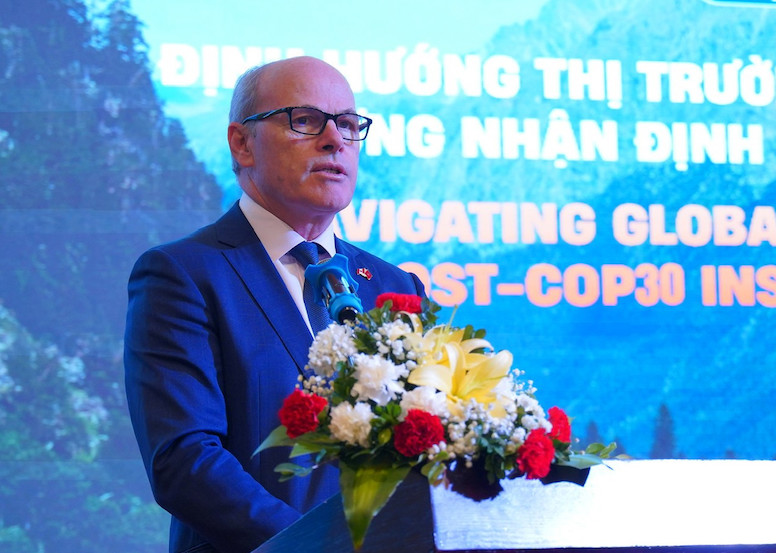
Canadian Ambassador Extraordinary and Plenipotentiary to Vietnam James Nickel shared: Canada is committed to supporting Vietnam in responding to climate change. The carbon market is a key economic tool to achieve the goal of net zero emissions.
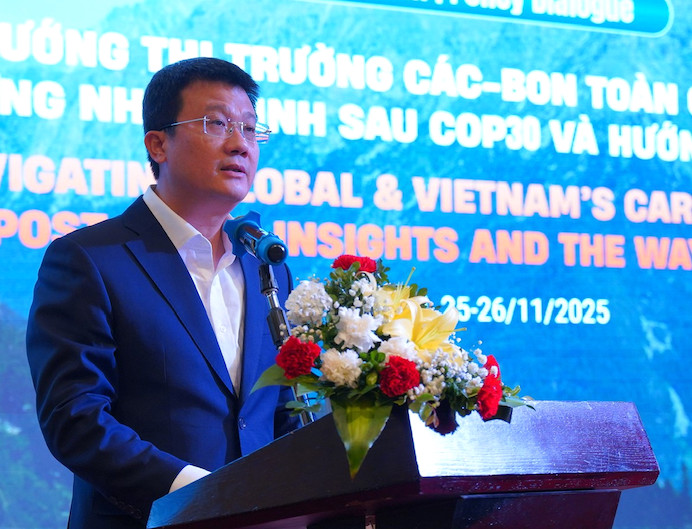
Mr. Nguyen Tuan Quang, Deputy Director of the Department of Climate Change (Ministry of Agriculture and Environment) said that in the current trend, carbon pricing tools such as the carbon market and carbon tax are becoming one of the increasingly popular, effective and powerful policy tools to help countries reduce greenhouse gas emissions, contributing to the implementation of the goals of the Paris Agreement.
The latest data from the World Bank's "Current situation and trends in carbon pricing in 2025" report shows that carbon pricing tools have now controlled about 28% of global greenhouse gas emissions, generating revenue of more than 100 billion USD in the past year, becoming an important public financial resource for green transformation.
Mr. Quang said that in order to realize the commitment to reduce greenhouse gas emissions and build a carbon market, Vietnam has urgently developed and issued an important legal framework. The Law on Environmental Protection 2020 stipulates the "Organization and development of carbon markets" in Article 139.
Currently, Canada is supporting Vietnam in implementing the carbon For Good Project (20242028). The core goal of the project is to build capacity to implement the plan to minimize the impact of climate change and mobilize sustainable financial resources to protect and develop forests, including a high-quality, comprehensive and responsible forest carbon market in Vietnam.
The project aims to promote solutions to solve challenges in forest management that specialized forces and communities, especially ethnic minority women, are facing when participating in forestry development projects and carbon credits. The four provinces and cities participating in the project are: Tuyen Quang, Lai Chau, Son La and Can Tho.
The project is expected to reach 12,000 direct beneficiaries and 244,125 indirect beneficiaries; at the same time, supporting 400 policymakers and 410 private sector actors to participate in the forestry sector and the carbon market of Vietnam.
