Lu people's buffalo spirit worshiping ceremony: Beauty of gratitude in modern life

Mai Châu |

Hanoi - The Village of Culture and Tourism of Vietnamese Ethnic Groups organizes a ritual to worship the buffalo spirit of the Lu people, recreating the culture of gratitude, connecting people with nature.

On May 2nd, at the Village of Culture and Tourism of Vietnamese Ethnic Groups (Doai Phuong, Hanoi), visitors had the opportunity to witness the Su Khon Khoai Festival (buffalo spirit worshiping) - a unique ritual of the Lu ethnic people from Nam Tam commune, Lai Chau province.

In the life of the Lu people, the buffalo is not only a livestock but also a close "collaborator" attached to agricultural production. Therefore, the buffalo spirit worshiping ceremony carries a deep gratitude meaning, showing respect for the labor of animals that have contributed to bumper crops.
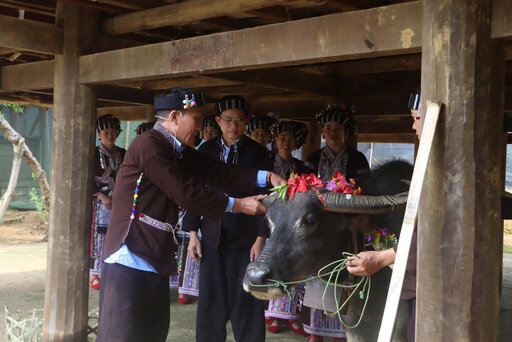
Nghi thức buộc chỉ đỏ trong lễ cúng hồn trâu của người Lự, gửi gắm lời tri ân và cầu chúc bình an sau mùa vụ. Ảnh: Làng Văn hóa Du lịch các dân tộc Việt Nam
The ritual of tying red threads in the buffalo spirit worshiping ceremony of the Lu people, sending words of gratitude and wishing peace after the harvest season. Photo: Village of Culture - Tourism of Vietnamese Ethnic Groups

The special feature of the ritual is the "excuses" from the homeowner. After a hard harvest season, they perform a ritual to compensate for the times when buffaloes were scolded or whipped when they did not work satisfactorily. This is considered a way for the Lu people to send their feelings, soothe and pray for the health of their pets.

In the ritual part, the "buffalo" is carefully cared for with young grass, clean water, and offerings such as sticky rice, salt and wine - symbolizing fullness. The shaman performs the ritual of tying red threads to the buffalo's horn and the homeowner's hand, wishing peace and connection between humans and livestock.
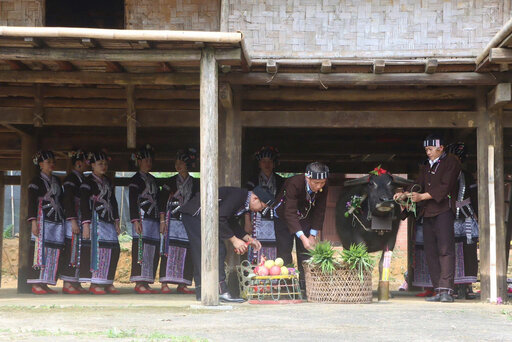
Không gian nghi lễ cúng hồn trâu của người Lự được tái hiện trang trọng, với lễ vật dâng cúng và sự tham gia của cộng đồng. Ảnh: Làng Văn hóa Du lịch các dân tộc Việt Nam
The ritual space for worshiping the buffalo spirit of the Lu people is solemnly recreated, with offerings and the participation of the community. Photo: Village of Culture - Tourism of Vietnamese Ethnic Groups

Not only carrying spiritual colors, the worshiping ceremony also opens up a vibrant community cultural activity space. The flexible "Brocade Colors" dances and the traditional con throwing game contribute to creating a bustling atmosphere, expressing the aspiration for proliferation and yin-yang harmony.
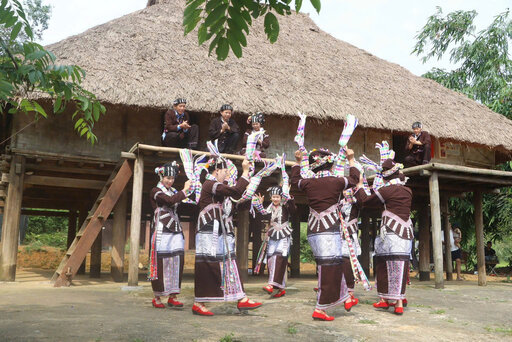
Điệu múa rộn ràng trong phần hội, tôn vinh nét đẹp văn hóa và tinh thần cộng đồng của người Lự. Ảnh: Làng Văn hóa Du lịch các dân tộc Việt Nam
The bustling dance in the festival part, honoring the cultural beauty and community spirit of the Lu people. Photo: Village of Culture - Tourism of Vietnamese Ethnic Groups

In addition, the highland fair with many local products and unique cuisine continues to serve tourists until May 3rd, contributing to enriching the experience at the event.

In the midst of modern life, the buffalo spirit worshiping ceremony of the Lu people is not only a traditional ritual but also a reminder of the philosophy of gratitude in life, cherishing the harmonious relationship between humans and nature.

Mai Châu
TIN LIÊN QUAN

The forest god worshiping ceremony of the Giay people attracts tourists to attend in the Capital

|

Hanoi - During the April 30 - May 1 holiday, the Village of Culture and Tourism of Vietnamese Ethnic Groups organized a ceremony to worship the forest god of the Giay people, attracting many tourists to attend.

Restoring the Ceremony to celebrate the new Rong house of the Jrai people on April 30 - May 1

|

Gia Lai - During the April 30th and May 1st holidays, Pleiku Ward People's Committee organized the restoration of the ceremony to celebrate the new Rong house of the Jrai people.

Recreating the rain praying ceremony, preserving the cultural identity of the E De people

|

Dak Lak - Functional agencies have recreated the rain praying ceremony, contributing to preserving and maintaining the cultural identity of ethnic minorities.