
Traffic system severely damaged
By the end of 2025, after more than 4 consecutive natural disasters caused by storms No. 3, No. 5 and No. 10, many mountainous communes and border areas in the West of Nghe An are still struggling to overcome the consequences. Traffic was cut off for a long time, infrastructure was seriously degraded, making people's lives difficult.
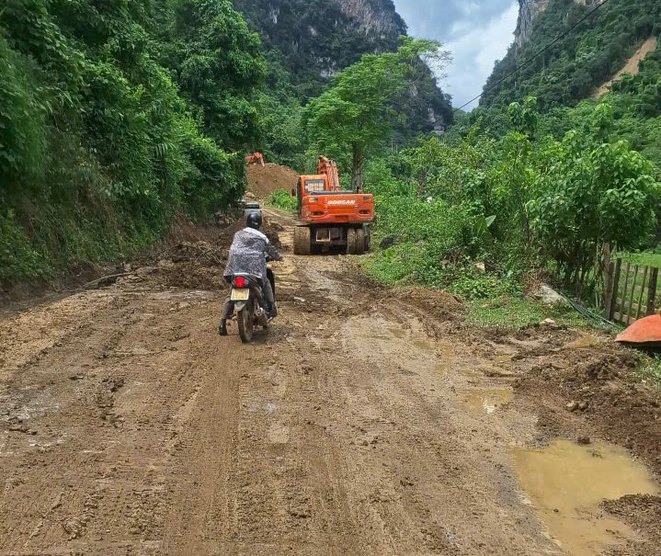
Recorded in many mountainous communes in the West of Nghe An, a series of inter-commune and inter-village roads are still in a state of landslides and mud. There are sections where there is only one lane for temporary vehicles, the road surface is peeling, the riverbank is deeply submerged, posing a potential risk of accidents. In some places, temporary bridges were washed away, so the supply of goods and people's travel had to be combined with walking and boat trips through many stages.
In remote villages, many households still have to build temporary houses made of wood and corrugated iron after their houses were swept away by floodwaters; many families have to stay with relatives. Soil, rocks, tree stumps, and waste after floods are still piled up around residential areas, affecting daily life and posing a potential risk of epidemics.
Sharing with reporters, Mr. Vi Van Hai, residing in Muong Xen commune, said that the degraded traffic infrastructure after the storm has become a long-term suffering for local people. "It was almost impossible to go when it rained. People have to take their vehicles to the commune center and walk in sections. Difficult travel leads to business, production and children's education are affected. People really hope that the roads will soon be solidly repaired to feel secure in stabilizing their lives," said Mr. Hai.
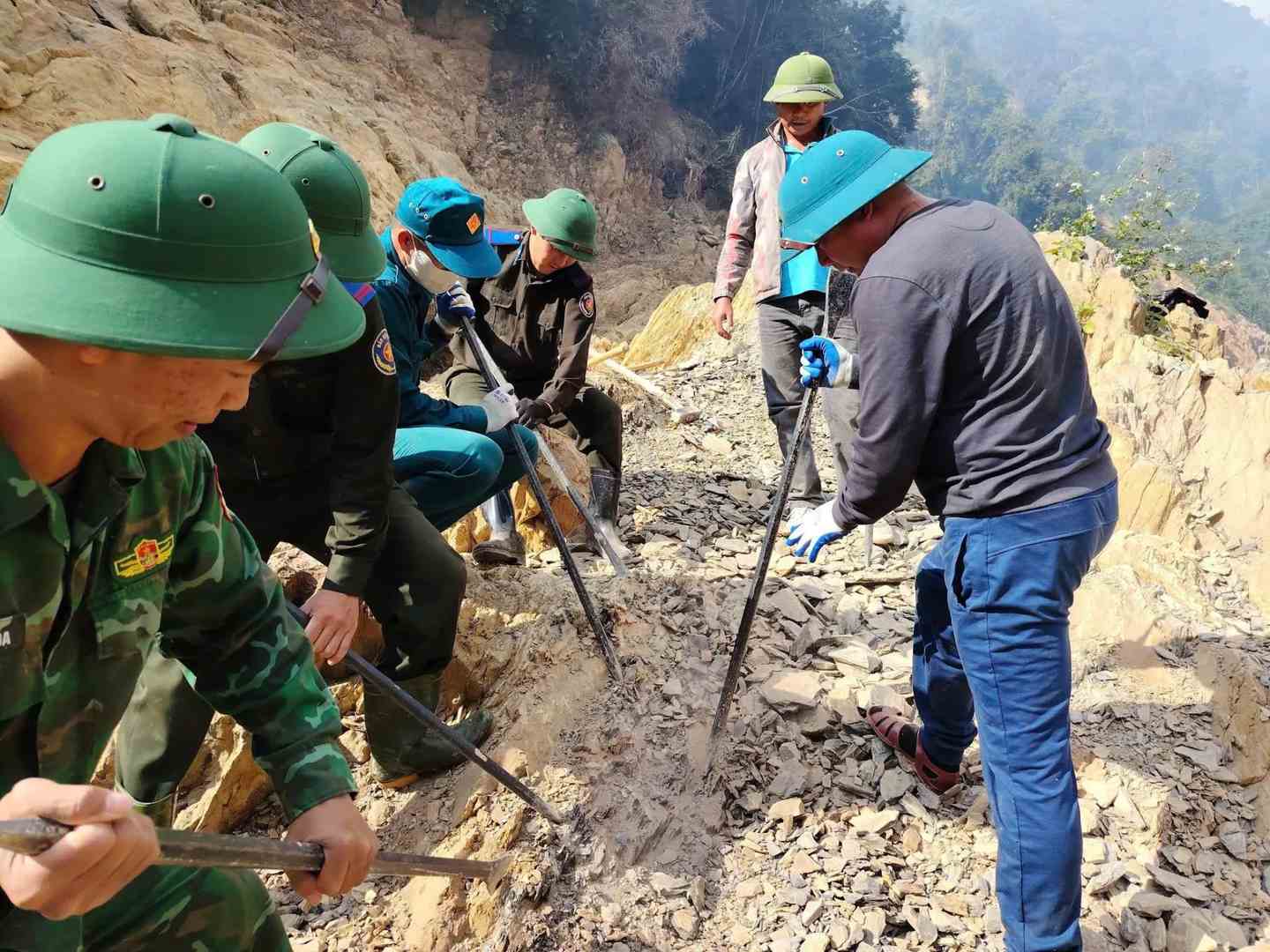
In the border commune of My Ly, the consequences of floods have caused 7/12 villages to be in a state of difficulty in accessing traffic due to cut off roads. Faced with that reality, since the beginning of December 2025, the local government has coordinated with the Border Guard Station, Commune Police and the people of the villages to simultaneously launch a campaign, cutting mountains and opening roads to the village. Due to difficulty in accessing machinery, traffic restoration is mainly done manually, relying on human resources.
Speaking to reporters, Mr. Luong Van Bay, Chairman of My Ly Commune People's Committee, said that restoring traffic infrastructure is the most urgent task of the locality at present. "We take advantage of the weather to enter the dry season, mobilize maximum internal resources from the people, combine military and police forces to clear essential routes. In the immediate future, it is necessary to ensure people travel safely and students go to school conveniently; in the long term, it is necessary to invest in consolidating transport infrastructure," Mr. Bay emphasized.
Western traffic is already difficult, now even more difficult
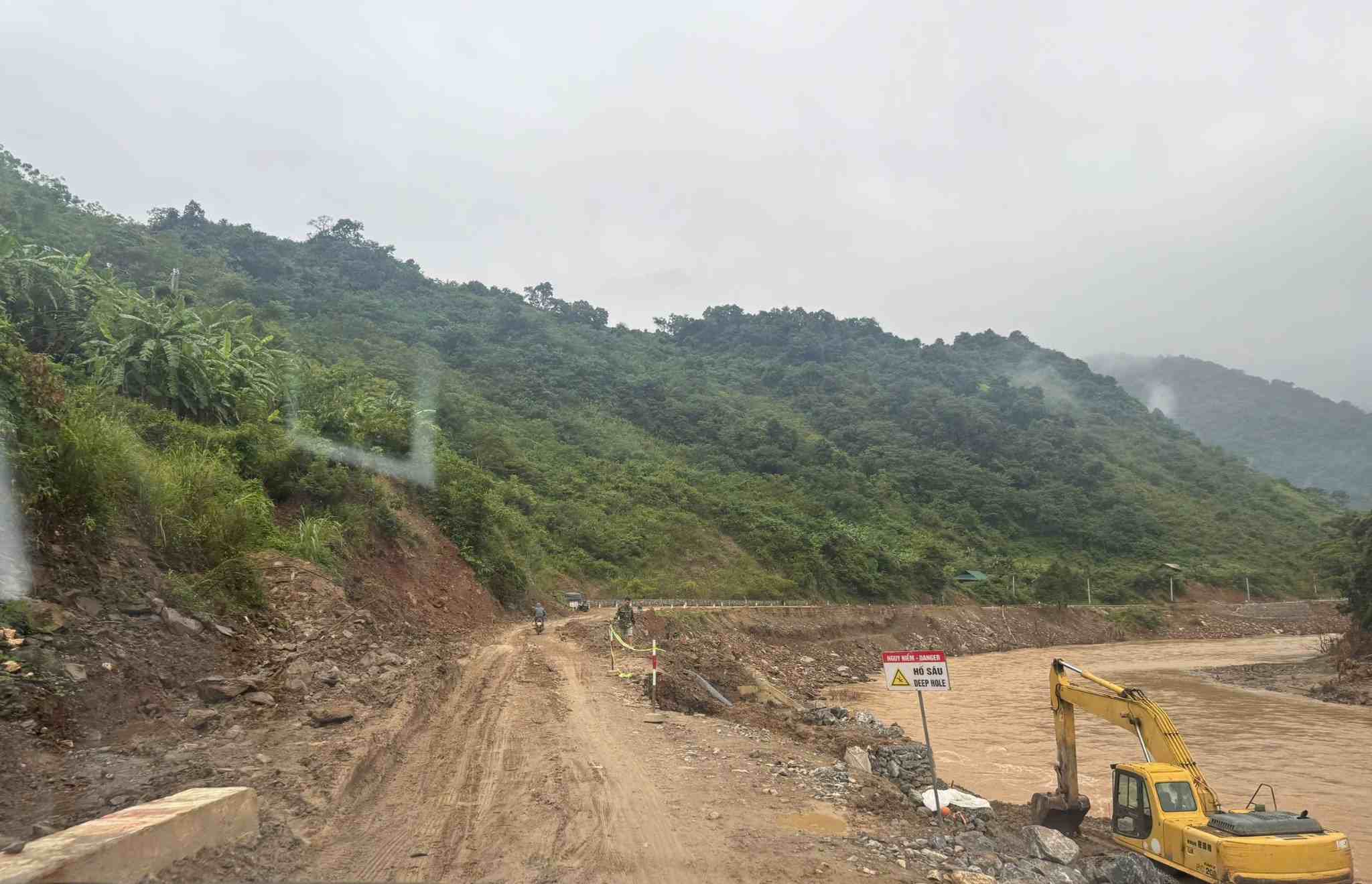
According to local people, traffic in the western part of Nghe An is already very difficult due to the rugged and cut-off terrain. Now that natural disasters are more serious, life is even more difficult: goods are difficult to circulate, transportation costs are high, living costs are expensive; travel takes a lot of time and is always potentially dangerous.
In that context, the need to overcome and restore the transportation system is considered an extremely urgent task for people to soon stabilize their lives and restore production.
According to the report submitted to the 35th session of the Nghe An Provincial People's Council, which opened on the morning of December 11, 2025, natural disasters in the province are very complicated, unusual and extreme. The whole province was directly affected by 18 tornadoes, storms No. 3, No. 5, No. 6, No. 10 and a period of tropical depression; accompanied by 9 large-scale heavy rains, many places had flash floods, and severe flooding. Total rainfall is generally 1,8002,500 mm, 4070% higher than the average of many years.
As a result, 12 people died and 31 were injured; 106,307 houses were damaged, of which over 70% were completely damaged. The authorities had to evacuate more than 13,000 households from the dangerous area. In particular, the traffic sector suffered heavy damage with more than 200,000 meters of road damaged, 164 bridges of all kinds were swept away or collapsed; over 9,000 electric poles were broken. The total estimated damage is about VND 8,980 billion.
Discussing the work of overcoming the consequences of storms and floods, Mr. Hoang Phu Hien, Vice Chairman of Nghe An Provincial People's Committee, said that the province identified the restoration of transport infrastructure as a key task, a top priority in the post-disaster period.
The province is focusing on reviewing and classifying the level of damage to traffic routes, first of all, repairing key routes, ensuring temporary route clearance to serve travel and relief; at the same time, gradually investing in repairing and upgrading the foundation of heavily damaged traffic works, especially in mountainous areas and areas that have been cut off for a long time, to ensure safety and long-term stability for people.


