
Beekeeping models associated with the construction of OCOP raw material areas have initially shown clear economic efficiency, opening up a direction for sustainable development for the people.
Favorable conditions for the formation of a commodity beekeeping area
Lam Dong is a locality in the Central Highlands region with fertile land and a temperate climate, suitable for many types of industrial crops and fruit trees. This area also has a diverse ecosystem, creating favorable conditions for the development of honey bee farming.
In reality, beekeeping not only helps to effectively utilize natural flower sources from coffee, cashew and durian growing areas but also contributes to increasing the value of agricultural production, creating more livelihoods and increasing income for rural people.
In order to maintain and improve the quality of the brand "Dak Nong Honey" and "Lam Dong Honey", in 2025, the National Agricultural Extension Center will coordinate with Nguyet Quang Joint Stock Company to implement the project "Building a honey beekeeping model associated with product consumption linkages to create raw material areas for OCOP products".
The project is implemented in Dak Mil and Dak Sac communes (Lam Dong province), with a scale of 400 beehives at each location. Before implementation, relevant units have coordinated with local authorities to conduct field surveys, select locations and participating households that fully meet technical criteria.
The breeding bee was Apis cerana, with a scale of 3 standard spots per bee, with a clear, healthy origin and no infection with common diseases such as Larvae or parasitic pests.
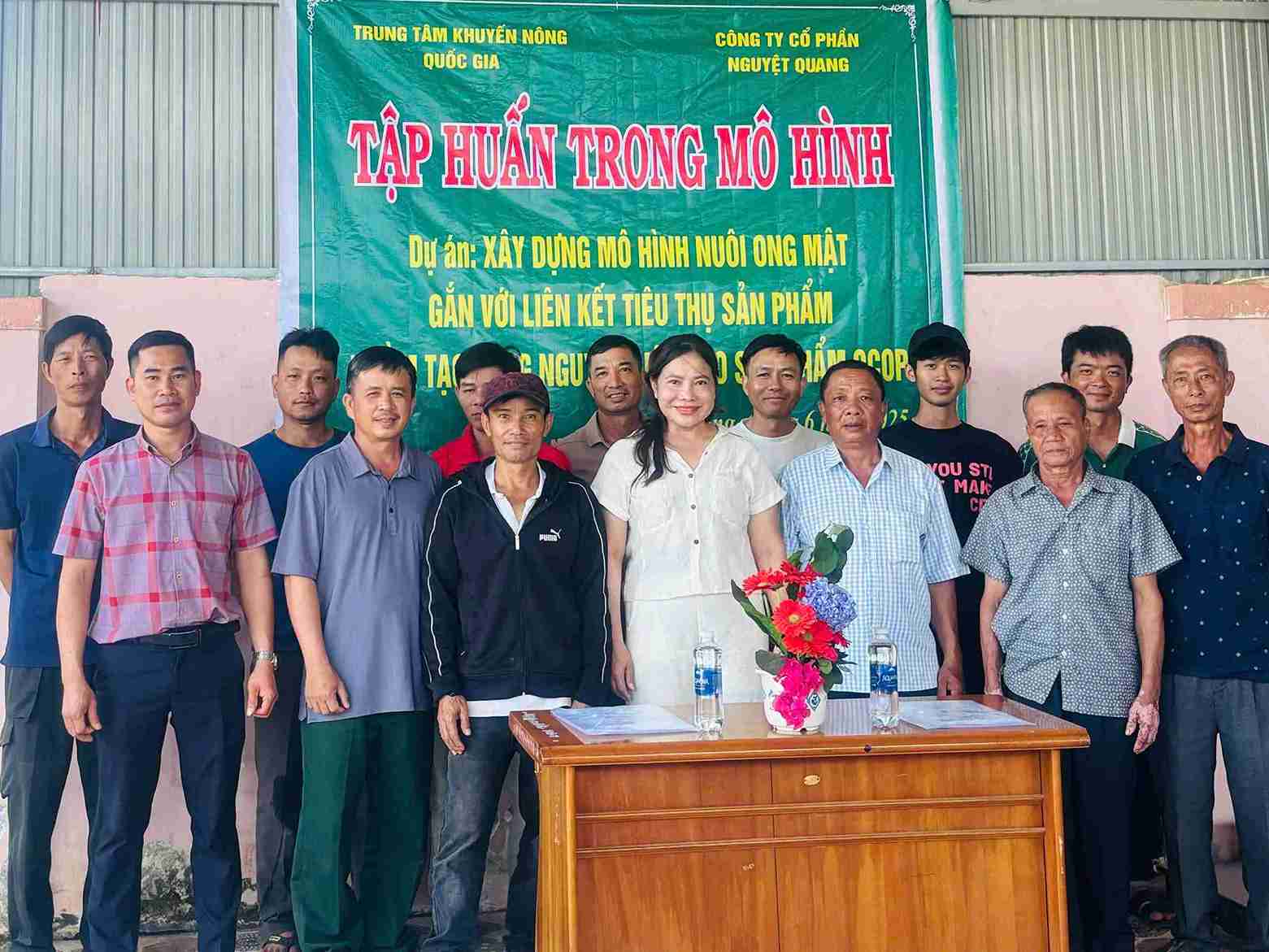
The effectiveness of the linkage model
Participating in the model, beekeeping households are supported by the State with 70% of breeding and material costs, the remaining 30% is counterpart capital from the people.
In addition, households are also able to participate in safe beekeeping technical training courses according to good livestock practice, combined with on-site training suitable for each season and each development stage of the bee colony.
Up to now, the beehives in the growth model are stable, without any epidemics. The number of herds is multiplied, the number of spheres in each box meets the standards for exploiting honey. From September to November 2025, the average honey output will reach over 10kg/group.
Not only do households directly participating in the model benefit, many outside beekeeping households also have the opportunity to learn new techniques and access quality breeding sources.
Mr. Luu Huu Thinh, in Dak Mil commune, Lam Dong province, said that domestic bees have many advantages such as the ability to gather in large groups, strong herds, few diseases and adapting well to local conditions.
"Inner-city bee farming is suitable for household economy, initial investment capital is not large, recovery time is fast, favorable for long-term development", Mr. Thinh shared.
The formation of a production - consumption chain is expected to create a stable source of raw materials for OCOP products "Dak Nong Honey" and "Lam Dong Honey".
Initially, the model has created a positive spillover effect, helping beekepers approach technical advances and gradually change traditional production practices.


