
The program is applied to children under 18 years old to detect early and limit dangerous complications caused by the disease.
Dr. Phan Trong Hau - Head of the Department of Traumatology and Spinal Orthopedics, Institute of Traumatology and Orthopedics, Central Military Hospital 108 said that scoliosis is a disease that directly affects the structure and physiological shape of children's bodies. What is worrying is that many cases progress silently for a long time, so they are easily overlooked by their families.
Many children come for examination when their spine has been clearly deformed, the chest cavity is deviated, affecting respiratory function and daily activities," Dr. Hau said.
Dr. Phan Trong Hau recommends that parents should pay special attention when children show symptoms such as disproportionate shoulders, head tilting to one side, one shoulder blade protruding high, uneven legs, dislocated hips or disproportionate ribs on both sides. In many cases, children wear unbalanced clothes or have abnormal gait but are not taken for early check-ups.
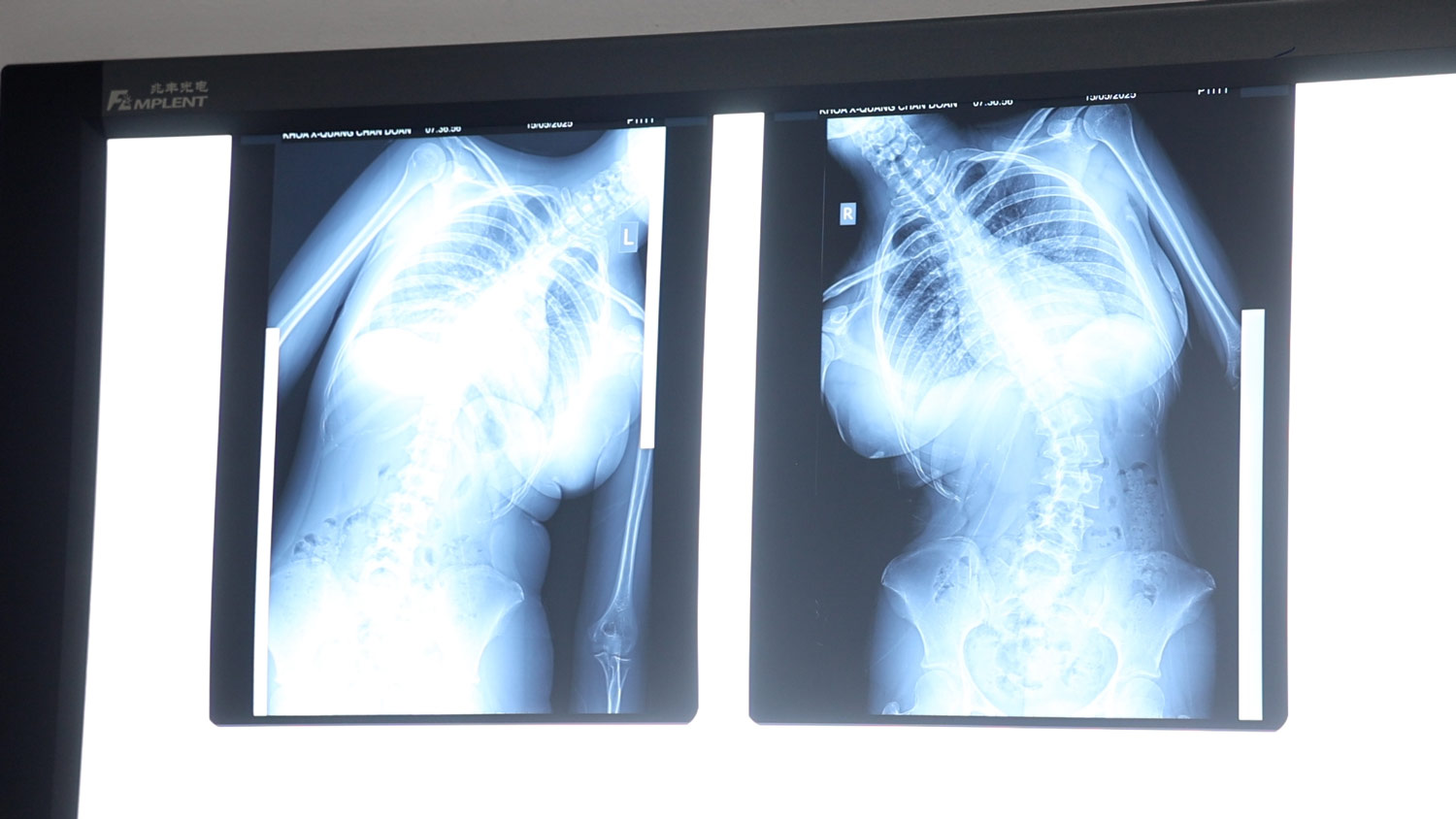
According to doctors, if not intervened in time, scoliosis can progress severely over time, causing spinal deformity, thoracic deformity, affecting the development of the lungs and internal organs.
In severe cases, children are at risk of respiratory failure, reduced quality of life and have to undergo complex surgeries. Not only affecting physical health, the disease also makes many children feel self-conscious and insecure in learning and social interaction due to changes in appearance.
Dr. Phan Trong Hau emphasized that early detection is very important because many cases can be effectively controlled if monitored and treated at the right time, limiting the risk of major surgery later.
It is expected that from now until June 18, 2026, the subjects eligible for free screening are children under 18 years old with one or more signs suspected of scoliosis such as: displaced shoulders, tilted head, protruding shoulder blades, unbalanced clothes, one side of the body thinner than the other, uneven legs, displaced hips or asymmetry of the ribs on both sides.


