
The Dan Phuong communal house - pagoda complex is considered a place to preserve the cultural soul of coastal residents. Not only is it an ancient religious space, this place is also associated with land reclamation history, legends about Trieu Viet Vuong and heroic years of revolutionary struggle.
According to history, around the early 17th century, many clans such as Luu, Nguyen, Pham, Vu, Tran... following the reclamation policy of the Le Dynasty came to the new coastal land to start a business. They took the name Dan Phuong from their hometown Hanoi given to this land. From the wild reeds, people built dikes to encroach on the sea, built prosperous villages and together built the first communal house in 1687.
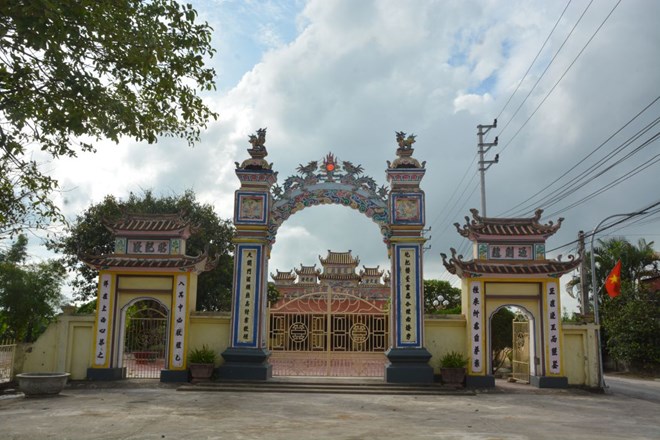
Initially, the communal house faced North and was built quite simply. After many upheavals, especially when villagers continuously encountered epidemics, people decided to rebuild the communal house in the South direction in 1739 with a more spacious scale.
The communal house is a place to worship Trieu Quang Phuc - a national hero who was honored by the people as Trieu Viet Vuong. Legend has it that during the time of resisting the Luong army, he was granted a dragon hoof by the gods to attach to his hat, helping him to win wherever he fought. That image is still preserved through the ancient parallel sentences in the communal house as a sacred trace of folk legends.
After many renovations, Dan Phuong communal house - pagoda still retains the majestic appearance of traditional architecture. The communal house stands out with three-entrance nghi mon, a wide brick yard and buildings built in the style of "first first, second only". The two-story eight-roof central building is a unique highlight with many exquisite carvings. The rear palace places statues and worships Duc Trieu Viet Vuong in a solemn space.
Not far from the communal house is Linh Son peaceful pagoda with a large three-entrance gate, three-story bell tower with eight roofs, along with a system of front halls, three treasures, mother shrine and Tran Hung Dao temple forming a harmonious complex.
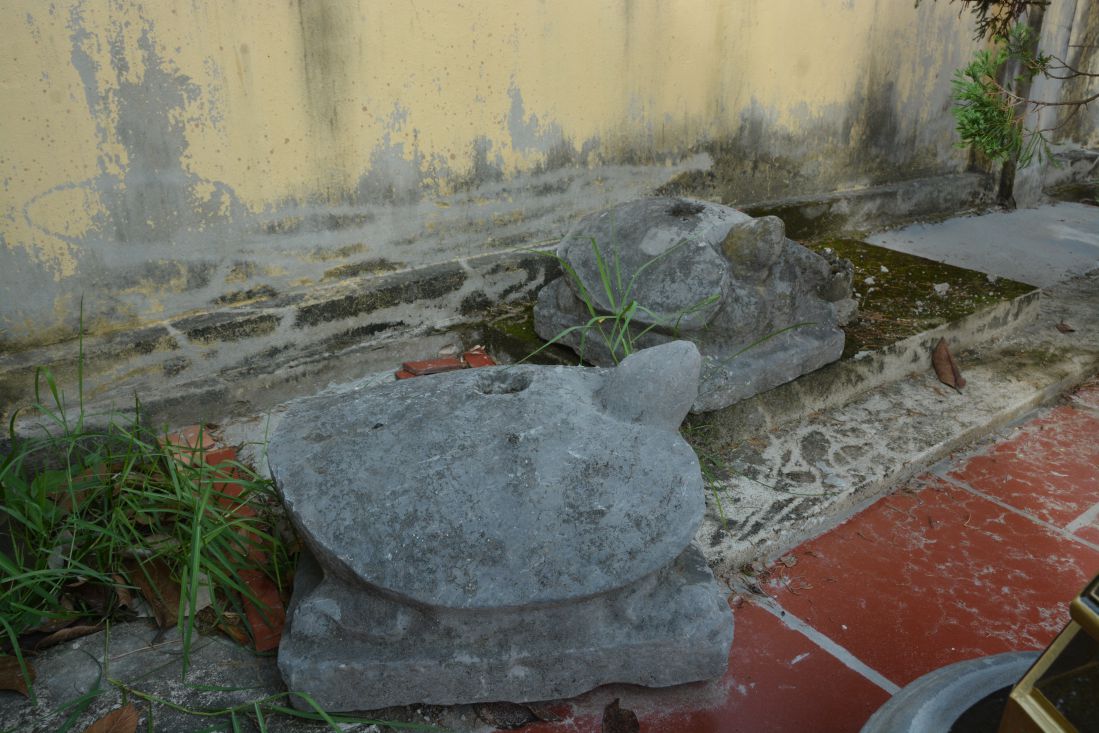
Not only carrying cultural values, Dan Phuong communal house - pagoda is also deeply associated with the local revolutionary history. During the resistance war against France and the US, this place was once a place to establish revolutionary government, organize congresses, meetings and hide cadres. Although it was destroyed by war bombs and bullets, especially in the 1952 Napan bombing, the relic complex was still jointly preserved and restored by the people.
Today, Dan Phuong communal house - pagoda is still present as a historical witness in the sea, preserving memories of patriotism and religious life of generations of Giao Binh residents.


