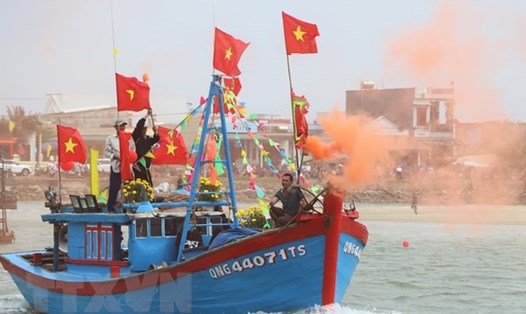
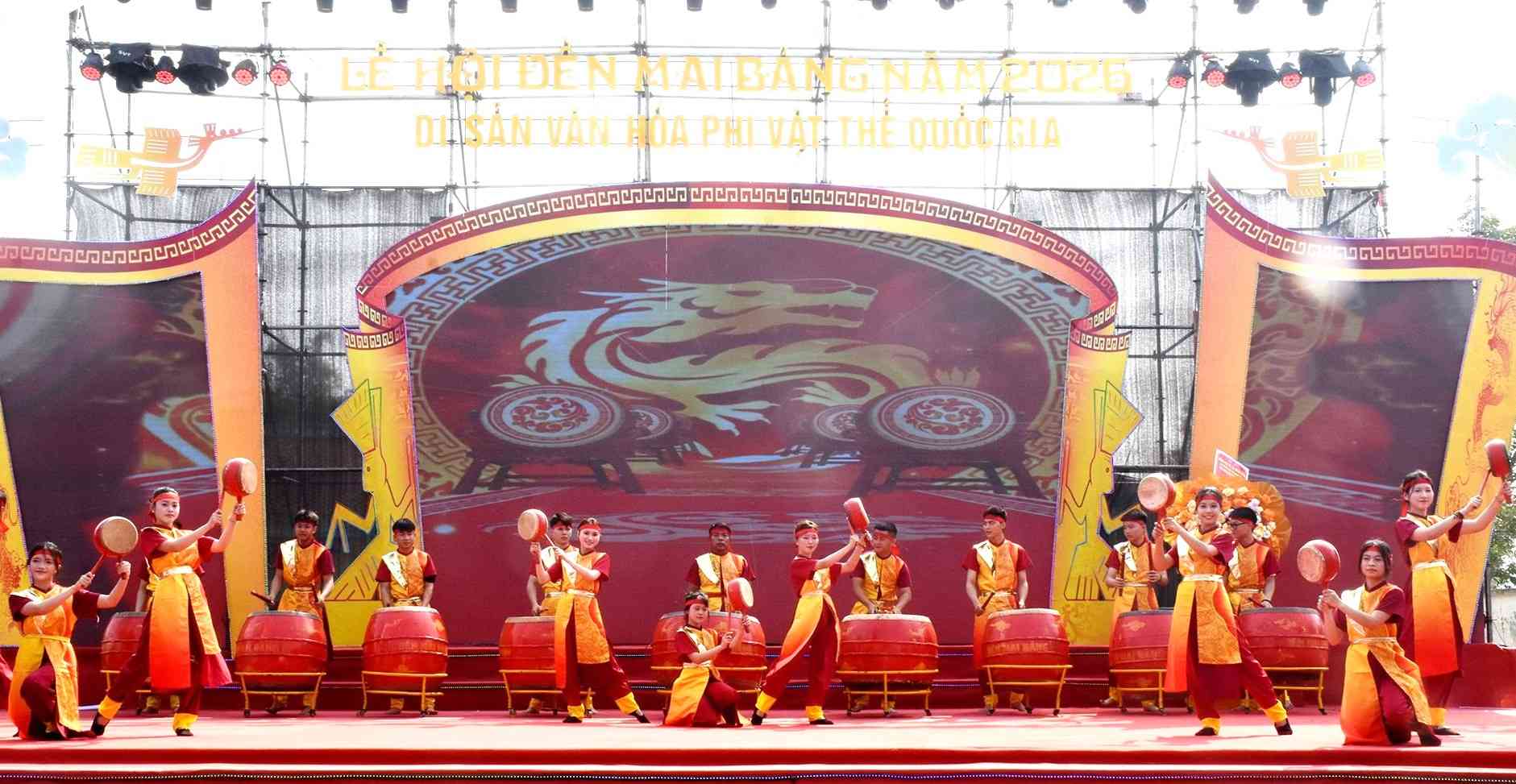
On March 30, at the National Historical and Cultural Relic Mai Bang Temple (Cua Lo ward, Nghe An province), the locality organized the opening ceremony of the Mai Bang Temple Festival 2026.
Attending the ceremony were leaders of the Department of Culture, Sports and Tourism, the Provincial Relic Management Board; leaders of Cua Lo ward and a large number of people and tourists from all directions.
According to documents stored at the relic, in 1771, residents from Mai Lam village (Ha Tinh) migrated to the Mai Bang area to establish the village. About 9 years later, people built a temple to worship Vo Muc Chieu Trung Dai Vuong Le Khoi - a famous general of the Later Le Dynasty.
Le Khoi was a person with many merits in the Lam Son uprising, and used to be an official under the three dynasties of the Le dynasty. In 1443, he was appointed to guard Hoan Chau region, contributing to reclaiming land, developing production and consolidating national defense in the Nghe An - Ha Tinh region.
In addition to worshiping Le Khoi, the temple also coordinates the worship of many historical figures and gods according to folk beliefs. Worship has been recognized and granted royal decrees by feudal dynasties through many periods.
At the opening ceremony, leaders of Cua Lo ward performed the drumming ritual to open the festival, opening a series of unique cultural and religious activities.
Mai Bang Temple Festival 2026 takes place from March 26 - 30 (ie, March 8 - 12 of the 2nd lunar month), including the ceremony part and the festival part. The ceremony part is solemnly organized with traditional rituals such as khai quang, yết cáo, cầu ngư, rước and đại tế. The festival part is exciting and bustling with many sports activities and folk games.
This is an opportunity for people to remember the merits of their predecessors, and at the same time send their wishes for a peaceful life, favorable harvests, and effective fishing.
Notably, at the beginning of 2026, the Mai Bang Temple Festival was recognized by the Ministry of Culture, Sports and Tourism as a National Intangible Cultural Heritage.