
Not fussy in processing, no need for expensive spices, the rustic grilled catfish dish evokes memories of peaceful afternoons under the melaleuca trees, by the smoky fire. There, the fish is usually fat and firm thanks to abundant natural food.
Usually, after a day of removing fish traps or digging ditches, catfish are caught by people and processed right in the heart of the forest.
The fish does not need to be scalded or marinated, just skewer a bamboo stick (or fresh branch) from the mouth to the tail, then grill it over charcoal.
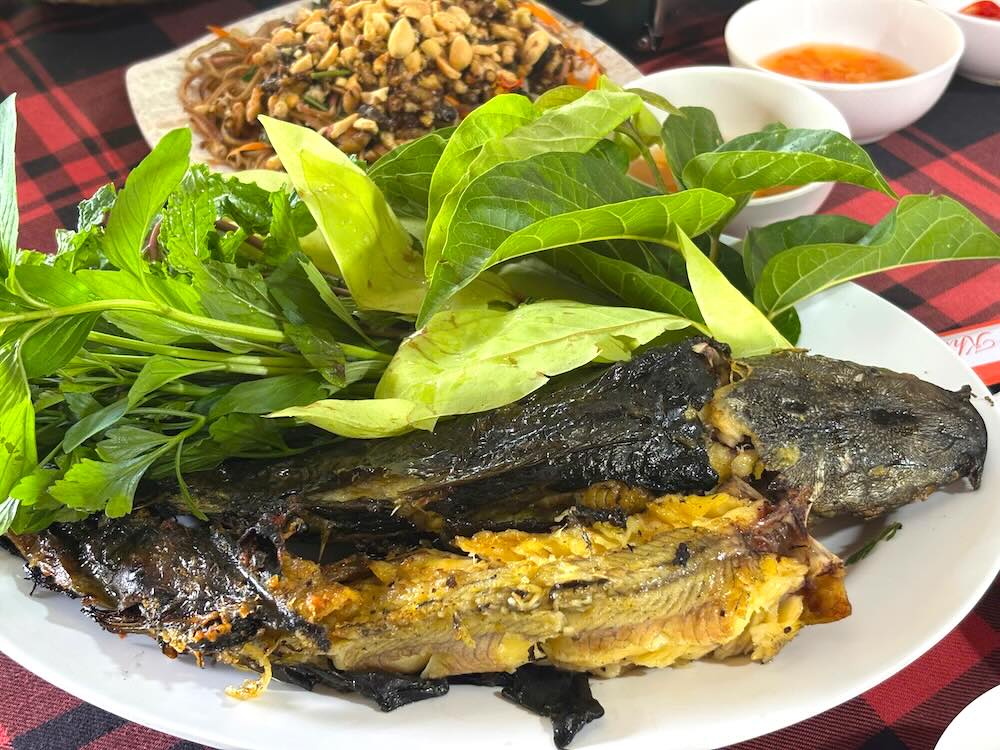
What makes grilled catfish attractive is not only the flavor, but also the way the dish retains its most pristine features. The fire makes the fish skin lightly blackened, a little fish fat secreted outside creates a rather indescribable aroma, which is a flavor that industrial processing cannot have.
At this time, diners when eating grilled catfish skin will feel the crispness and fatty taste melting out, extremely stimulating the taste buds. Perhaps that's why when serving it on the tray, people often compete for the skin on the grilled catfish because it is "very delicious".
Especially in U Minh Ha, grilled catfish is often served with typical forest vegetables. The plate of fish is often placed next to all kinds of garden vegetables, forest vegetables such as choai shoots, cach leaves, herbs, basil, or sour star fruit, bitter banana.
Diners can wrap the golden fish meat with wild vegetables in a thin layer of rice paper, then dip it thoroughly in a bowl of sour and spicy tamarind fish sauce or lemon chili salt. The sweetness of the fish, the slightly astringent taste of choại shoots, and the slight spiciness of the dipping sauce blend together to create a harmonious and rich overall that is not greasy at all.
Not just a dish, grilled catfish also evokes the unique culture of the people of U Minh in particular and the Mekong Delta in general. That is the image of gathered meals, both enjoying local products and telling stories of the plains.


