According to ancient customs of Diec village, men from 53 to 54 years old will prepare a khao lao feast (also known as yến lão - longevity celebration custom) to offer to ancestors, inviting elderly people from 55 years old and older to enjoy. The most elaborate khao lao feast is the hammock carp dish, which must not only be delicious but also beautiful. Previously, the feast was made on the 6th day of the Lunar New Year, now it has been changed to the 3rd day of the Lunar New Year every year.
Carp preparing for the elderly feast is male carp, in a quantity of about 3-4 kg or more. The carp is cleaned, keeping the scales intact, gutted. Next, stuff dry banana leaves into the carp's belly to make it round and sew it skillfully so as not to reveal the cut.
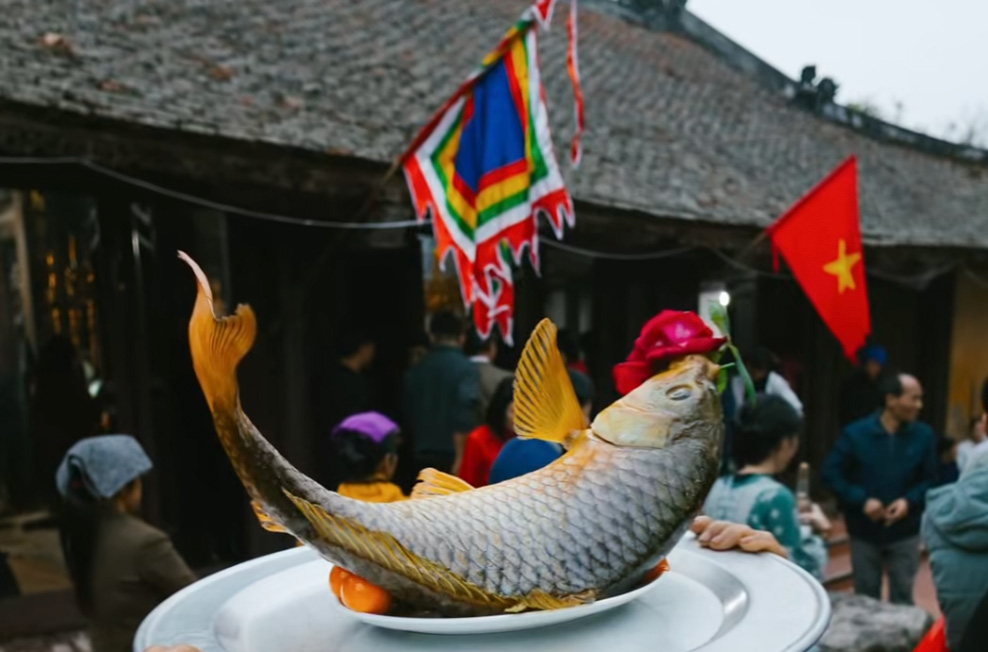
Then the fish will be placed on a hammock frame made of bamboo or steel, and then fried for about 6-10 hours to complete. Carp dishes lying in hammocks need to be fried for so long to keep the scales from peeling and cracking, while the fish body is softly curved and delicate.
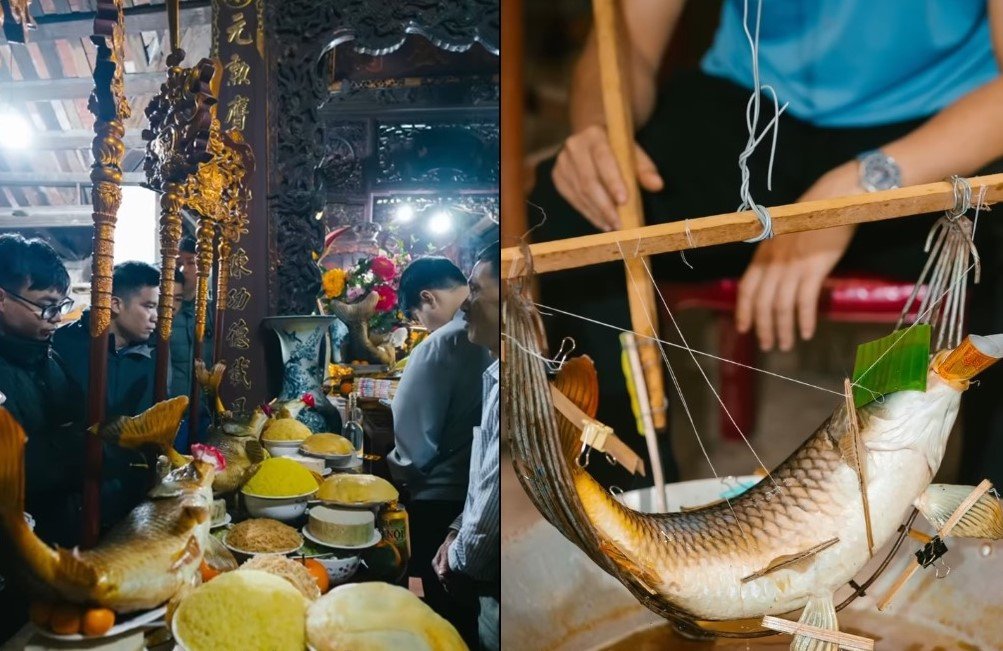
The frying process requires the processor to be skillful. The maker must prepare a large deep-bottomed pan, using about 5 liters of oil to fry the large carp until cooked. Place the fish hammock in the middle of the pan, use a spoonful of boiling oil to slowly pour it onto the entire body of the fish meticulously and patiently so that the meat is golden brown. The frying process takes the most time, so experienced people in the village will take turns doing it.
Worshiped carp need to meet the following standards: body bent like a communal house roof, mouth wide open, scales even and golden, eyes intact. When the whole carp is golden brown, lively as if swimming, the hammock will be removed to be placed on the feast.
Diec villagers believe that carp lying in hammocks must still have golden scales, symbolizing the image of "transforming into dragons". This is also considered as a wish for longevity and old age from children and grandchildren in the house, acquaintances in the village sent to the elders.
The "khao lao" feast, in addition to the unique hammock carp dish, also includes many traditional Northern offerings such as sweet sweet soup, pork sausage, chicken, sticky rice, fermented pork roll, mọc. The feast is usually arranged in 3 layers with 8 plates and 4 bowls to invite 4 people to eat.
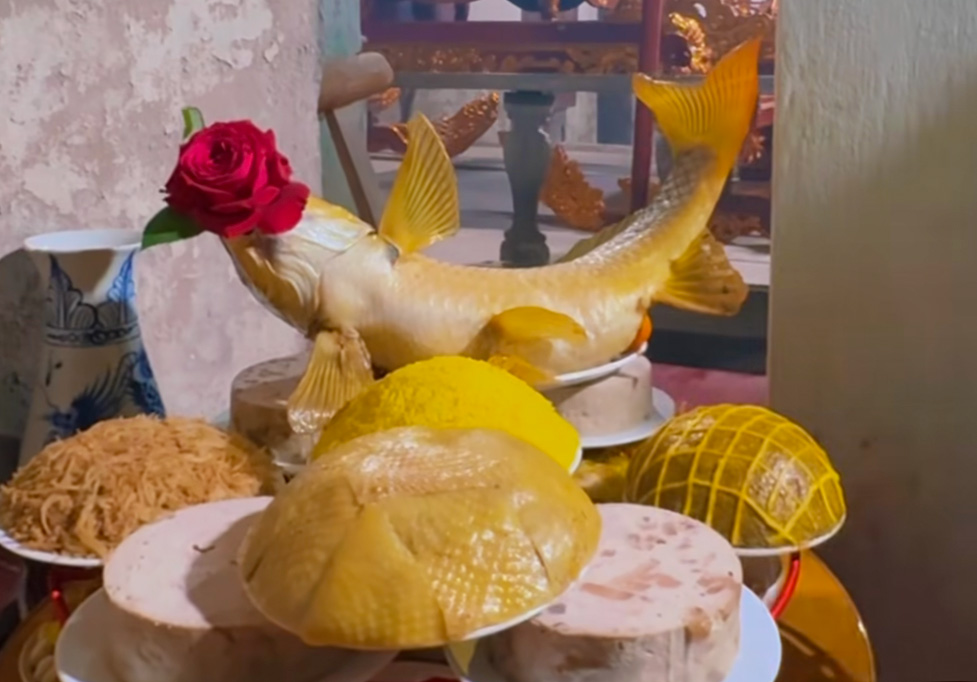
Early in the morning of the 3rd day of Tet, a full tray of offerings is brought to the relic of the communal house, pagoda or temple of the village to perform rituals, presented to the saints, and then the feast begins at home. Bui Quang Thuy, from old Thai Binh, who came to Diec village for the first time to watch the feast cooking, shared: "Starting at 1 am, arranging offerings to bring to the temple at 3 am, when it was still dark and his hands still smelled of oil and fish, everyone was excited.
The feast is not only for worship and eating but also a way to express sincerity. Hearing the price of a 10 million VND tray, outsiders may find it expensive, but insiders see this as the result of effort, gratitude and pride".
The people who prepare the "khao lao" feast must invite 55-year-olds in the village to their house. When eating the feast, the host calls guests "cụ" (old man) and addresses them as "con, cháu" (child, grandchild) to invite them to have a meal, the oldest person will eat first and must use a savory dish first and a sweet dish later.
The khao lao feast of Diec villagers has been around for hundreds of years but is still preserved as a cultural beauty. The dish of carp lying in hammocks is elaborately prepared not only to show filial piety to ancestors and elders but also to be proud of the traditional cuisine of the homeland.