
Pagoda flowers are found in many areas of Son La such as Sop Cop, Song Ma, Thuan Chau, Muong La, Ngoc Chien...
This flower usually grows in humid and cold climates, with a lot of fog, and can be harvested by people in season to sell fresh or dried for gradual use.
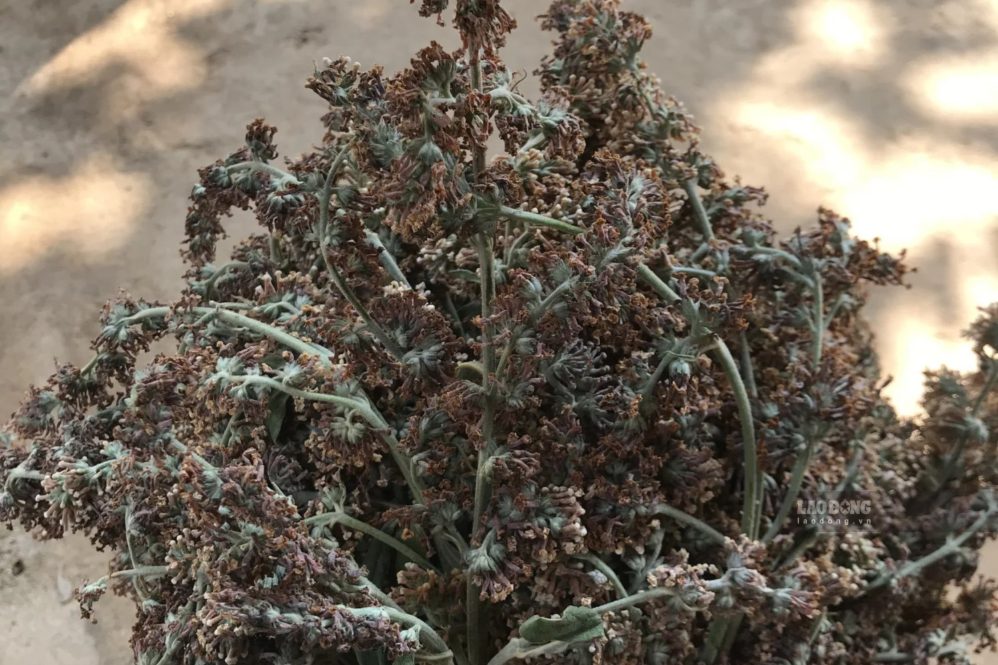
Not only is it a forest flower, phan bundles are also used as coloring ingredients for many traditional dishes, among which the prominent is phan bundle sticky rice of the Thai people.
In Ngoc Chien commune, phoen sticky rice is a dish that people often prepare to treat guests or use on important occasions.
The sticky rice is impressive with its natural golden color, unlike sticky rice that is colored from familiar leaves, tubers or flowers.
To have a delicious batch of sticky rice, sticky rice is a carefully selected ingredient. According to Ms. Ca Thi Thoa, who has many years of experience in processing ethnic dishes in To Hieu ward, fragrant sticky rice, round, plump grains, especially sticky rice tan, is often used to make sticky rice bundles.
The amount of flowers used must be suitable for the amount of rice. On average, about 10kg of rice can use a small bouquet of flowers, about 1 tael. If used more or less, the color of the sticky rice will change," Ms. Thoa shared.
Dried or freshly picked bouquet flowers are washed, put in a pot and boil for about 5-10 minutes. When the water turns yellow, the flowers are taken out, the water is cooled and then used to soak sticky rice.
After being washed, the rice is soaked in fragrant water for about 4-5 hours, or overnight depending on the processing method. When it has absorbed the color, the rice is taken out to drain and then put in the storage compartment.
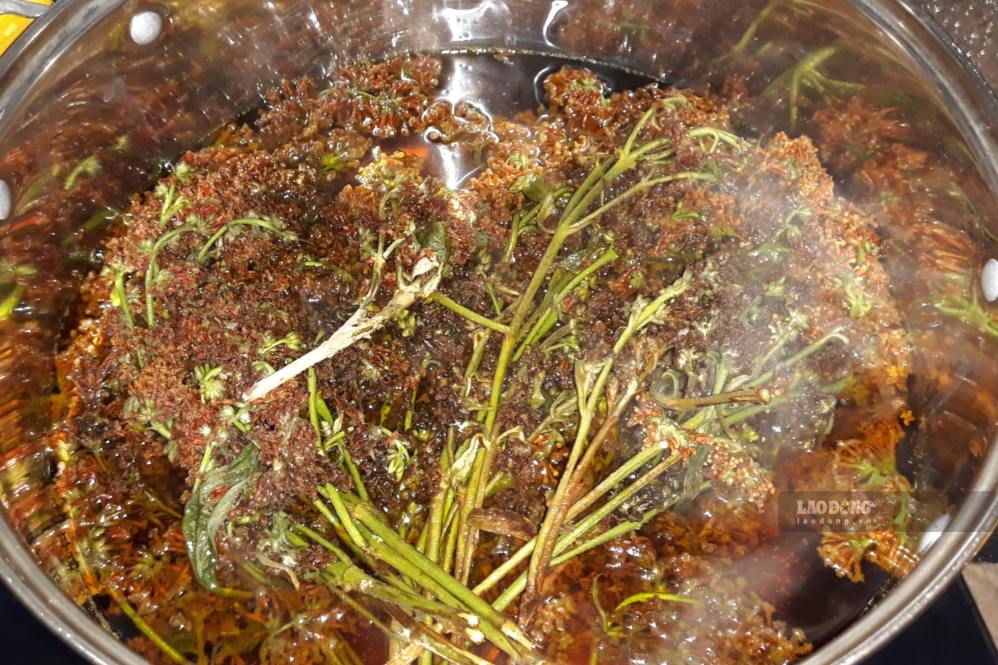
According to the experience of sticky rice makers, to make the sticky rice grains evenly cooked, firm and sticky, sticky rice can be cooked twice the heat. The first time, when the rice is about 80% cooked, pour it out to cool and drain excess water vapor. Then, the sticky rice is cooked until it is completely cooked.
When the lid is opened, the glutinous rice grains turn golden like honey, shiny, loose and sticky. The aroma of sticky rice combined with the characteristic smell of banh cong flowers creates a dish with a unique flavor.
After steaming, the sticky rice is usually poured into a tray lined with dong leaves, fanned to evaporate excess water vapor, and then put in to press Khau - a traditional sticky rice container of the Thai people. This method helps the sticky rice grains maintain their flexibility without becoming mushy.
Ms. Hoang Thi Hue, a tourist from Lao Cai province, said that she has come to Ngoc Chien many times and enjoyed ethnic dishes here.
Phon sticky rice has a very beautiful yellow color, sticky rice grains are chewy, fragrant and have a characteristic taste. Every time I come here, I buy a little to give as a gift to my family," Ms. Hue said.
Phon sticky rice is often eaten with sesame salt, peanut salt, smoked meat, grilled fish or chẩm chéo. In the five-color sticky rice tray of the Thai people, yellow also symbolizes fullness and prosperity.
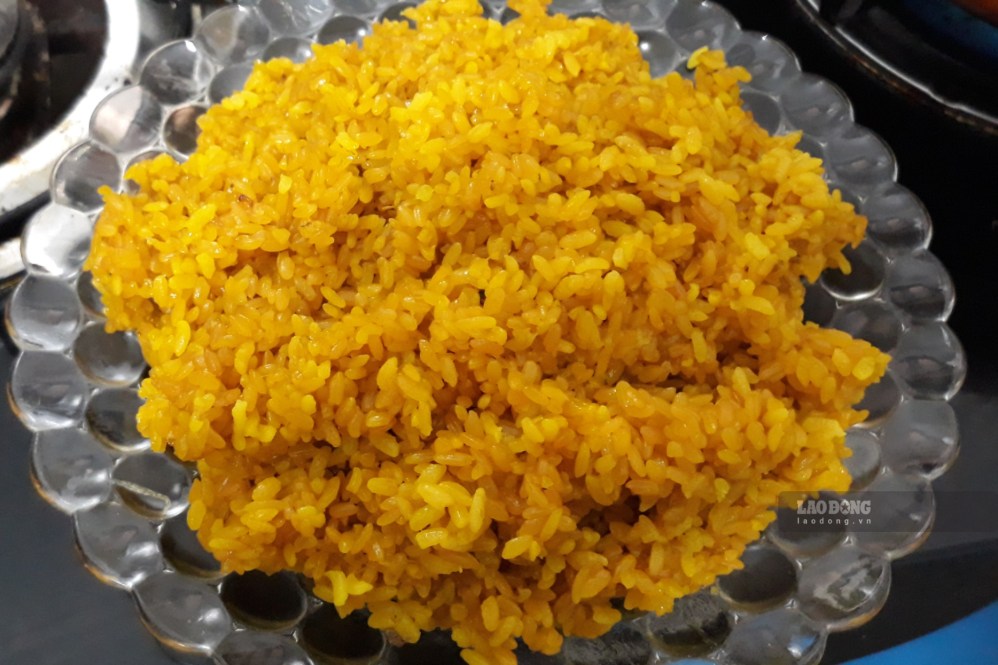
From the flowers in the mountains and forests, the Thai people create sticky rice with natural yellow color and a unique processing method. Sticky rice bundles are not only present in the meal, but also contribute to preserving the traditional culinary culture of the Thai people in Son La.
Through that simple dish, the products of the mountains and forests continue to be preserved and become a unique feature in indigenous culture.


