
According to storm news, the latest low pressure from the Philippine Atmospheric, Geophysical and Astronomical Services Administration (PAGASA) in the early morning of May 29, Typhoon Jangmi is actively operating in the sea area east of the Philippines.
At 3 am this morning (local time), the center of Typhoon Jangmi was determined to be located at about 14.8 degrees North latitude - 134.3 degrees East longitude, about 1,360 km east of the Southeast of Luzon Island.
The storm has the strongest sustained wind of 75 km/h near the center, gusting up to 90 km/h and is moving in the Northwest direction at a speed of about 20 km/h.
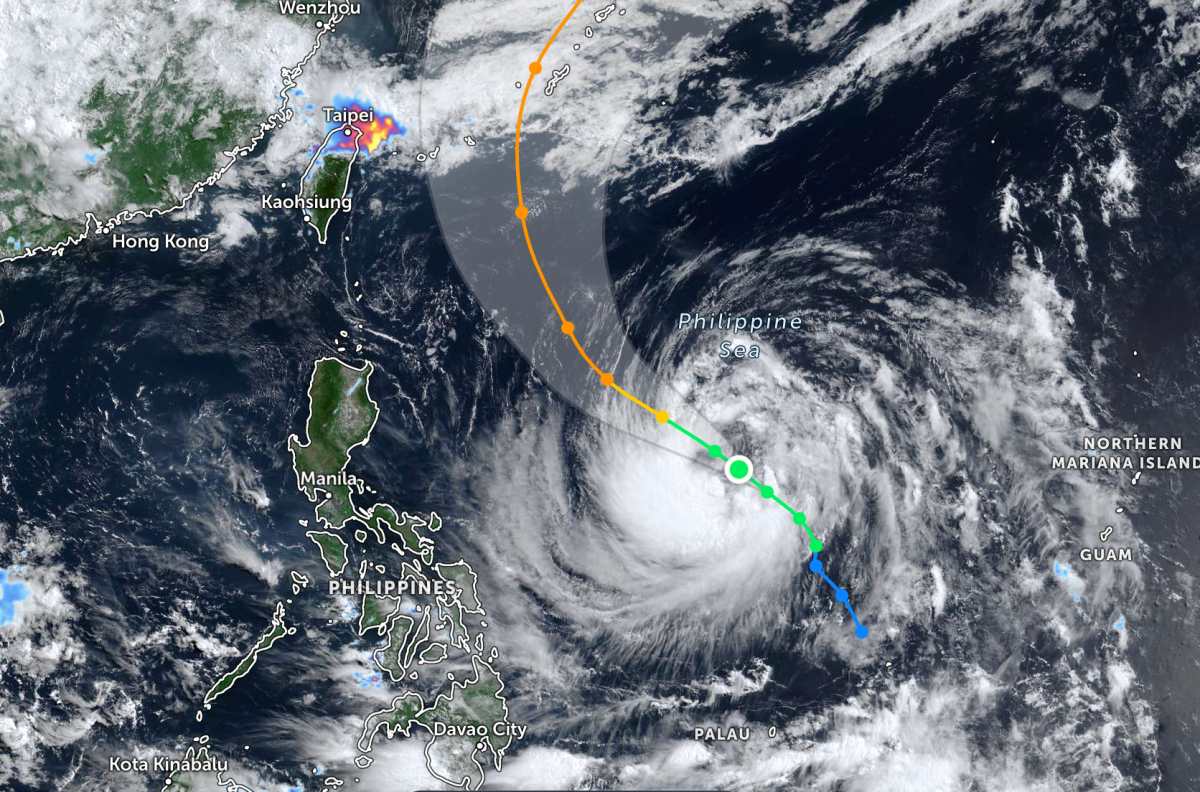
Due to the impact of the low pressure trough related to Typhoon Jangmi, the Eastern Visayas and Caraga areas are forecast to be cloudy, with scattered showers and thunderstorms.
Moderate to heavy rain at times can cause flash floods and landslides in vulnerable areas.
Meanwhile, the Southwest monsoon is affecting Palawan and the western areas of Visayas and Mindanao. Localities including West Visayas, Negros Islands, Zamboanga Peninsula, Soccsksargen, Barmm, Lanao del Norte and Palawan are forecast to be cloudy, with showers and scattered thunderstorms. The risk of flash floods and landslides is also warned due to moderate to localized heavy rain.
In the metropolitan area of Manila and the rest of the Philippines, the weather is generally cloudy to mostly cloudy, accompanied by showers or localized thunderstorms in the late afternoon and evening due to the impact of local convection. Strong thunderstorms can cause localized flooding or landslides in some areas.
Regarding sea conditions, the Visayas, Mindanao and Palawan areas have southwest to west winds with light to moderate intensity. The sea areas in the area have wave heights from 0.6-1.8 m.
The remaining areas of Luzon Island have Northwest to West winds of light to moderate intensity, light to moderate rough seas with waves 0.6-1.8 m high.
People and tourists who plan to visit these areas should follow the weather forecast. Check the flight schedule and follow local instructions to avoid storms affecting the journey.


